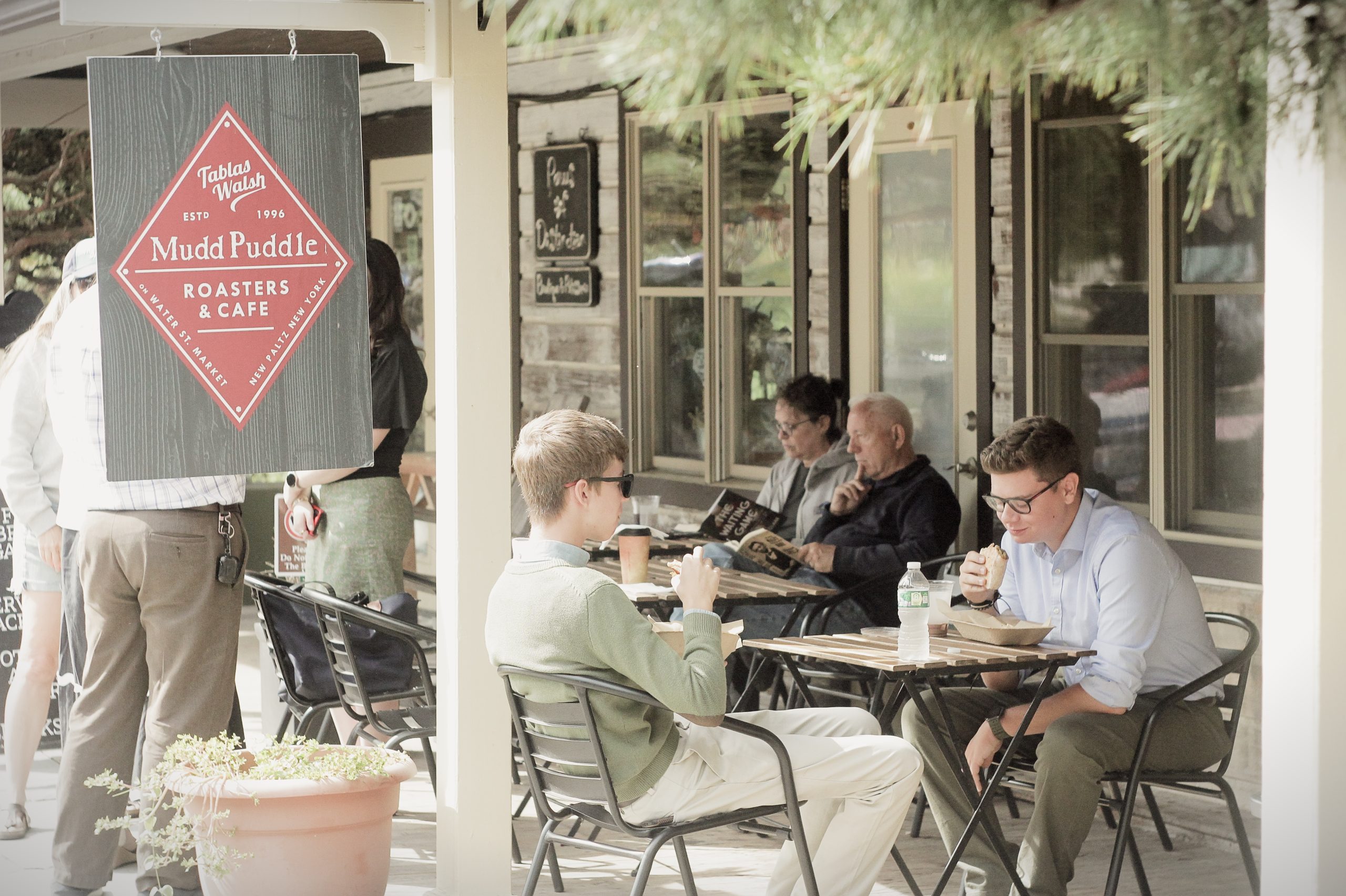
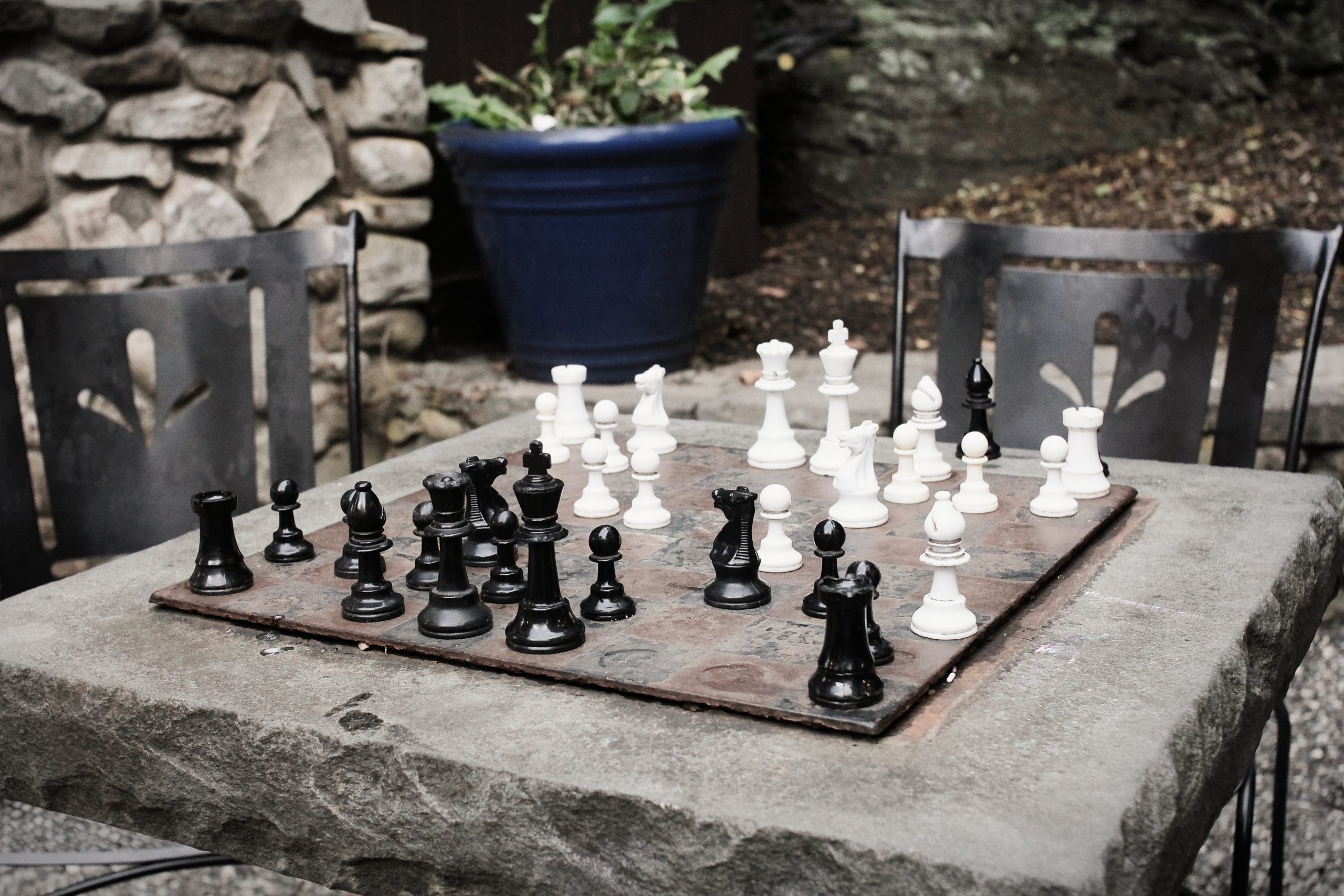
The first thing you notice when you walk into Water Street Market — coming down Main Street into New Paltz from the Wallkill — is that you are walking into a room. The buildings step back from the sidewalk into a small piazza-style courtyard. There is a sculpture in the middle of it. There are café tables and chess sets and, in summer, a movie projector pointed at one of the walls. A theater with a green roof sits at the back. Two-story shop fronts run on either side. The thing functions like a contained village, because that is what it was designed to be.
The address is 10 Main Street, New Paltz, NY 12561. It has been operating as Water Street Market since roughly 1998–2000. The whole property is one operator's project. That is the editorial spine.
The architect
The operator is Harry Lipstein — Queens-raised, Syracuse-educated, an architect by training, a real-estate developer by practice, a producing artistic director by avocation. (He also founded Urbanite Theatre in Sarasota, Florida, with two collaborators, which gives some sense of how he thinks about real estate.) Lipstein designed Water Street Market himself, master-planned the assemblage of small shop facades around the central courtyard, and has run the property as the landlord, curator, and programmer ever since.
Three things about how he runs it are unusual enough to be worth naming.
First, the curation. Lipstein's vendor model is long leases to independent operators with no chain or franchise tenants. Twenty-plus shops, restaurants, galleries, and a black-box theater — all owner-operated, almost all of them locally based, almost none of them with another location anywhere else. Water Street Market is not a co-op or a market hall in the food-court sense. It is a village's worth of small businesses, each in their own building, on a single property.
Second, the philanthropic posture. Programming and amenities at Water Street are not vendor-funded. They are property-level. Free loaner bikes for the Wallkill Valley Rail Trail, which runs adjacent to the market. Chess sets and tables in the courtyard — free. A small lending library — free. Free Monday Night Movies in the courtyard in summer, projector and screen. Free Tuesday Night Live Music in the courtyard, also in summer — local musicians, audience dancing on the cobblestones. A rotating outdoor sculpture garden curated by the Hudson Valley sculptor known as Craig.
Lipstein, on what he is doing:
"We share with all artists the fundamental reason for being in human form, which is to share love, and to in some way make people have an experience that allows them to be more empathetic with the world."
That is, in plain language, the positioning of Water Street Market: a privately owned commercial property programmed as if it were a public commons.
Third, the long horizon. The Antiques Barn opened as a charter tenant in October 1999; it is still there, owned by Walter Marquez since 2004. Mudd Puddle Café has been a long-tenured anchor since the early years. The newer additions — The Cronin Gallery (2015, Hudson Valley Pop artist Ryan Cronin), The Parish Restaurant & Bar (2016, New Orleans Cajun/Creole), DENIZEN Theatre (2018, the on-site 70-seat black box), Grazery (2019, cheese / plants / lifestyle, by Melissa and Greg Gagne) — have all stayed. The vendor list compounds. The block compounds with it.
What's actually inside
The current vendor mix breaks down roughly into four registers — which, not coincidentally, are the four tags this article carries.
Eat.
- The Parish — upstairs, with a deck overlooking the Shawangunks. Theresa Fall is the proprietor. Cajun and Creole, since 2016.
- Mudd Puddle Café — fresh-roasted coffee, tea, lunch and pastries. The market's caffeine spine since the early years.
- Grazery — cut-to-order artisanal cheeses, fondue, grilled-cheese menu, plus greenhouse plants and seasonal cut flowers. Melissa and Greg Gagne, both formerly of Red Rooster Café in Gardiner; Melissa is CIA-trained.
- Jar'd Wine Bar — wine bar, named for the canning-jar service.
Shop.
- The Antiques Barn — multi-dealer, charter tenant (1999). Glass, jewelry, pottery, furniture, vintage clothing — late 1800s through 1970s.
- Antiques on Main — the second multi-dealer antiques operation, with its own dealer mix.
- The Cronin Gallery + The Shop — Ryan Cronin's high-saturation Pop work (Rust-Oleum on canvas, 20 years of practice), paired with Cronin-imagery home goods and apparel.
- The rotating retail mix — clothing, jewelry, home goods, books — across the rest of the buildings.
See.
- The outdoor sculpture walk — curated by Craig ("Sculpture by Craig"), rotating works through the courtyard and walkways. "An extension of my studio and garden," in Craig's words.
Do.
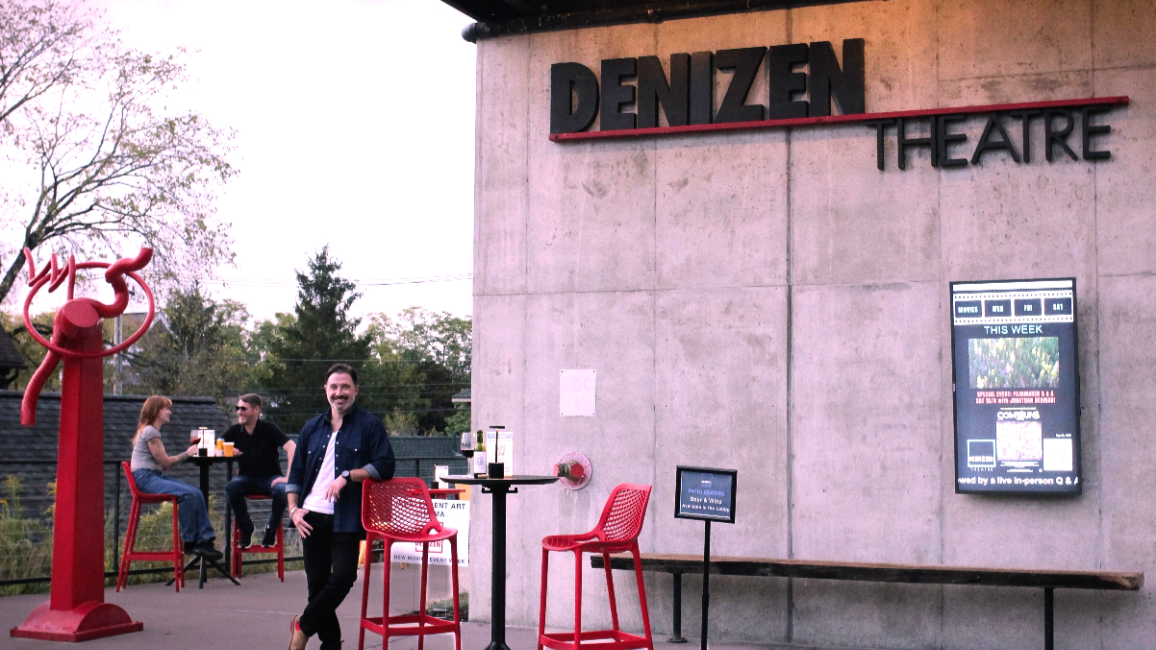
- DENIZEN Theatre — 70-seat black box at the back of the property, opened September 12, 2018. Lipstein-designed concrete-glass-metal structure with a living green roof, sited next to the upper parking lot. Founders: Lipstein, Ben Williamson, Brittany Proia. Markets itself as "the only European-style Cinema Arts Venue in New York." Name decoded: Den + I + Zen.
- Free programming — Monday movies, Tuesday music, Fourth Friday social nights with food, drinks, music, kids' activities; periodic chalk festivals.
The village within a village phrase shows up in nearly every press piece written about the property. It is, by now, the property's working description.
The architectural logic
A walk-through helps.
The site is two acres at the bottom of Main Street where Main meets Historic Huguenot Street and the Wallkill Valley Rail Trail. The buildings step in from the road, opening to the courtyard rather than presenting to the street. The courtyard is paved, with sculpture on plinths and café tables under the trees. The shop facades — colonial-style on the lower level, more idiosyncratic on the upper — wrap two sides; the theater anchors the back. Cobblestone walkways run between them. The whole thing is small enough to walk in five minutes and varied enough that you can spend an afternoon. By design.
What Lipstein built, in plain terms, is a piazza — the European urban form that Americans almost never get because their main streets developed as linear strips, not contained rooms. A New Paltz Main Street block built ground-up in the 1990s would have been a strip mall. Lipstein built it as a piazza instead.
Theresa Fall — who runs The Parish and curates much of the public programming — frames it this way:
"Harry is a philanthropic guy, and when he built the market, he really just envisioned great things for the space and for the community; a piazza-type courtyard where people could come together."
That is operationally what Water Street is. The property is the room. The vendors are the conversation. The programming is the reason to keep coming back.
Why this is hard
Most multi-vendor curated retail doesn't work for very long.
Look at any small American town that tried a "cute shopping village" build during the 1990s and 2000s. The pattern is well-rehearsed: the developer signs a mix of charming independent operators on three-year leases, the operators leave or fail at year four because the rent rises faster than their margins, the developer fills in with chain replacements, the chain replacements fill in with vacancies, the vacancy rate hits twenty percent, the property is sold to a new owner who paves the courtyard for parking and converts the upper level to office, and the village is gone.
The reason Water Street Market hasn't followed that arc is that the operator is not optimizing for the highest rent. He is optimizing for a sustained vendor mix. That is a different business plan — one that produces lower per-square-foot returns in any given year and higher long-run real estate value over twenty-five. The vendor mix is the brand. The brand is what lets the property keep its tenants and its public.
Most landlords don't run long-horizon operations like this because most landlords are not also producing artistic directors of black-box theaters. Lipstein is. The same thinking that makes Water Street's vendor mix coherent is the thinking that put DENIZEN at the back of the property.
What's around it now
Water Street sits at the bottom of New Paltz's Main Street, which runs about a half-mile uphill before opening into the SUNY New Paltz campus. The market is part of an ecosystem of independent operators we have written about in two earlier Edit features. The town profile holds the broader story of New Paltz's stewardship and Main Street. Brooklyn Cider House at Twin Star Orchards is five minutes up Ohioville Road, the Basque sidrería on a 210-acre orchard.
A morning at Water Street, an afternoon at Twin Star, an evening at Mountain Brauhaus at the foot of the Trapps. That is a Sunday in New Paltz.
Go, then come back
Water Street Market is at 10 Main Street, New Paltz. Park in the upper lot off North Manheim. Walk down through the courtyard. Coffee at Mudd Puddle. Browse The Antiques Barn, Antiques on Main, The Cronin Gallery. Lunch at The Parish if you have a deck table; otherwise Grazery. Time it for a Monday night in summer if you want the projector going on a wall, or a Tuesday for the dancing-on-cobblestones crowd. Check the DENIZEN schedule before you drive up; if the show fits, stay for it.
Then drive home. Look at any small American town you happen to pass through and ask: who is curating its block, and how long have they been doing it? That is the case for Water Street Market. And, quietly, it is the case for everywhere in the valley that has had one patient operator on one parcel of land for a long time.
— The Editors