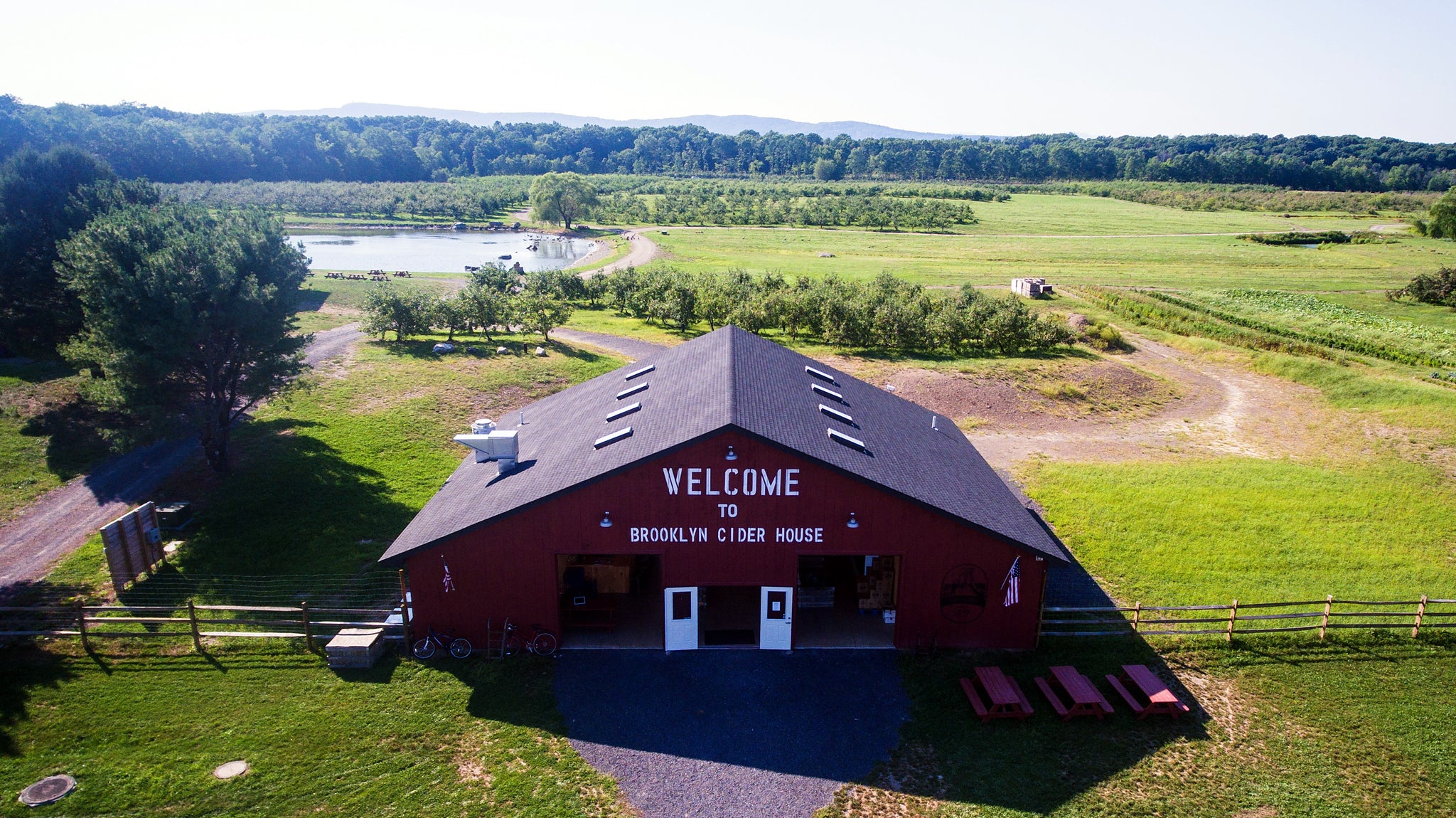
The road to Brooklyn Cider House climbs out of New Paltz village on Ohioville Road and runs north past long apple orchards in straight rows, the kind that mark a working farm rather than a hobby one. The cidery is at 155 N. Ohioville Road, in a converted barn at the back of a 210-acre property — a tasting room on one end, a wood-fired pizza pavilion under a wide outdoor cover, a pond in the middle distance, and the orchard itself in every direction.
You can think of it as a Hudson Valley orchard with a Basque problem. Or a Basque cider house with a Hudson Valley accent. They are the same thing.
The 2014 sip
In 2014, Peter Yi — Korean-born, Brooklyn-raised, twenty-five years into a wine career, the founder and operator of PJ Wine in upper Manhattan since 1991 — took a buying trip to the foothills outside Urnieta and Hernani in Gipuzkoa, Basque country. He went looking for wine. He walked into a sagardotegi — a Basque cider house — and ordered.
His own account of what happened next, on the record with multiple outlets:
"I took one sip and I knew that that incredible job and life I had built was all down the toilet. I found my new passion. It took me 25 years to develop the palate to really understand that this is what I want."
"When I arrived there, and had the food and that style of cider together, I discovered something that was missing from my life. I was blown away. I couldn't stop thinking about it."
Within months, Peter and his sister, Susan Yi, walked away from their wine careers. In May 2015 they bought Twin Star Orchards in New Paltz — an existing apple farm, but not a cider operation — and started planting. By 2017 they had opened Brooklyn Cider House in Bushwick, the first restaurant and bar in New York City with an onsite cidery, while the Hudson Valley orchard came online behind it. The "Brooklyn" in the name is for the borough Peter and Susan grew up in. The name and the address have been a productive misunderstanding ever since.
In 2020, Bushwick closed. Operations consolidated to the orchard. The Hudson Valley site became — and remains — the entire brand.
The ritual
The Basque tradition the Yis imported has a few moving parts that are worth getting right, because the ritual is what makes the drink legible.
The barrel is called a kupela. It is wooden, vertical, and very large — a single barrel can hold thousands of liters of cider. The peg that plugs the spigot hole is called the txotx, which is also Basque for "stick." That is the same word, and the same syllable, that becomes the call.
When the cidermaker is ready to pour from a particular barrel, he or she shouts "¡txotx!" (pronounced "choach") and pulls the peg. A pencil-thin stream of cider arches out into the room. Guests line up; each catches roughly two fingers' worth in their tilted glass, breaking the stream against the inside lip of the glass to aerate the cider on the way in. The peg goes back. The next barrel comes around. Cycle repeats.
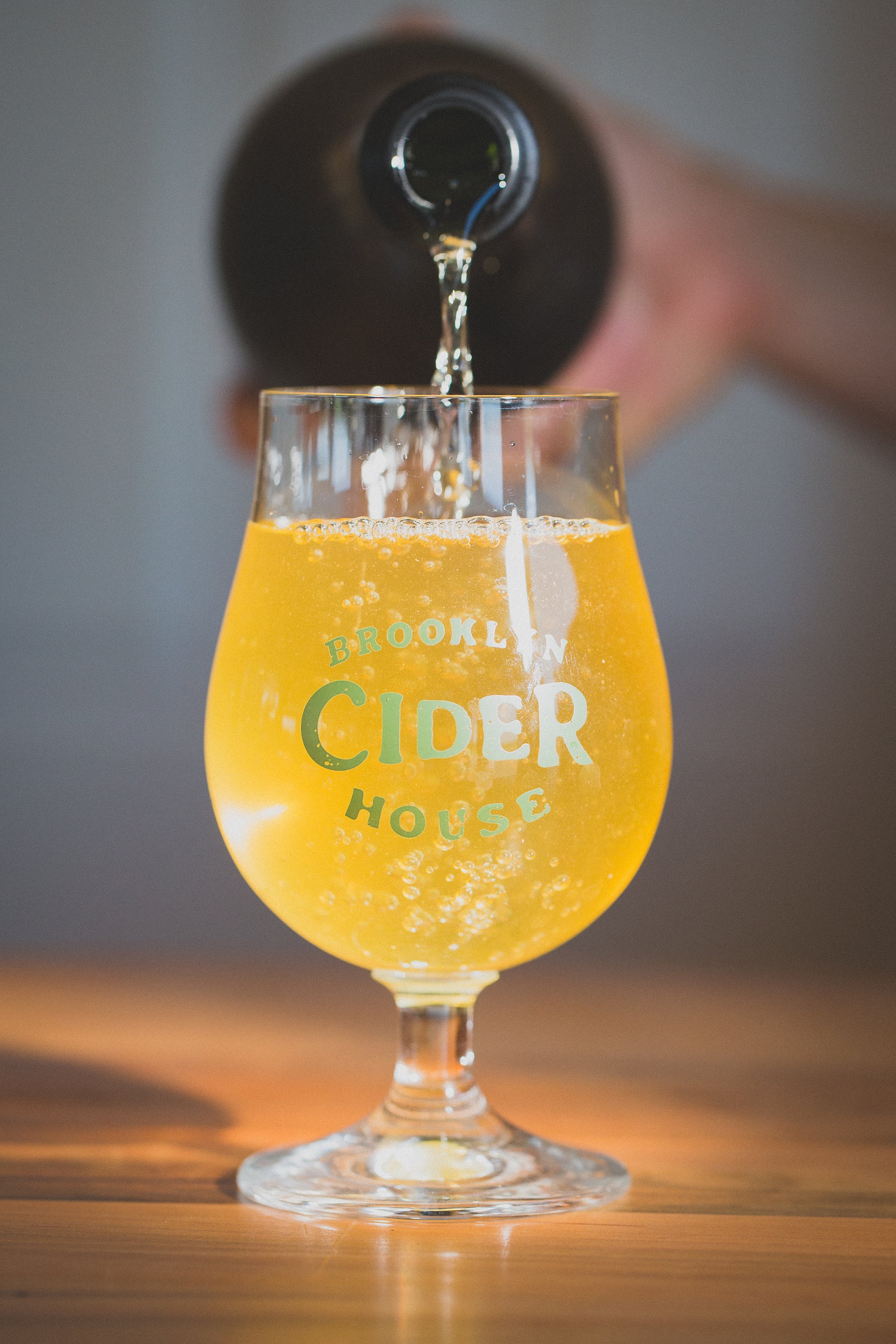
The food cadence is fixed and runs alongside: chorizo cooked in cider, salt cod tortilla, salt cod with peppers, txuleta (massive bone-in beef chop, rare), Idiazabal cheese with quince paste and walnuts. You eat between txotx calls. You drink between bites.
This is what Peter Yi walked into in 2014. It is what he came home to build.
The cider
The cider itself is the kind of cider you do not get from a factory.
Native yeast — meaning the apples are crushed and the juice is allowed to ferment by what is already living on the fruit and in the air, no commercial yeast added. No concentrate. No added sugar. Long lees aging. The result is dry, tannic, lightly carbonated, and tastes structurally more like a serious dry wine than the sweetened cider that occupies most of the American market.
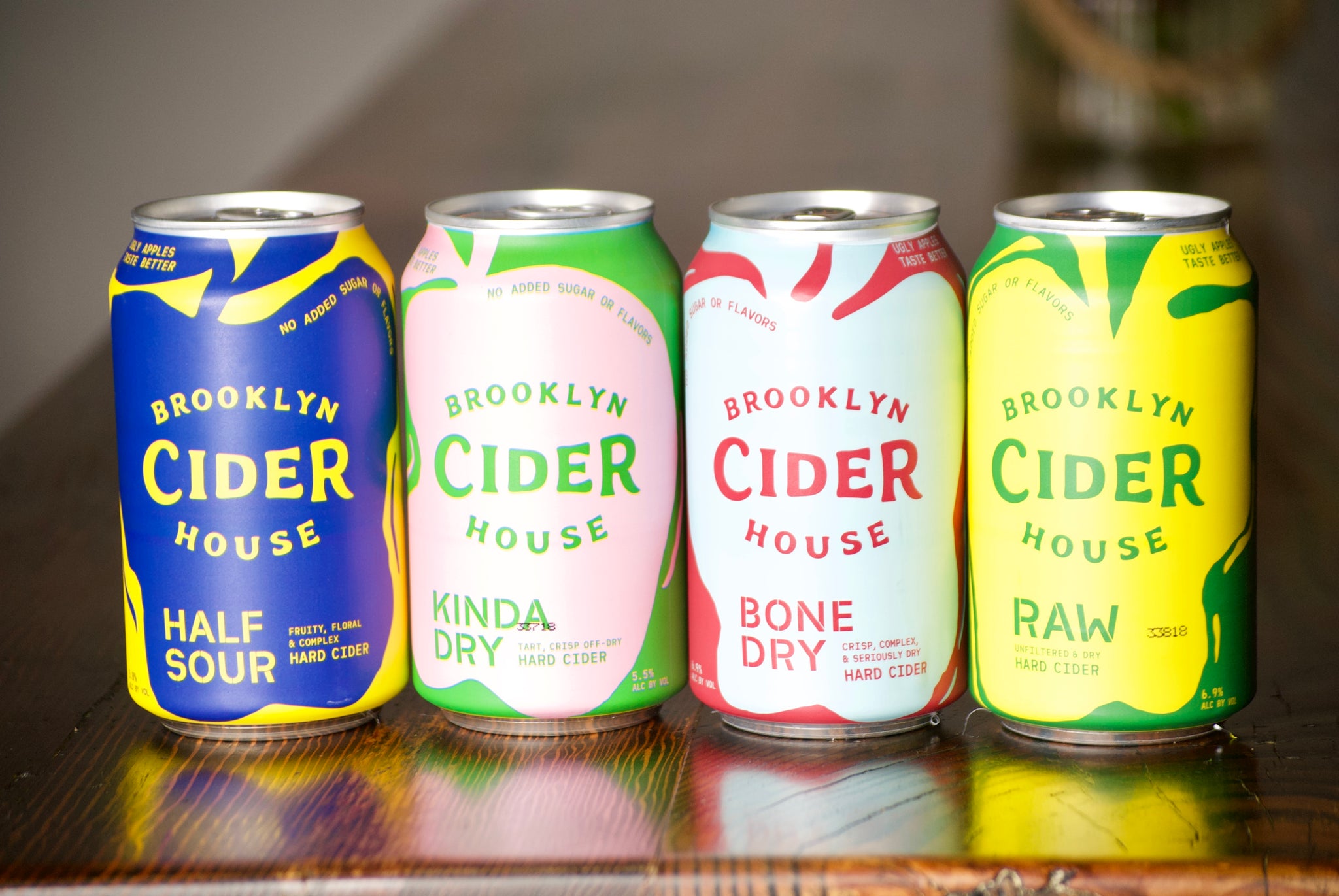
The core line: Raw, Half Sour, Bone Dry, Kinda Dry, Little Wild, and a Rosé. Raw is wild-fermented, unfiltered, three fermentations, eight months on lees. Bone Dry is heavier on bittersweet heirlooms, ten to twelve months on lees, lightly carbonated. Half Sour runs honey, wildflower, citrus, pickled pear. The Cider Club program produces small-batch limited releases — Rustica (Golden Russet / Roxbury Russet); "Dance, Dance, Dance" (Dabinett / Porter's Perfection / Northern Spy / Newtown Pippin co-fermented with estate strawberries).
The ciders are distributed in NY, NJ, CT, MD, VA, DC, and FL.
The orchard
The orchard is the part most visitors do not understand they are looking at.
Twin Star is 210 acres. About 100 are planted to traditional eating apples — Cortland, Golden Delicious, Gala, McIntosh, Fuji, Macoun — for the U-pick blocks in fall. The other major plantings, started in 2015 and expanded steadily since, are roughly 110 acres of cider-specific heirloom and rare varieties: Kingston Black, Tremlett's Bitter, Dabinett, Porter's Perfection, Northern Spy, Newtown Pippin, Golden Russet, Roxbury Russet — more than forty varieties in total. These are not eating apples. Most of them are bittersweet or bittersharp, high in tannin, low in juice — useless on a fruit stand and essential for serious cider. Few American orchards have planted them at this scale. Twin Star is one of the very few that has.
Peter has been on the record about how he runs the orchard:
"You let Mother Nature take its course. I don't manipulate the cider. I don't try to make a very specific style with a formula. It's a more natural approach."
"We are not concerned with superficial imperfections of our fruit."
That second line is the entire philosophy in eight words. The fruit is for fermenting. It does not have to look pretty for the bin.
The argument
This is the part where the case has to land.
Cider is, by definition, farm-bound. Wine can be — and a great deal of fine wine is — made by a winemaker buying fruit from sources hundreds of miles from the cellar. Beer can be made anywhere there is malt, hops, water, and yeast; the agricultural step is decoupled. Spirits are decoupled twice over. A great cider, in contrast, is made by an orchard. The variety planted in the row determines what the bottle tastes like, in a way and to a degree that is not true of almost any other fermented drink. The kupela has to be near the trees. The trees have to be near the press. The estate is the brand.
Which means: the regions on Earth that can make serious sidrería-style cider are the regions with the apples, the climate, and the depth of orchard heritage to plant the right trees. Gipuzkoa is one. Asturias is another. Normandy, Brittany, Somerset, Herefordshire. And the Hudson Valley — which has been at the center of North American apple production for nearly four hundred years and which sits in a band of climate that is, with apologies to nobody, basically Asturias with better Wi-Fi.
What Peter Yi imported, then, is not a flavor. It is a form. The full sidrería: estate fruit, native yeast, kupela barrels, the txotx pour, the food at the long communal tables. Brought from a region with apples to a region with apples. The Hudson Valley already had everything except the form. He brought the form.
That is the argument the cider makes for itself, and the argument the orchard makes for the region.
What's around it now
Twin Star is the front of the house. The current visitor experience runs April through early November, Thursdays through Sundays. The pavilion does wood-fired pizza, burgers, and casual outdoor counter service — that is the everyday experience for a Saturday afternoon with a flight. Txotx pours — the full barrel-and-peg ritual — run on a guided-tasting basis; check the calendar before driving up. Weddings and private events use the barn-pavilion-pond-orchard combination as the venue.
You are also one orchard away from the rest of working New Paltz. Twin Star is roughly five minutes from the Wallkill Valley Rail Trail. Ten from the village. Fifteen from the foot of the Shawangunks. Coppersea Distilling (small-batch traditional spirits) is on Springtown Road, the next significant farm road over. Whitecliff Vineyard is on the Shawangunk Wine Trail nearby. Mountain Brauhaus, the climbers' canteen, is at the foot of the Trapps. The Hudson Valley cider scene that Twin Star anchors — Hudson Valley Farmhouse Cider, Orchard Hill, Pennings Farm Cidery, Bad Seed in Highland, Naked Flock, Awestruck, and Angry Orchard's outsized presence in Walden — is what a four-hundred-year-old apple region looks like when it remembers it has the chops to do this seriously.
Go, then come back
Brooklyn Cider House at Twin Star Orchards is at 155 N. Ohioville Road, New Paltz. Drive up on a Friday afternoon or a Sunday morning. Order a flight at the pavilion — Raw, Bone Dry, Half Sour, and the seasonal release. If a txotx tasting is on the schedule, take it: you will not understand cider the same way after you have caught one off the kupela. Walk the orchard rows in fall — the heirloom varieties have small, tannic, ugly-by-supermarket-standards fruit, and that is the point. Eat the wood-fired pizza. Buy a couple of bottles for the drive home.
Then look at every other apple orchard you pass on the way back to the city, and ask: what could that grow if it remembered it could? That is the case for Brooklyn Cider House at Twin Star. And, quietly, it is the case for the Hudson Valley — the apple country that already had everything except the form.
— The Editors