The thing about Dia Beacon is that the building was already there.
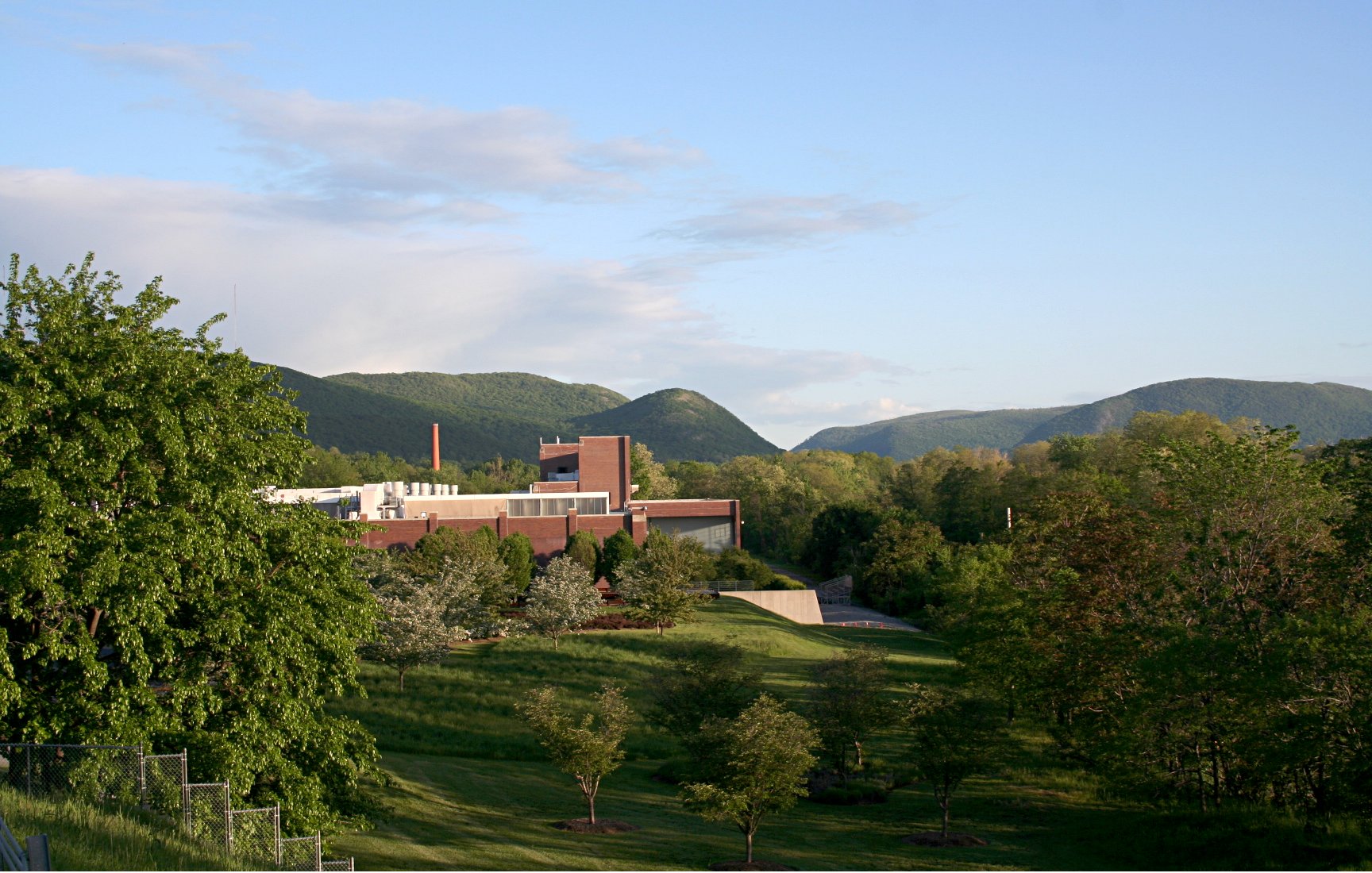
In 1929, the National Biscuit Company — Nabisco — built a factory on the Hudson at Beacon to print and assemble the cardboard boxes that the company's biscuits, crackers, and cookies shipped in. The architects of record were Louis N. Wirsching, Jr. (Nabisco's staff architect) and the John W. Cowper Company. The spec was state-of-the-art for printing-plant work in the early twentieth century: thirty-one acres of riverside land, three hundred thousand square feet of interior, brick exterior, cast-iron column grid, concrete and oak floors, and — crucially — thirty-four thousand square feet of north-facing sawtooth skylights engineered to flood the printing floors with even, indirect daylight. Color separation in the 1920s required even, north-only light. Color requires the same light now.
By the late 1980s the building had been bought, sold, idled, and bought again. The boxes for biscuits no longer needed printing in Beacon. Nabisco was gone. The building was empty. So was most of Beacon's commercial Main Street; by the late 1990s, the developer Ron Sauer described it as looking "like a war zone" — eighty percent vacancies, plywood, graffiti.
That is the building that Dia walked into.
The institution
The Dia Art Foundation had been founded in 1974 by Heiner Friedrich (a German art dealer), Philippa de Menil (a Schlumberger heiress and a daughter of the de Menil family), and Helen Winkler (an art historian). Their model was unorthodox by museum standards then and now: Renaissance-style patronage, in their own framing — not show-by-show curation but the long, single-artist, large-scale commitments that no normal institution had the patience or the square footage to underwrite. Dia funded the things that didn't fit anywhere else.
Dia's name comes from the Greek διά — "through" / "by means of" — and Friedrich's framing of the choice is the most useful sentence anyone has written about what the foundation was trying to be:
"Dia was chosen as a transitory term for an institution that would not be eternal but would make possible the presence of artworks on an extended, long-term basis."
By the early 2000s, Dia had assembled one of the most significant private collections of 1960s and '70s American art — Walter De Maria, Donald Judd, Richard Serra, Andy Warhol, Sol LeWitt, Agnes Martin, Robert Smithson, Dan Flavin, Joseph Beuys, Bruce Nauman, Fred Sandback, On Kawara, Imi Knoebel, Blinky Palermo, Robert Ryman. The work, by definition, was large. Most of it had been sitting in storage. The collection needed a building.
The conversion
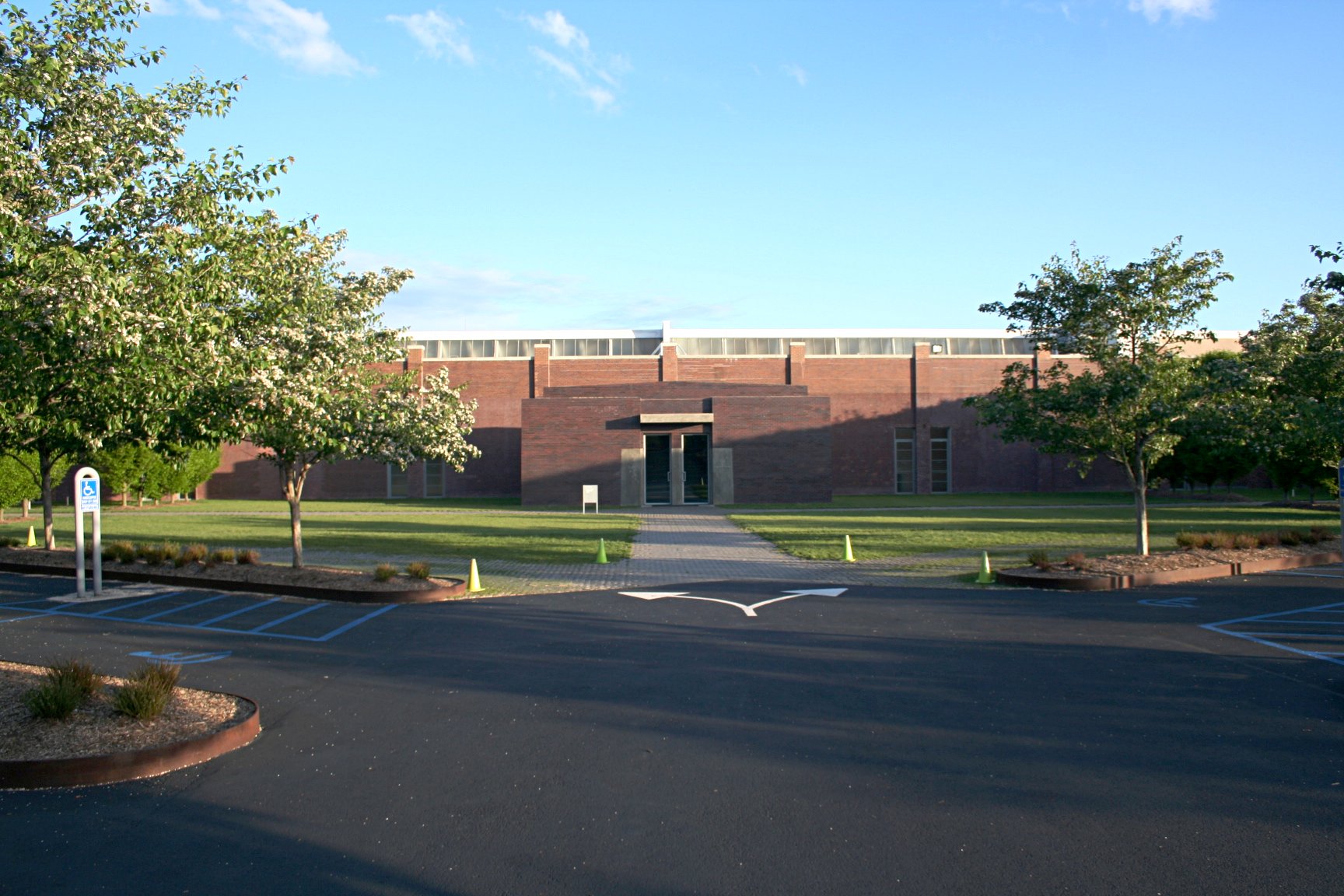
In 2003, with Leonard and Louise Riggio (the Barnes & Noble family) putting in at least $35 million of the roughly $50 million required, Dia opened the Beacon factory as the Riggio Galleries — 240,000 square feet of gallery space within the larger building. The artist Robert Irwin led the conversion as a collaborator with the architecture studio OpenOffice (Alan Koch, Lyn Rice, Galia Solomonoff, Linda Taalman). The model was unusual: an artist as the primary author of the experiential design, the architects as collaborators rather than principals. Director Michael Govan drove the institutional decisions.
The conversion was, by any normal standard, restrained. The 1929 column grid stayed. The brick stayed. The wood and concrete factory floors stayed. The sawtooth skylights stayed and were the point. The galleries are illuminated almost entirely by indirect natural daylight; the museum is regularly described — accurately — as a "daylight museum." Walk into the De Maria room at noon and the room will look one way; walk in at four-thirty in November and it will look another. The art is the same. The light is what the building does.
"That moment of entering is really the power of the building." — Robert Irwin
"There are very few places with concentrations of works, even by these artists, that are so all-encompassing and environmental." — Michael Govan
The museum opened on May 18, 2003.
What's inside
What Dia gives you in Beacon, in roughly the order you would walk it on a first visit, is a series of single-artist rooms — each gallery designed for the work in it, the work designed for the gallery, both having sat in conversation for, in many cases, two decades.
Walter De Maria's Equal Area Series in the upper galleries — silver and gold rectangles laid on the floor in a long mathematical grid; 360° I Ching / 64 Sculptures opens as a special presentation in October 2026.
Richard Serra's Torqued Ellipses, 1996–2000, installed in their dedicated gallery — the curved Cor-Ten steel walls so heavy they had to be brought in before the building was sealed.
Michael Heizer's North, East, South, West, 1967/2002 — four geometric voids in the gallery floor; you walk to the lip and look down.
Andy Warhol's Shadows, 1978–79 — a single 102-panel cycle silkscreened in two sequences, hung edge-to-edge around the perimeter of one long room.
Dan Flavin's "monuments" for V. Tatlin, 1964–81 — the fluorescent-tube modernist requiems.
Donald Judd — stacks, floor pieces, a dedicated gallery.
The Agnes Martin Gallery, with rotating long-term presentations of Martin's grids; Painting is not making paintings opens April 4, 2026.
Fred Sandback's lines of yarn that draw geometric volumes in space.
John Chamberlain. Imi Knoebel. Blinky Palermo. Robert Ryman. On Kawara. La Monte Young and Marian Zazeela. Joseph Beuys.
The 2026 rotating presentations at Beacon include Frédéric Bruly Bouabré, John Chamberlain, Howardena Pindell, Bridget Riley, Richard Tuttle, Lee Ufan, and Haegue Yang. This is not the New York gallery week-on-week-off rotation. These are two-, three-, ten-year commitments. Dia's whole point is that an artwork made to be looked at over time should be available to be looked at over time.
The town
The argument has to land here.
In 1999, four years before Dia opened, eighty percent of Beacon's commercial frontage was vacant. The hat industry — Beacon was the "Hat Making Capital of the United States" in the late nineteenth century, with as many as fifty hat factories operating simultaneously — had been gone for decades. Nabisco was gone. The river was still there. The Metro-North station was still there. The buildings were still there. The economy was not.
Beacon's revitalization had begun, slowly, in the years before Dia: a handful of artists and developers had quietly moved in during the late 1990s, and a small handful of restaurants and shops had opened. But the catalyst — the institution that turned a slow local recovery into a nationally legible cultural address — opened on a Sunday morning in May 2003.
What followed is documented. By the time the State of New York awarded Beacon a $10 million Downtown Revitalization Initiative grant in 2021, the official state framing of why Beacon deserved the grant explicitly credited Dia: Beacon's recovery was a "long and steady effort to revitalize its Main Street and local economy, which was greatly facilitated in 2003 by the establishment of Dia: Beacon." Williams College's economic-impact summary documented Dia drawing roughly 145,000 visitors a year to a town whose entire population was around 13,000. The visitors' spillover into Main Street's coffee shops, restaurants, and galleries was — in the language of the brief — "considerable."
Today Beacon's Main Street is a half-mile of independent operators that compounded over twenty-three years: Hudson Beach Glass in the restored firehouse at 162 Main, with Chihuly-trained blowers; the Howland Cultural Center; the Beacon Theatre; Ethan Cohen KuBe in a repurposed high school on Fishkill Avenue, running an artist residency; Witch Please (which we've written about); the Beacon Institute for Rivers and Estuaries; Mirbeau Beacon (which we've also written about) opening at the Tioronda Estate in May 2026. The broader Hudson Valley orbit Dia anchored has also compounded — Magazzino Italian Art twenty minutes south in Cold Spring, Manitoga / Russel Wright Design Center in Garrison, Storm King Art Center across the river. None of that ecosystem was in motion at Dia's scale before Dia opened.
The post-industrial Hudson Valley — the brick factories that had gone dark in the 1960s and '70s, the mill towns and biscuit-box plants and felting houses and shoe factories — produced a great many empty buildings between New York City and Albany. Most of them are still empty. Beacon's was filled in 2003 by an institution with a 240,000-square-foot collection and a thirty-year horizon. The town caught up because the institution was already there.
What "the museum that built the town" means
The argument is simple and a little uncomfortable.
A great many cultural institutions are the result of a town's economy. They open because there is enough wealth and density and cultural appetite already on the ground to support them. The town comes first. The museum follows.
Dia Beacon is the inverse case. The institution moved into a town that was, for most contemporary purposes, not there yet. It did not arrive because Beacon was a cultural address. It made Beacon a cultural address. The Hudson Line was the same Hudson Line. The river was the same river. The factory was the same factory. What changed was that there was a globally-significant single-artist museum at the end of Beekman Street, and a bus from the train station, and a reason for someone in Berlin or Tokyo or Seoul or São Paulo to come spend a weekend in Beacon, NY.
The town built around it because the institution was patient. Twenty-three years of operating institution. Not a building under restoration. Operating.
What the rest of the valley can learn
Three things.
One. A single, ambitious, operating institution is worth more to a town's long-run trajectory than an inventory of preserved buildings. Beacon had vacant factories before Dia. Most Hudson Valley towns have vacant factories now. A building that does something is the unit of recovery, not a building that sits.
Two. The artist as designer was not a gimmick. Robert Irwin's role at Dia Beacon — an artist treating the conversion as a work itself, designed by walking the building rather than drawing it — produced a museum that feels the way the work in it feels. The thing, the room, and the light agree. That is hard to fake later. It needs to be set at the start.
Three. Patience compounds. Dia's twenty-five-or-so artists at Beacon are not a rotating program. They are, in many cases, the same rooms, the same works, the same light every season. A visitor in 2003 and a visitor in 2026 see the same Serra. That kind of long horizon is what produces the trust — and the eventual brand — that a place like Beacon now has.
Go, then come back
Dia Beacon is at 3 Beekman Street, Beacon. Open Friday through Monday, ten to five, last admission four-thirty. Closed Tuesday through Thursday. The Metro-North Hudson Line drops you at Beacon station, a fifteen-minute walk or a short cab ride from the front door. General admission is $25; Beacon and Newburgh residents are free always; Hudson Valley residents are free the last Sunday of every month.
Spend three hours. Start in the De Maria room at the top. Walk down through Heizer, Serra, Warhol, Judd, Flavin, Martin, Sandback. Sit in front of one work — one — for ten uninterrupted minutes. Notice what happens to the light between when you came in and when you walk out.
Then walk Main Street. Hudson Beach Glass, Witch Please, the indie galleries, the restaurants. Look up at the brick buildings and ask, of any of them: what is this still capable of being? That is the case for Dia Beacon. And, quietly, it is the case for everywhere in the valley with a building that has not yet found its second purpose.
— The Editors