The road into Storm King climbs through farmland and then crests, and you see the Hudson Highlands open up in front of you — the long, tree-covered ridges that gave this part of the river valley its name. The art center sits inside that view. It has been sitting inside that view, on the same five hundred acres in Mountainville, since 1960.
Most people come for the sculpture. The sculpture is the reason. But the longer you stand on Storm King's grounds, the clearer it becomes that the sculpture is not actually the point. The point is the view. The point has always been the view.
The long view
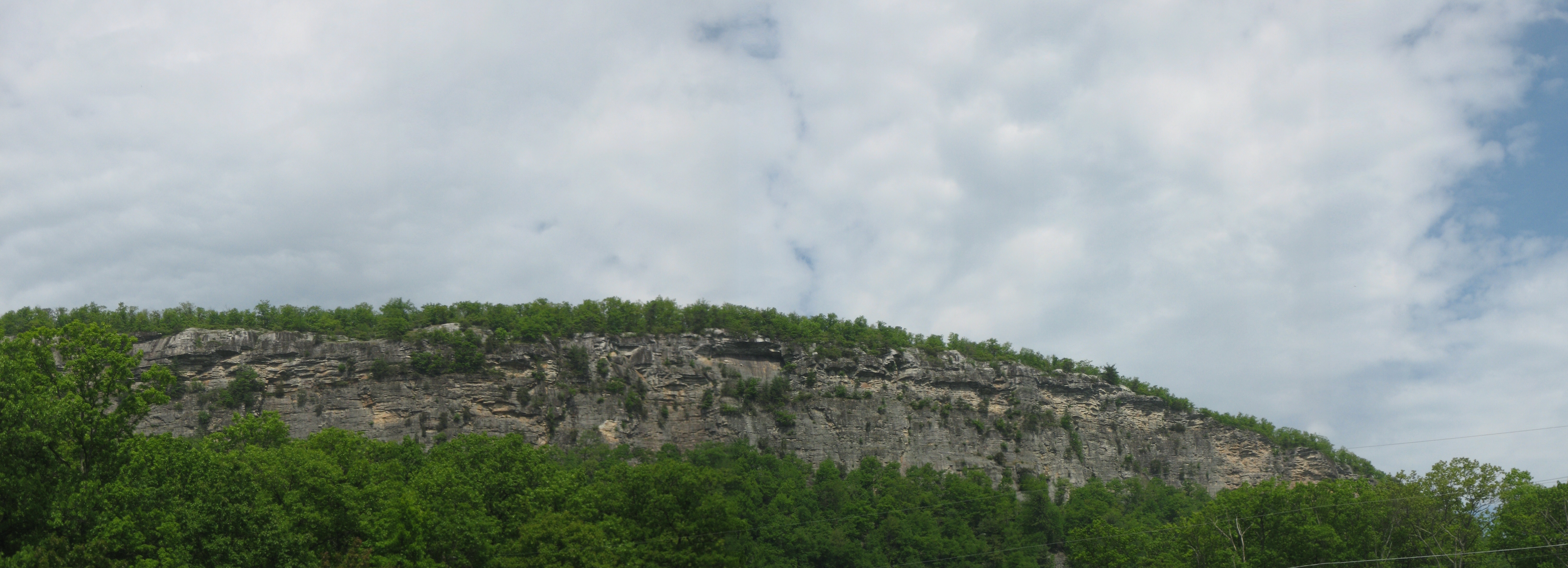
Here is the fact almost no one writing about Storm King leads with. In addition to the five hundred acres they kept for the art center, the founders — Ralph E. Ogden and H. Peter Stern, two retired industrialists from a steel-fastener company in Mountainville — donated another twenty-four hundred acres to the State of New York. Three hundred contiguous acres around the property. Twenty-one hundred acres of Schunnemunk Mountain. Schunnemunk is the long ridge to the west of Storm King; it is now a state park. None of those donated acres house a single sculpture. The reason they were donated is that they sit on the western horizon, and the founders did not want anything ever built on them.
Read that again. They gave away almost five times the land they kept, to protect the view from the land they kept.
That is the Storm King thesis, in one number. The art does not stop at the property line. The institution does not, either.
Thirteen Smiths
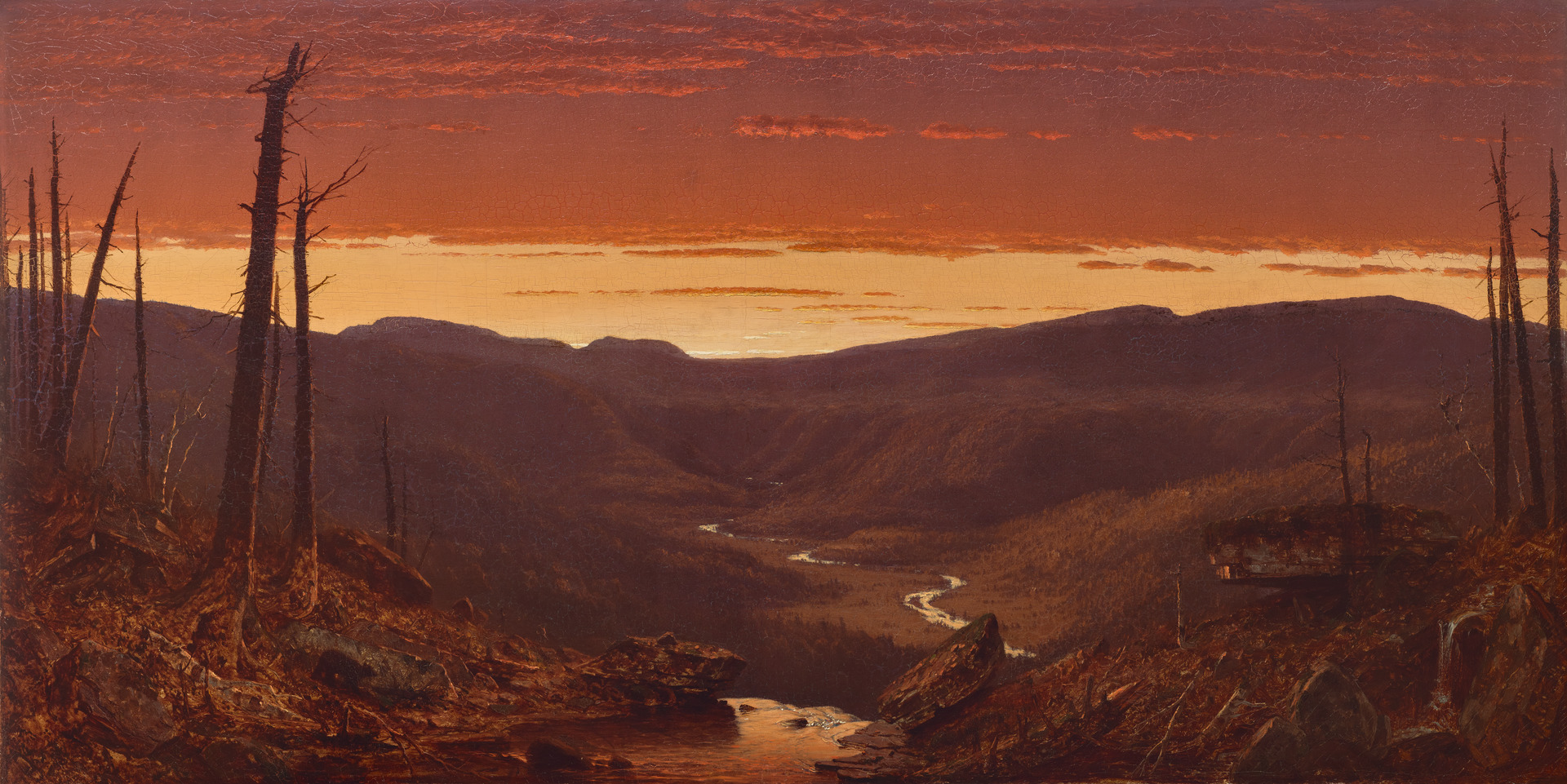
Storm King opened in 1960 with a different idea entirely. The original collection was Hudson River School painting — the nineteenth-century landscape canvases that depict, sometimes from the same ridges Storm King now occupies, the same valley. Beautiful. Not the right idea.
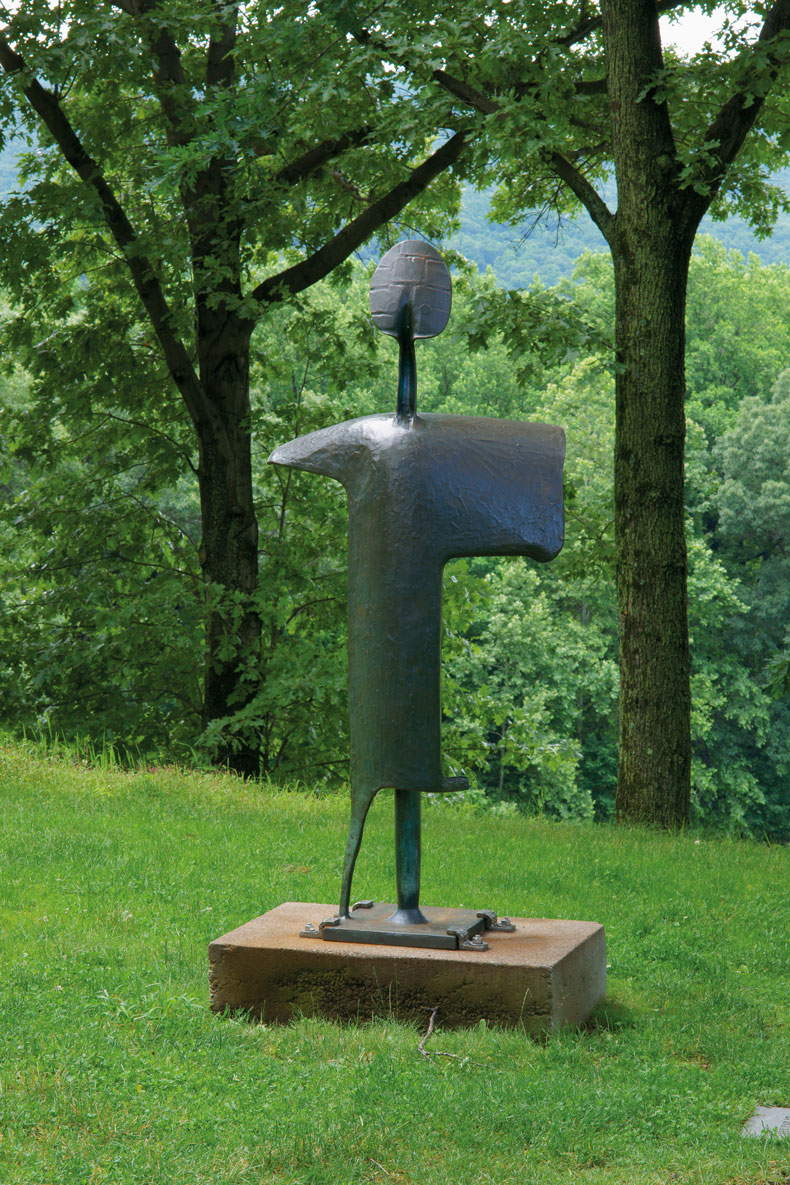
The pivot came in 1967, when Ogden, then in his early seventies, drove up to Bolton Landing on Lake George — the home and outdoor studio of the sculptor David Smith, who had died two years earlier. Smith had been the great American sculptor of his generation, and his estate was choosing what to do with the steel pieces he had left scattered across his fields. Ogden, a man who had built a career manufacturing steel fasteners, knew exactly what he was looking at. He bought thirteen of them at once.
Those thirteen Smiths came back to Mountainville and were installed not in galleries but in the fields. That is the moment Storm King became Storm King.
The acreage is not a backdrop. The landscape is the work. Storm King has been quietly proving this for sixty-five years.
Landscape as medium
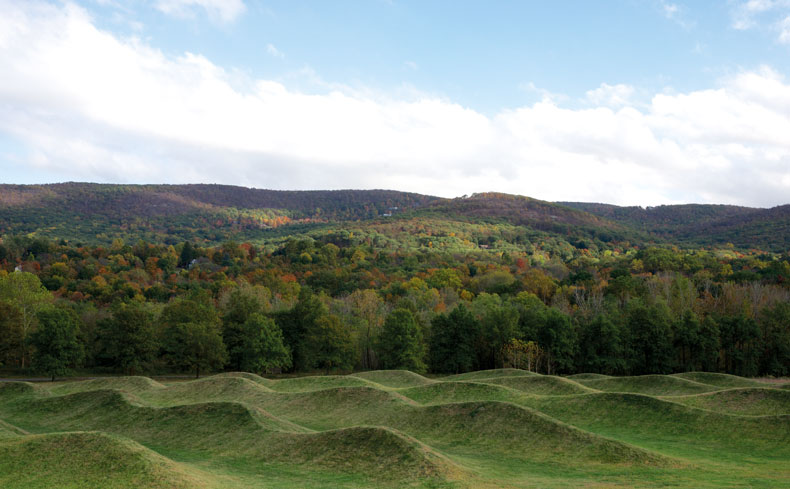
The five hundred acres are not just open ground. The landscape architect William A. Rutherford was brought in to compose them — vistas, allées, hills, ponds, stands of trees, walking paths, all calibrated to scale up and down with the works on view. Maya Lin's Storm King Wavefield (2007–08), eleven acres of rolling earth waves between ten and fifteen feet tall, was built on top of a former gravel pit that had once supplied surfacing for the New York State Thruway. The Wavefield is the largest site-specific work Lin has ever made. It exists because Storm King treats landscape as a material it can shape, not as a stage it occupies.
That logic — landscape as medium — runs through everything the institution does.
Remove parking, add landscape
In 2022 Storm King announced its first major capital project since the institution opened. In 2025 it reopened after fifty-three million dollars of work. This is the second season under the new design — the moment to come see what has changed.
What has changed is, in one sense, almost imperceptible. There is no new wing. No grand new gallery. No starchitecture gesture marking the new entrance. Instead: the architects, Heneghan Peng of Dublin and WXY of New York, with landscape designers Reed Hilderbrand and Gustafson Porter + Bowman of London, removed the two parking lots that used to sit inside the museum grounds. Five acres of car park became five new acres of landscape. The two former lots are now Tippet's Field, planted with native species and populated with works by Kevin Beasley and Mark di Suvero. The new ticketing pavilions — slim cedar volumes attached to a restored eighteenth-century stone farmhouse — sit at the edge, not the center. There is also a new conservation and fabrication facility, the David R. Collens Building, named for the longtime Director who steered the institution. Six hundred and fifty new trees were planted.
In an era when most institutions adding fifty-three million dollars of square footage would have added more parking, more lobbies, more gift shops, restaurants, and event halls, Storm King removed parking and added landscape. That is the institutional posture. That is what the long view buys you.
Specificity
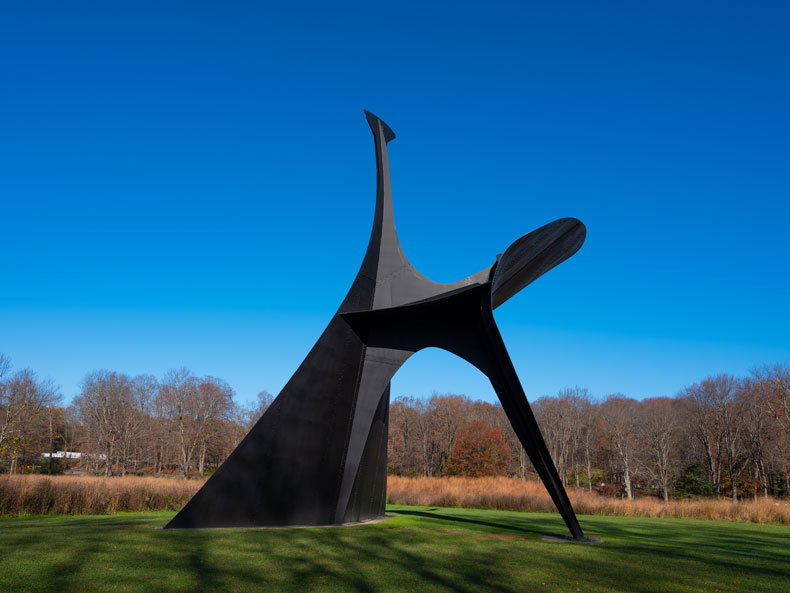
Names matter, and Storm King has always known that. The permanent collection holds more than a hundred works. The names you would expect: Alexander Calder (The Arch, 1975, one of his last), David Smith (the original thirteen, plus more added since), Louise Bourgeois, Isamu Noguchi, Mark di Suvero (Pyramidian, Beethoven's Quartet, Mon Père Mon Père), Maya Lin, Richard Serra, Andy Goldsworthy, Alice Aycock, Magdalena Abakanowicz. The 2026 outdoor commissions you may not yet know: Saif Azzuz, Liz Glynn (Open House), Anicka Yi (Message from the Mud, a microbial portrait drawn from samples of the museum's own pond).
Each one is in a specific place on the property. That is the discipline. The Wavefield is not just a Maya Lin. It is the Lin built on the gravel pit that once supplied the Thruway. The Calder is not just a Calder. It is The Arch, one of his last works, placed where the new restroom pavilion now frames it. Tippet's Field is not just a meadow. It is the meadow that was, until 2025, a parking lot.
What the rest of the valley can learn
Three things.
One. Context is not the backdrop. Context is the asset. Storm King's five hundred acres would be a different institution if it sat in a different valley, with a different ridge on the horizon. The founders understood this so deeply that they bought the ridge to protect it. Every developer, agent, and seller in the Hudson Valley should ask: if I owned this property, would I buy the next one over to protect the view? If the answer is no, the view doesn't matter that much, the property is being sold short.
Two. Specificity beats luxury. Storm King does not advertise itself as the most prestigious sculpture park in America. It advertises itself as the place with the Smith fields, the Wavefield, the Highlands behind, and the Anicka Yi pond piece this year. Prestige is an adjective. Specifics are a brand.
Three. The long view is a discipline, not a feeling. It looks like turning down the easy renovation and waiting until you can spend fifty-three million dollars removing the parking from inside your museum and building something quieter. It looks like sixty-five years of saying no to the wrong addition. Patience is not a posture in the Hudson Valley. It is a method.
Go, then come back
Storm King is open from April 1 through November. It is roughly an hour from the George Washington Bridge — close enough for a day, slow enough that a day is the wrong dose. Take the morning to walk the south fields. Find Maya Lin's Wavefield; stand inside the troughs where the swells crest fifteen feet overhead. Sit on the Calder's lawn at lunch. Walk Tippet's Field in the afternoon and notice that, two years ago, you were standing on asphalt.
Then drive home along the river. Look up at the ridges. Schunnemunk is the long one to the west — the one Storm King made sure no one else would build on.
That is the case for the long view. And, quietly, it is the case for almost everything in the Hudson Valley worth waiting for.
— The Editors