The driveway at 11 Mirbeau Lane, in Beacon, climbs through sixty-four acres of mature plantings — specimen hemlocks, copper beeches, the oldest lacebark pine in America — and lands at a Gothic Revival mansion that has been many things, in many lives, since 1859. The Iroquois called this place Tioronda — meeting of the waters, where Fishkill Creek meets the Hudson. The Civil War general Joseph Howland built the mansion. His landscape was composed by Henry Winthrop Sargent, one of the founders of American landscape architecture. His brother-in-law, Richard Morris Hunt — the architect of the Biltmore and the Metropolitan Museum's Fifth Avenue façade — added a Music Room wing in 1872, with a fifty-eight-pipe Johnson & Co. organ that is still there.
Then for eighty-four years, between 1915 and 1999, the same property was something else.
The cure that came back
This is the spine, and it is the one fact about Mirbeau Beacon that will not appear in any opening-day press release. From 1915 to 1999, this estate operated as Craig House — the first privately licensed psychiatric hospital in America.
It was founded by a Dr. Clarence J. Slocum, who had a particular thesis about how to treat mental illness in the wealthy. He believed, and put into practice, that the cure was fine dining, painting, gardens, golf, swimming, and "intensive talk therapy." In 1935, Fortune magazine ranked Craig House among the five best mental hospitals in America. Its patient list, over the years, included Zelda Fitzgerald (March–May 1934, whose Craig House letters now live at Princeton), Rosemary Kennedy (after her lobotomy), Marilyn Monroe, Jackie Gleason, Truman Capote, Frances Ford Seymour.
In 1934, Zelda Fitzgerald was sent here to be cured by fine dining, gardens, painting, and golf. In 2026, you can pay $499 a night for the same prescription, minus the diagnosis.
That is the spine. Read it again. Mirbeau Beacon is not introducing a wellness destination to the Hudson Valley. It is reactivating one. The same prescription — meals, gardens, water, art, conversation — was already on this property when wealthy Americans were sent here to recover. The hospital closed in 1999. The estate sat largely vacant for the next twenty-five years. Mirbeau acquired it, restored it to National Park Service Historic standards, and opens for stays on May 8, 2026.
The patient gowns are gone. The treatment is intact.
The lineage
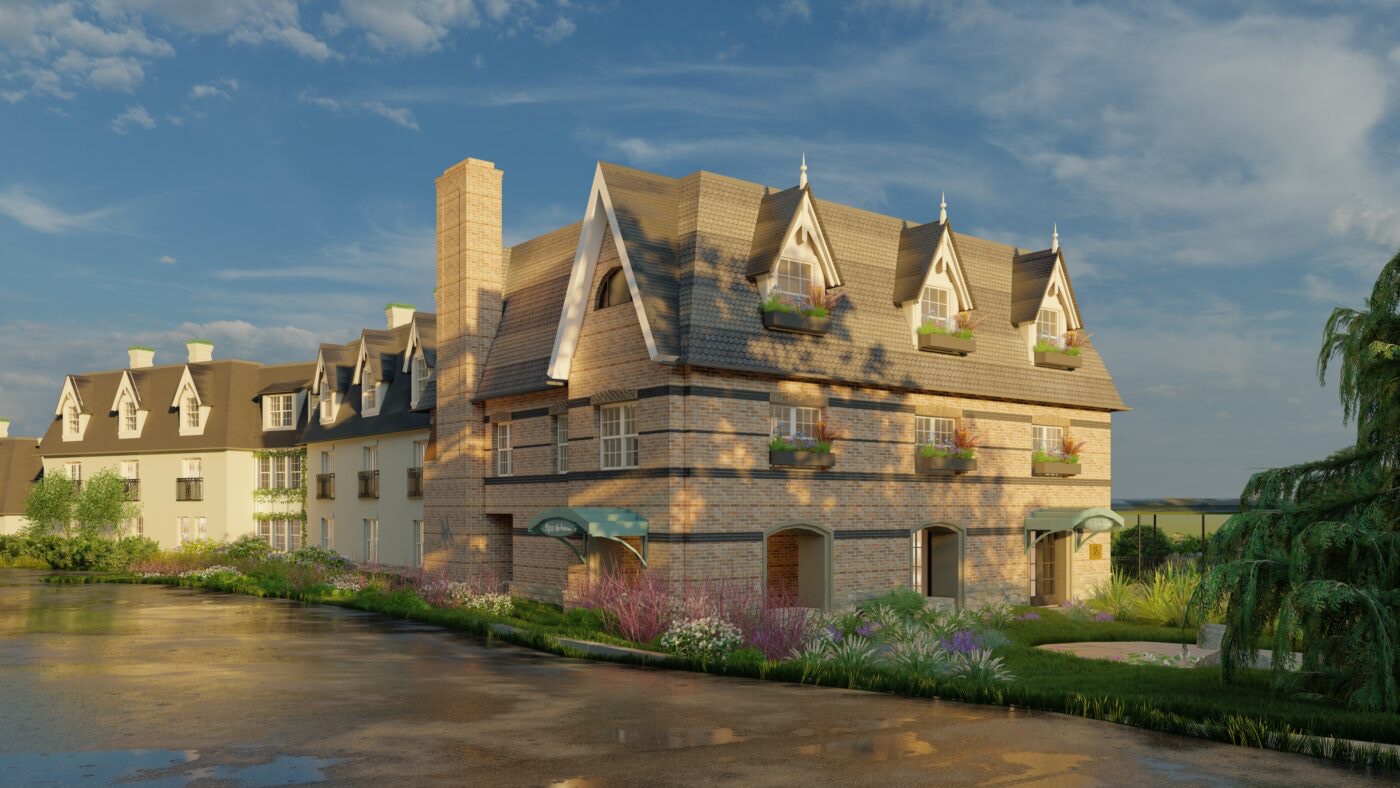
The architects of Tioronda are not minor. Frederick Clarke Withers, who designed the 1859 mansion, also designed Jefferson Market Library on Sixth Avenue and worked with Calvert Vaux on Olana, the Persian-revival estate of Frederic Edwin Church across the river. Henry Winthrop Sargent laid out the grounds in 1861–62; he was one of the half-dozen people who effectively invented American landscape architecture, and several of his original specimens — Sargent's Weeping Hemlock, the oldest lacebark pine in the country — are still on the property. Richard Morris Hunt's 1872 Music Room is the same hand that produced the Vanderbilt Biltmore in North Carolina and the Metropolitan Museum's iconic façade in Manhattan. The 1873 organ inside it, an Opus 411 by Johnson & Co. with fifty-eight pipes, has been silent and intact for a century and a half.
Three founding figures of nineteenth-century American design built the bones. The contemporary team — Arrowstreet, the Boston architecture firm — has had to not screw it up. The principal handoff, in other words, has been one hundred and sixty-five years long.
What 2026 looks like
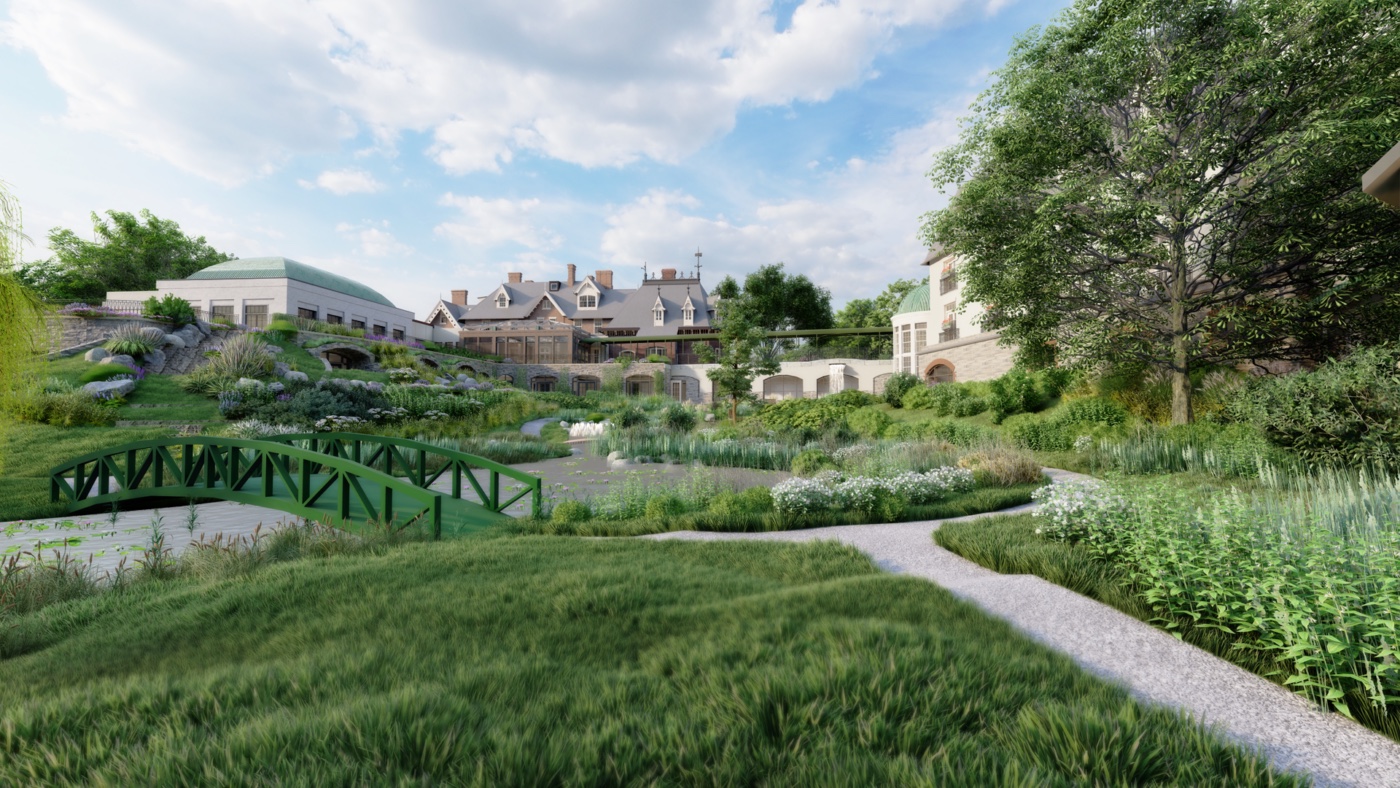
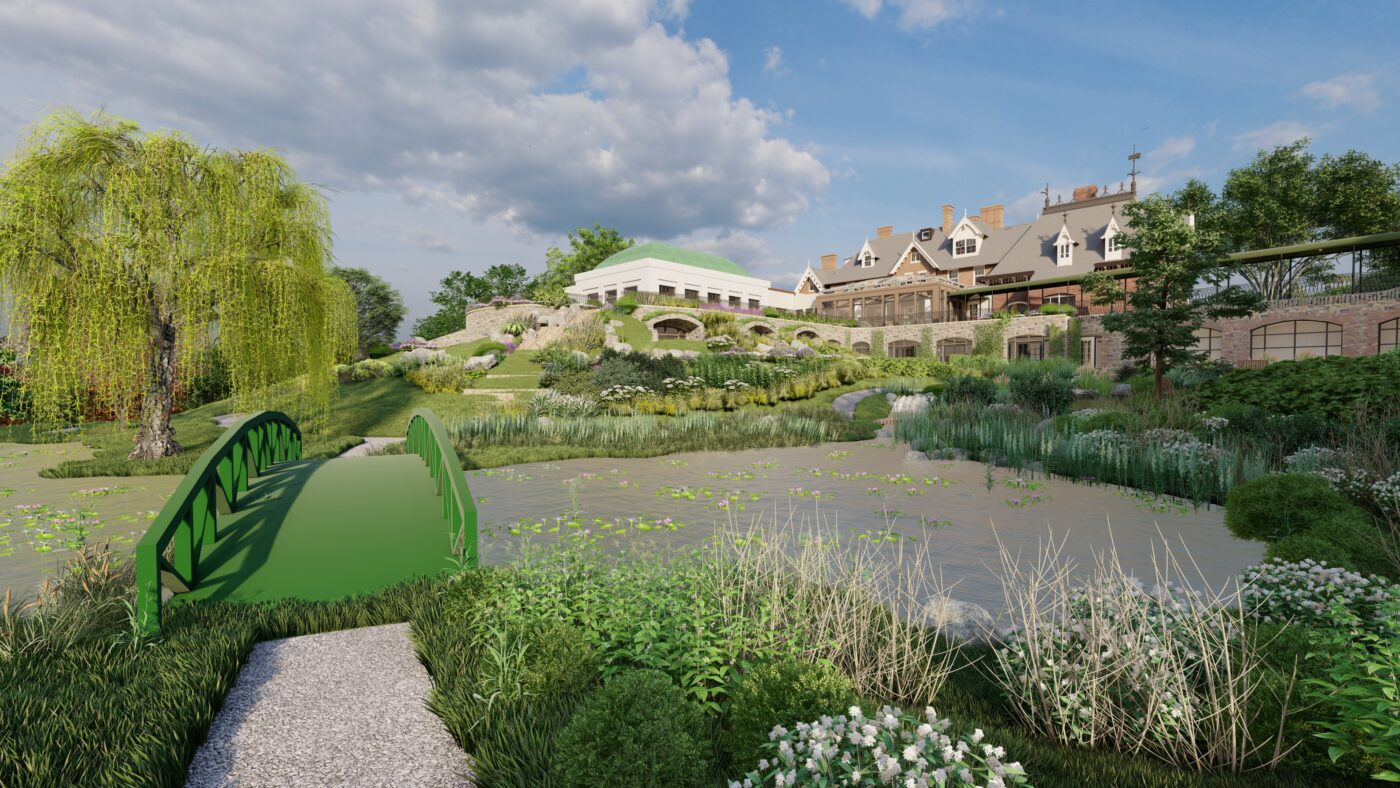
Phase one is roughly a hundred and twenty-five thousand square feet. Seventy-two guest rooms — most in a newly built east wing called the Spa Chateau, some in the restored Howland Mansion. Six private cottages on the grounds. Seven "Grotto Rooms" — partially bermed and designed to disappear into the landscape. A twenty-five-thousand-square-foot spa with twenty-one treatment rooms — the largest in Mirbeau's collection — including a meditation pool, a reflection room, eucalyptus steam, saunas, and an outdoor Aqua Terrace with hot pools and cabanas. The restaurant, Mirbeau Bistro & Wine Bar, is in the Howland Mansion; the Champagne Terrace opens off the Hunt Music Room. Frette linens, custom mattresses, in-room fireplaces. Rates start at $499 midweek, $659 weekend.
The opening date is May 8. Reservations opened in December.
The Mirbeau system
Mirbeau is a Skaneateles, New York–based hospitality group, founded in 2000 by Gary and Linda Dower. The Beacon location is its fifth — after Skaneateles (the flagship), Plymouth, Albany, and Rhinebeck — and its largest. Linda Dower is the in-house interior designer for every property. The company's name and aesthetic theme are borrowed from Octave Mirbeau, the French novelist who was Claude Monet's closest friend and most influential public champion for thirty years. Every Mirbeau property is, in some literal sense, a homage to Giverny — soft light, warm colors, gardens designed in painterly composition.
This is a French-impressionist hospitality system landing on a Gothic Revival mansion that used to be a Civil War general's house, then a sanitarium for movie stars. The grafts are unusual. They are also, when you stand on the grounds in late spring, surprisingly coherent.
What the rest of the valley can learn
Three things.
One. The most interesting properties in the Hudson Valley are not the ones with no history. They are the ones with the wrong history, read carefully. Every developer working on a heritage building should ask: what was actually happening on this property at its peak? What did the walls used to do? Mirbeau Beacon does not paper over Craig House. It carries it. The richer move, with old buildings, is almost always to let the history through.
Two. Specificity beats luxury — at the property scale. Mirbeau Beacon does not advertise itself as the most luxurious wellness destination in the Hudson Valley. It advertises itself as the property where Zelda Fitzgerald was treated, restored to NPS standards, with the largest spa in the chain. Generic luxury is a commodity. Specific luxury is a property.
Three. Hospitality is downstream of architectural patience. The Howland family commissioned three architects in fifteen years. Mirbeau spent two decades being a Skaneateles operator before they were ready for Beacon. The bones of this property are the result of patient commissioning across a century and a half. The contemporary lesson — for any developer in the valley with a heritage building — is that the patient ones win the long game.
Go, then come back
Mirbeau Beacon opens for stays on May 8. Roughly an hour and twenty minutes from the George Washington Bridge. Drive in. Walk the grounds. Find Sargent's Weeping Hemlock. Sit in the Hunt Music Room and ask whether anyone has had the Johnson organ tuned recently. Have the bistro lunch on the Champagne Terrace. Take the spa. Do nothing on purpose for a long afternoon.
Then think about what is happening. You spent the day, in 2026, on the same prescription — meals, gardens, water, art, conversation — that wealthy Americans were sent here to receive in 1934. The patient gowns were the only thing they ever needed to take off.
— The Editors