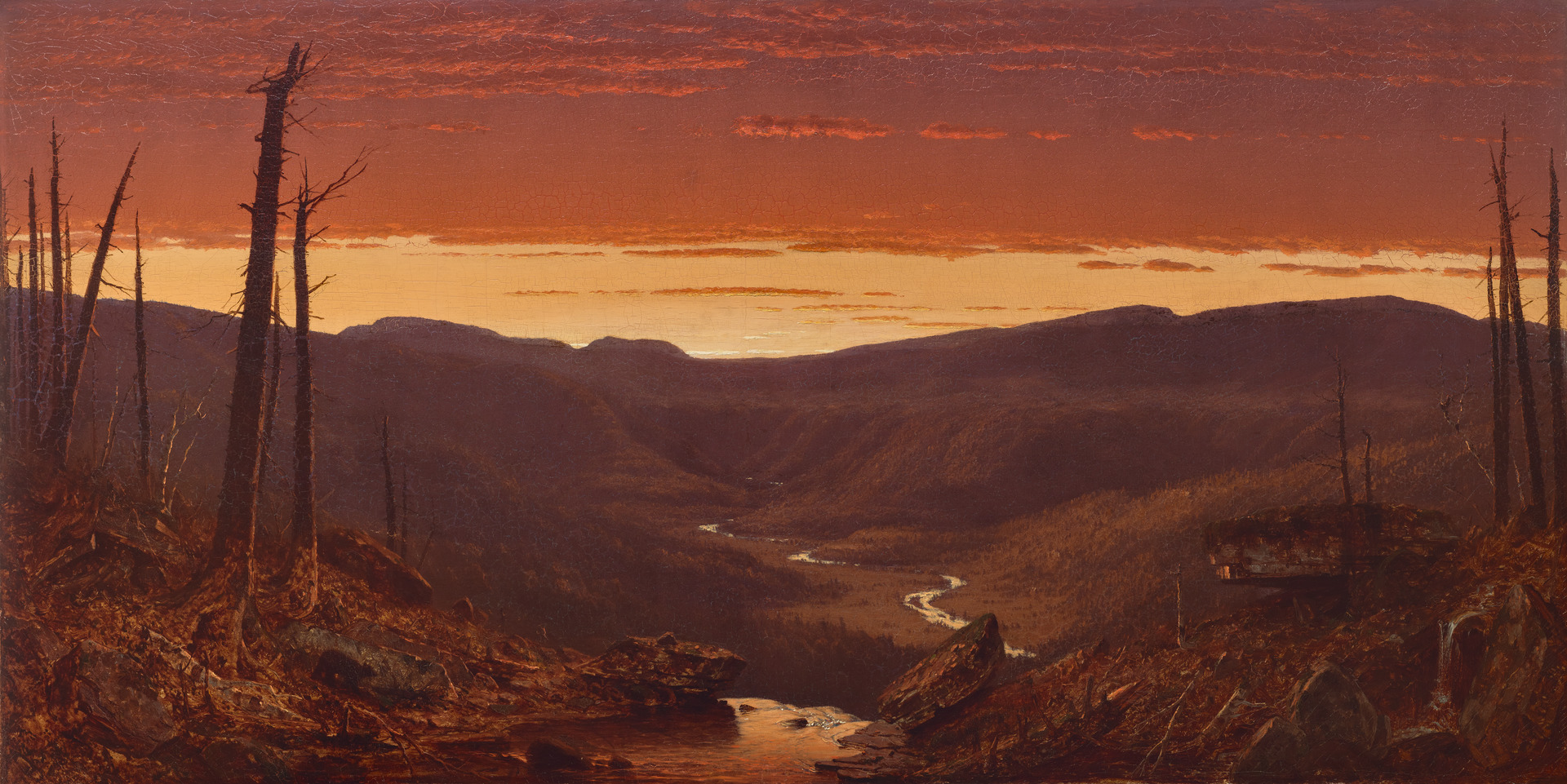
Saugerties sits where the Esopus Creek empties into the Hudson River, on the west bank, about a hundred miles north of Manhattan. The geography is the whole story of the town's first economy: a navigable creek meeting a navigable river meant a port, and for most of the nineteenth century what flowed out of that port was the ground itself — bluestone, quarried out of the Catskill foothills behind the town and shipped downriver by the boatload.
The town's name is older than the bluestone trade and tells you what was here before it. Saugerties is a worn-down English version of the Dutch "Zager's Killetje" — "the little sawyer's creek" — after a Dutchman who ran a sawmill on the creek in the 1650s. Sawmill, then mills, then bluestone, then the long industrial decline, then the revival. Each layer is still legible if you know where to look.
The bluestone
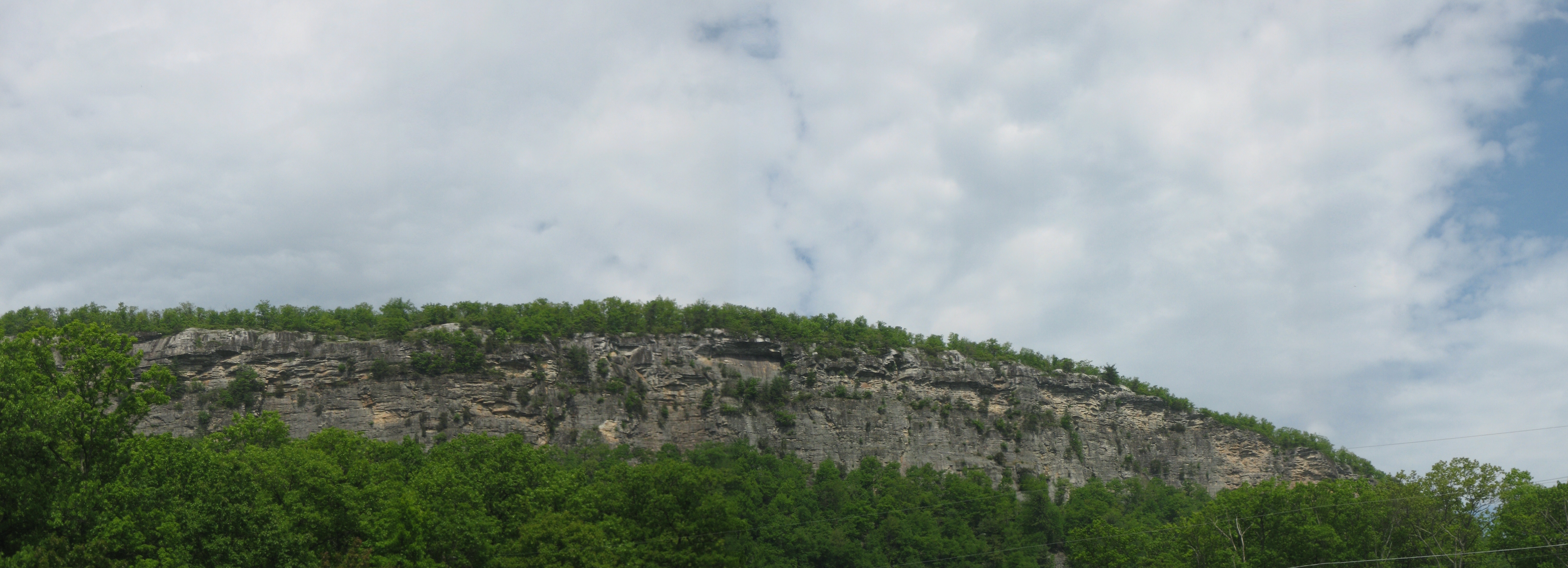
Catskill bluestone is a dense, hard, blue-grey sandstone that splits into flat slabs — which makes it nearly perfect for sidewalks, curbs, stoops, and building foundations. It was quarried out of the foothills west of Saugerties starting in the 1820s and 1830s, in hamlets with names like Quarryville, Glasco, Malden, and Veteran, and hauled by ox and horse down to the river docks.
From the docks it went onto barges, down the Hudson, and into New York City — where, for decades, a great deal of the stone underfoot was Saugerties bluestone. The sidewalks. The curbs. The stoops of the brownstones. At peak, the Catskill bluestone industry ran something like a million and a half dollars of annual production and employed roughly two thousand workers. It was the engine of the nineteenth-century economy here.
That is the literal sense in which Saugerties shipped its own ground. The town quarried the rock it sat near, finished it at the river, and sent it away to become the streets of another city.
Opus 40
And then — this is the turn that makes the spine — some of the ground came back as art, and stayed.
In 1938, a sculptor named Harvey Fite bought a disused bluestone quarry outside Saugerties. Fite taught sculpture and theater at Bard College for roughly thirty-five years. He bought the quarry, originally, just for the raw stone — he needed bluestone to carve. But after a stint in Honduras restoring Mayan ruins — learning how the Maya had dry-laid stone without mortar — he came home and started building something else entirely.
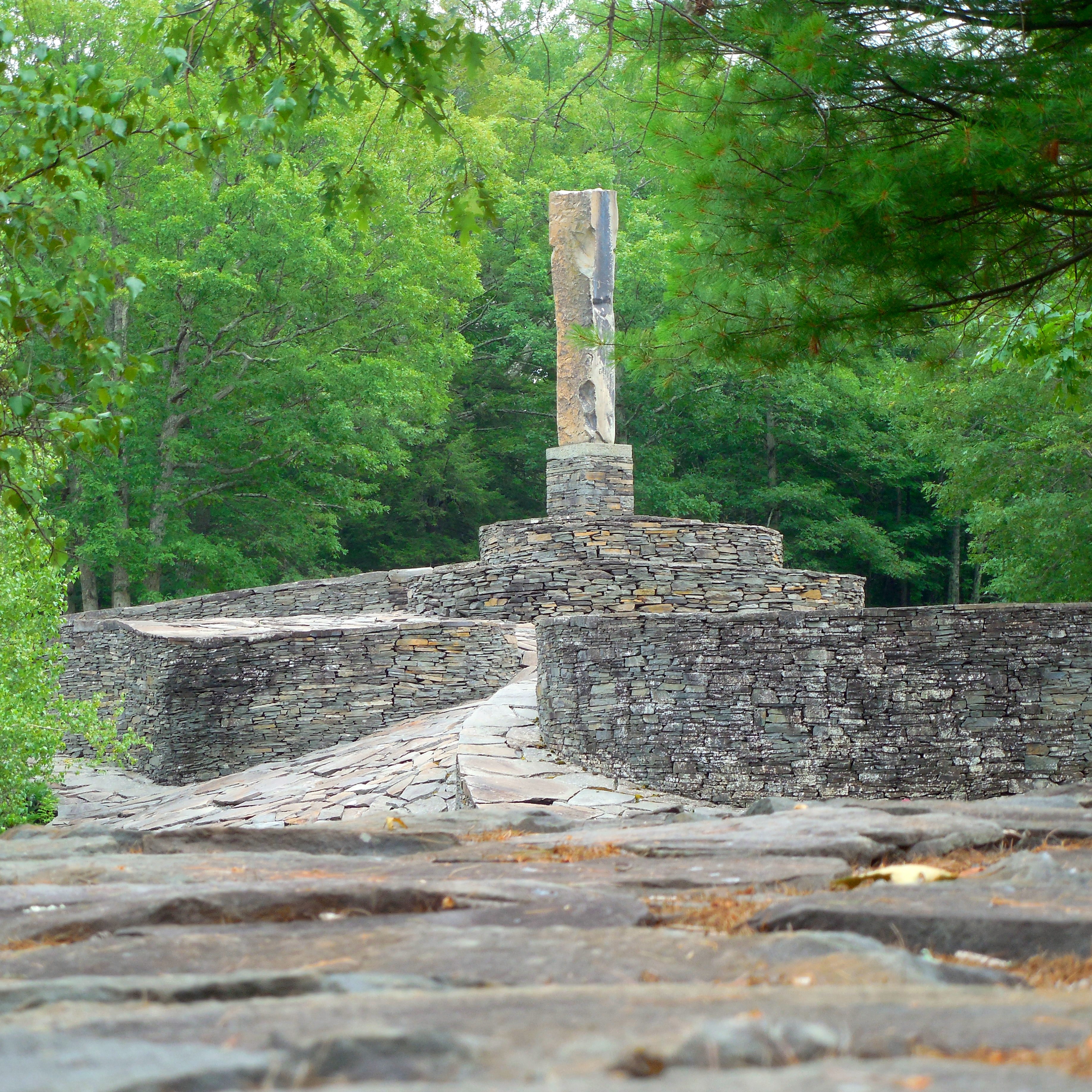
He began laying the quarry's leftover rubble — the waste stone the original quarrymen had discarded — into an environment. Ramps, terraces, walkways, pedestals, pools, all of it dry-laid bluestone, no mortar, fitted by hand with traditional quarrymen's tools, across six and a half acres. At the center, in 1964, he raised a nine-ton monolith. He called the whole work Opus 40 — opus, Latin for "work," and 40 for the number of years he estimated it would take him to finish.
He did not get forty years. On May 9, 1976 — in the thirty-eighth year of the work — Harvey Fite died in an accidental fall on the stones he had spent half his life laying.
Opus 40 is now a nonprofit, on the National Register of Historic Places, open to the public, hosting concerts on summer evenings amid the bluestone ramps. Fite also built a Quarryman's Museum on the grounds — folk tools and artifacts of the bluestone era — which means the site is, in the most literal possible arrangement, a museum of the industry, on the site of the industry, inside an artwork made from the industry's own leftovers.
The bluestone left Saugerties on barges to become another city's sidewalks. Some of it stayed and became the town's single greatest work of art. That is the whole town in one site. (We've given Opus 40 its own feature — read it here.)
The lighthouse
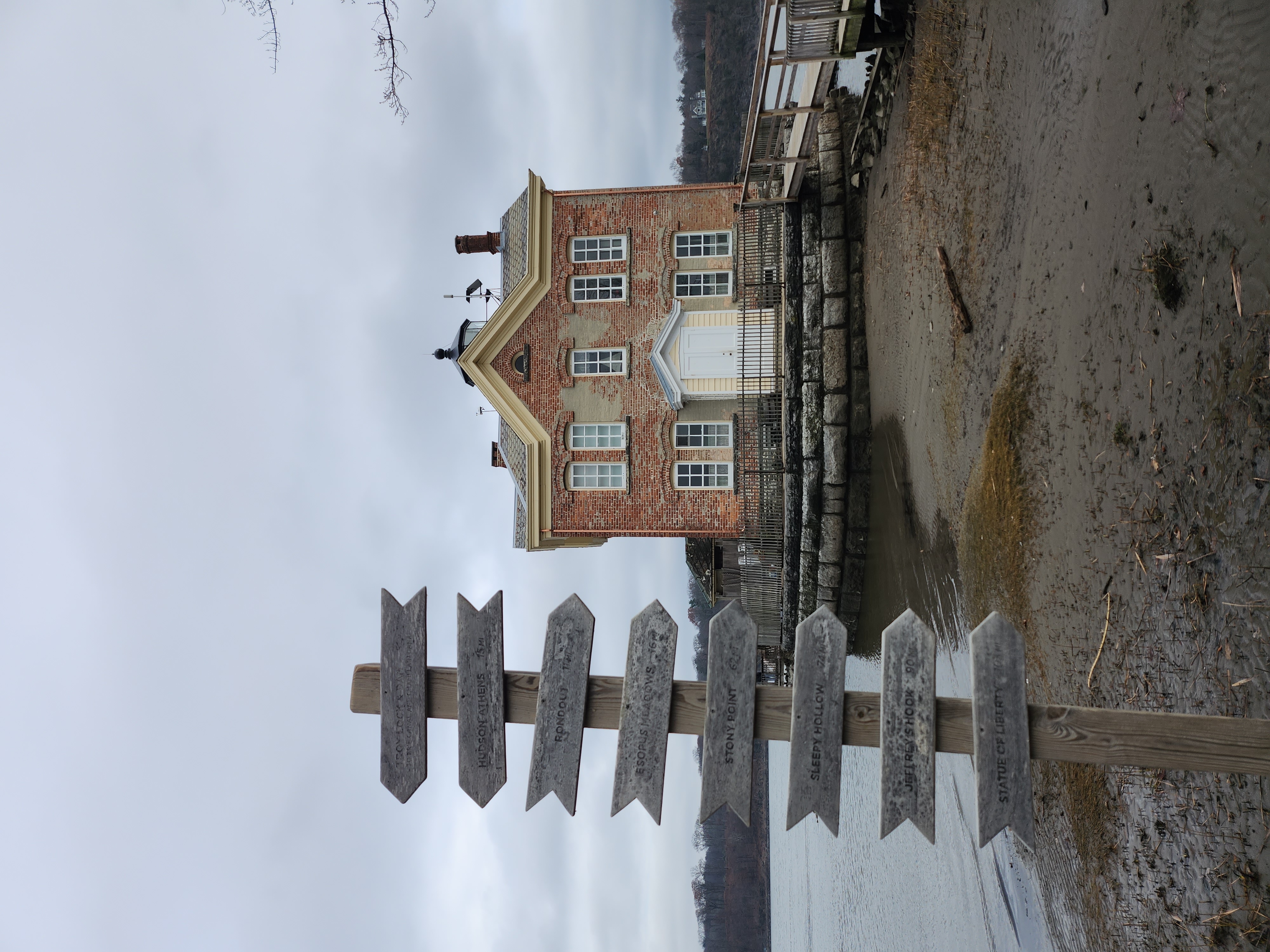
The other place where the town meets the river is the Saugerties Lighthouse, built in 1869 at the mouth of the Esopus exactly where the creek meets the Hudson — the same confluence that made the port.
The lighthouse was decommissioned, fell into disrepair, and was nearly lost. The Saugerties Lighthouse Conservancy, founded in 1985, bought it the next year for one dollar, restored it, and in 1990 got it recommissioned as an active aid to navigation. Today it operates as a two-bedroom bed-and-breakfast — billed as the only lighthouse on the Hudson River that takes overnight guests — plus a small museum and gift shop. You reach it by a half-mile nature trail through the Ruth Reynolds Glunt Nature Preserve, and the walk is tide-dependent; parts of the path flood at high water. You time your visit to the river.
The village
The contemporary village clusters along Partition Street and Main — the antiques-and-restaurants spine that carried the town through its revival.
The Orpheum Theatre, a century-old movie house with plush red seats and vintage signage, still programs film. Inquiring Minds Bookstore & Café at 200 Main, founded in 2003, is the independent bookshop-and-coffee community hub — new and used books, vinyl, organic coffee. Antiques shops line Partition. Restaurants come and go (verify before you drive for one), but the village has carried a stable independent dining scene through its revival, led for years by spots like Miss Lucy's Kitchen.
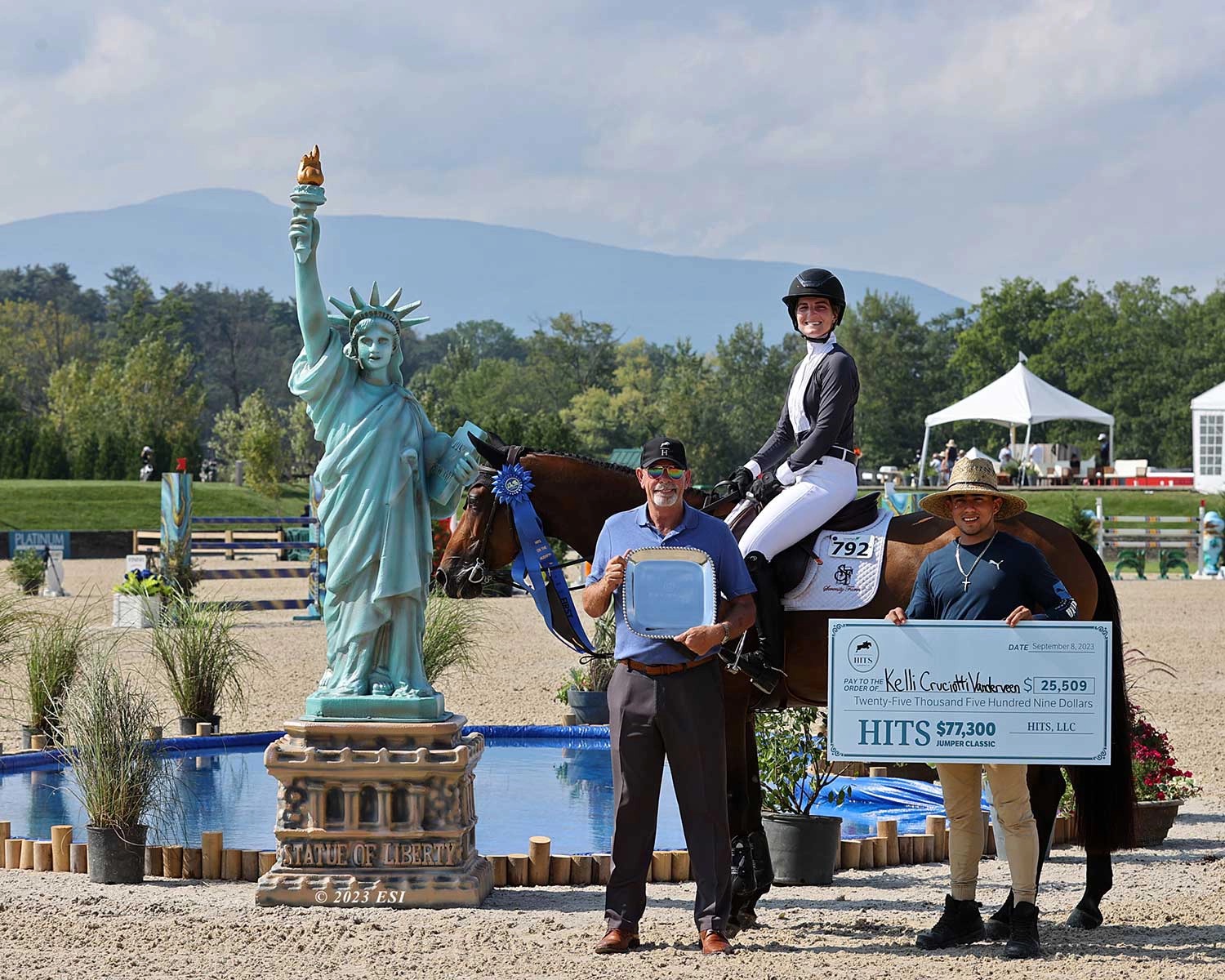
Two annual events define the town's calendar. HITS-on-the-Hudson — Horse Shows in the Sun — brings world-class hunter/jumper competition (and big seasonal crowds) to the Saugerties show grounds. And the Hudson Valley Garlic Festival, held every fall at Cantine Field, is one of the largest garlic festivals in the country — a genuinely beloved, slightly absurd, completely Saugerties institution.
The 1825 industrial town
Between the Dutch sawmill and the bluestone era, there was the factory town. In 1825, an entrepreneur named Henry Barclay dammed the Esopus at the falls and built an industrial community around the water power — the Ulster Iron Works and an adjacent paper mill chief among the operations. The village grew from roughly forty families to more than four thousand people as Irish, Italian, and German labor arrived to work the mills.
That is the arc the town has run: Dutch sawmill (1650s) → Barclay's industrial boom (1825) → the bluestone era (1820s–1890s) → twentieth-century decline → the contemporary arts-and-river revival. Each economy used the river. Each left something legible. The bluestone era left the most — including, by way of a Bard sculptor and a spent quarry, the thing that now defines the town.
What "shipped its own ground" means
The argument is about what extraction leaves behind.
A great many American towns were founded on extracting something — ore, coal, timber, stone — and shipping it away. The pattern, almost everywhere, is the same: the resource runs out or the market moves, the extraction stops, the town hollows, and what remains is the damage — the scarred hillsides, the abandoned works, the spent quarries. The ground left, and nothing came back.
Saugerties ran that exact pattern — quarried its bluestone, shipped it to pave another city, watched the industry collapse by the end of the century — and then did the rare second thing. A sculptor took the single most damaged artifact of the extraction era, a spent quarry full of waste rock, and spent thirty-seven years transforming it into something monumental. The ground that left became sidewalks. The ground that stayed became Opus 40. The town that shipped itself away also kept enough to make a masterwork out of the leavings.
What the rest of the valley can learn
Three things.
One. Extraction sites are raw material for their own redemption. The most damaged places — the spent quarries, the abandoned mills, the scarred industrial riverfronts — are exactly the sites with the most latent power, if someone is willing to spend the decades. Opus 40 is the proof. The Hudson Valley is full of spent quarries. It has exactly one Opus 40.
Two. Geography outlives industry. The Esopus still meets the Hudson where it always did. The confluence that made the bluestone port now makes the lighthouse B&B and the river access that draws residents. The economy changed four times; the geography did not. Build on the thing that doesn't move.
Three. A single obsessive work can become a town's identity. Harvey Fite did not set out to brand Saugerties. He set out to build, by hand, the thing he wanted to build, for as long as it took. Thirty-seven years of one person's discipline produced the site that now defines the town more than any marketing could. Obsession compounds into identity.
Go, then come back
Saugerties is about two hours north of Manhattan, just off the New York State Thruway. Start at Opus 40 (50 Fite Road) — walk the bluestone ramps, stand at the monolith, visit the Quarryman's Museum, and time a summer evening for a concert if one is on. Walk out to the Saugerties Lighthouse — check the tide table first — and have a coffee at the keeper's table at the river mouth. Walk Partition Street for antiques, the Orpheum, and Inquiring Minds. Come in late September for the Garlic Festival, or in show season for HITS.
Then drive home, and look at the next post-industrial river town you pass, and ask: what did this place ship away, and did any of it come back? That is the case for Saugerties. And, quietly, it is the case for everywhere in the valley that turned the leavings of its old economy into the thing it is now known for.
— The Editors