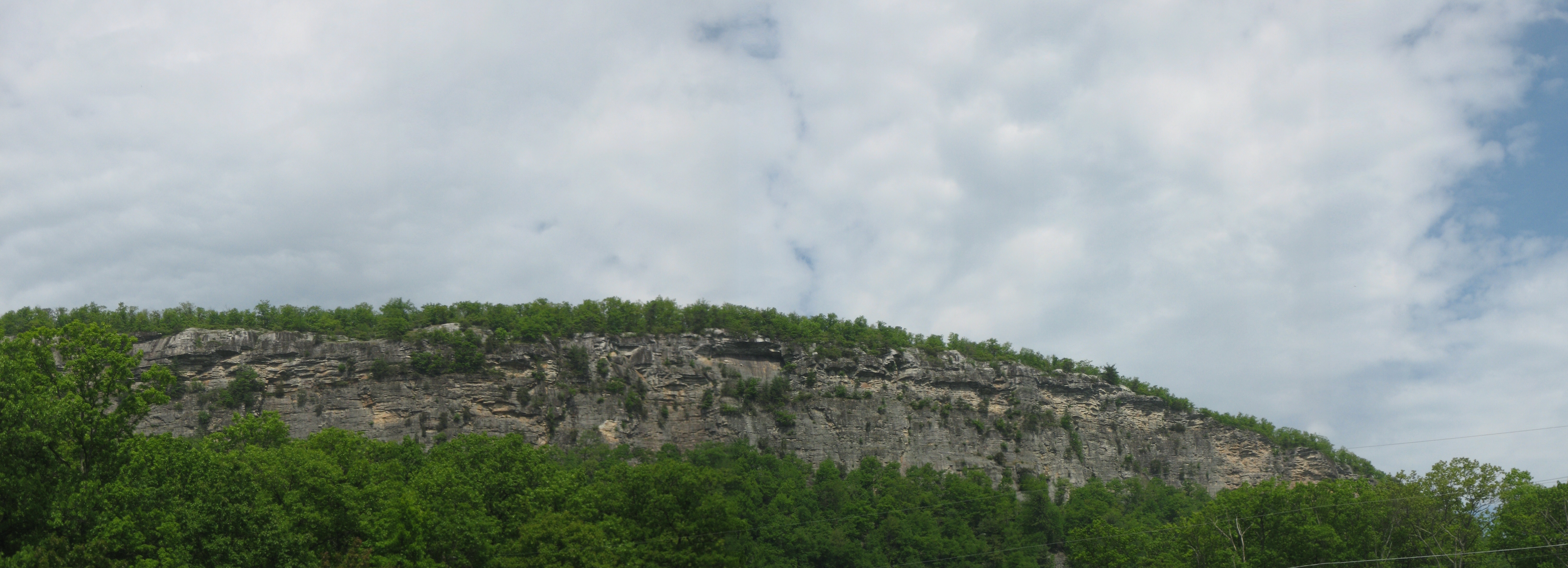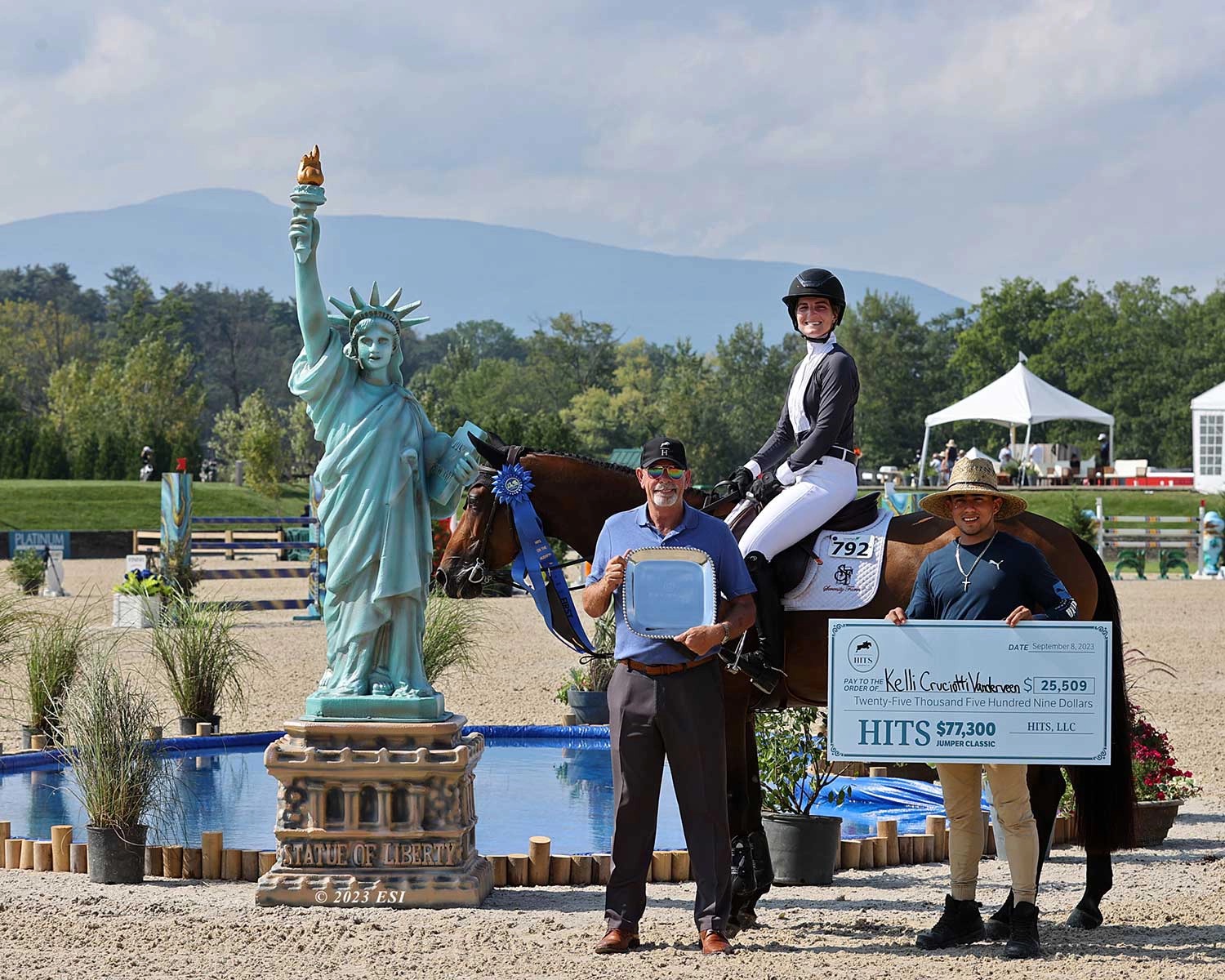
The showgrounds sit at 454 Washington Avenue Extension, at the edge of Saugerties, roughly two miles from the village center. Two hundred acres. Ten competition rings. Purpose-built stabling, VIP tenting, a viewing berm above the grand prix arena, and a Catskill horizon that, on a clear late-August afternoon, is what most of the photographs are actually about.
The place is called HITS on the Hudson. Horse Shows In The Sun. And for eleven weeks each summer — this year, from May 15 through October 11, 2026 — it operates as one half of a national sport's calendar.
The other half is Florida.
The show is on
Right now, in early July, the ring is quiet for a few days.
The FEI CSI3* Jumper Special ran June 11–14. Dressage I and II are on the calendar for July 10–12. The next big hunter/jumper week — HITS Hudson Valley IV — starts Tuesday, July 15 and runs through Sunday the 19th, opening the summer's Hudson Valley Jumping Tour. After that: Tuesday I on the 21st, Hudson Valley V from the 22nd through the 26th, Tuesday II on the 28th, and then the New York Horse & Pony Show — a CSI3*-rated week — from July 29 through August 2.
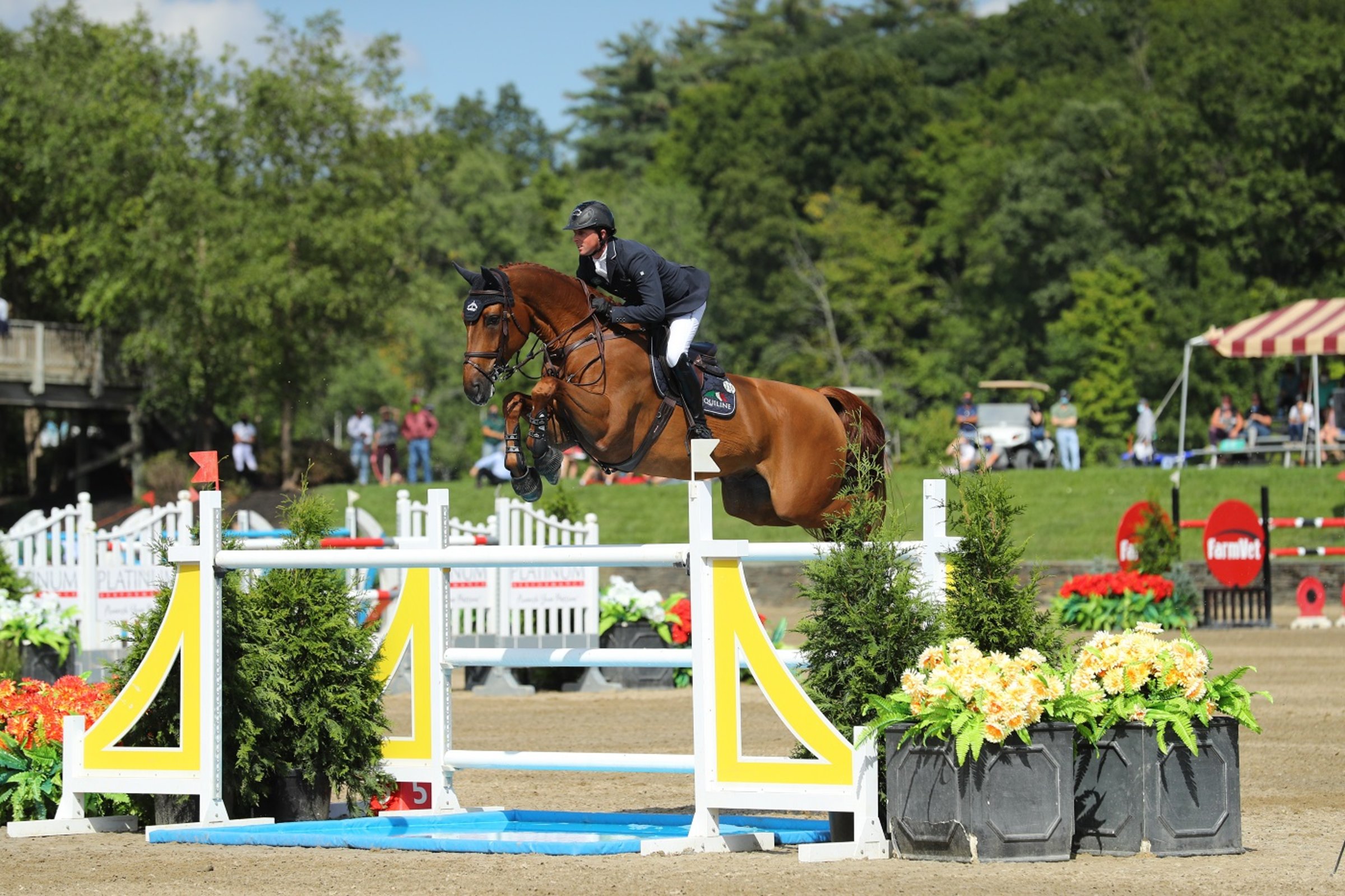
If you drive out to Washington Avenue Extension on a Sunday in late July, you will find a small city. Fifteen hundred to two thousand horses on the property, distributed across stabling row after stabling row. Roughly three thousand people — riders, grooms, trainers, families, judges, course designers, veterinarians, farriers, feed suppliers. Trucks. Trailers. A tack shop or two under a tent. A cluster of golf carts moving between rings. The marquee weekend of the summer is HITS Hudson Valley VIII, September 2–6 — a $125,000 FEI CSI3* Grand Prix on Sunday, and a $300,000 ClipMyHorse.TV Hunter Classic the same week. Then Fall Classic I and II close the season through the first two weekends of October. And then the ring goes quiet again for seven months.
This is what Saugerties looks like from mid-May through mid-October. It has looked like this since May 30, 2004, when the showgrounds opened.
How Saugerties got the show
Tom Struzzieri came to the Hudson Valley in 1979 from Long Island, at twenty-one, to manage a horse farm in Poughkeepsie. In 1982 he ran his first multi-day horse show — in Florida. He called it Horse Shows In The Sun. That's the whole naming logic. The first H stands for horse.
For seventeen years the operation grew — Florida winters, a small East Coast summer footprint — before the New York summer show found a temporary home at Ellenville, in Ulster County, from 1999 through 2003. By the early 2000s, the operation needed a bigger site. Struzzieri looked at a hundred and eighty possible locations across the Hudson Valley. What he wound up with was a two-hundred-acre parcel in Saugerties, held by a Woodstock-founded nonprofit called Family of Woodstock, Inc. — the local human-services organization that runs, among other things, the northern Ulster County crisis hotline, the food pantry, the domestic-violence support line, and the youth shelter that has operated in the same converted house since 1970.
The arrangement was direct. HITS would lease the land and build the showgrounds. Gate receipts — reported at the time as roughly $15,000 a week — would flow back to Family of Woodstock. The nonprofit that started as a coffeehouse and a crash pad in Woodstock in 1970 would become, thirty-four years later, the landlord of one of the largest hunter/jumper venues on the East Coast.
The showgrounds opened Memorial Day weekend 2004. Twenty-two consecutive summers later, they are still there, still operating that arrangement in some form. In April 2022, Traub Capital Partners acquired the majority of HITS's corporate ownership; Struzzieri stepped down as CEO at the end of that show season, though he remains a part owner and director of the company he founded on a Florida ring in 1982.
The showground itself is not a heritage farm rescued from subdivision. It is purpose-built. What makes it a Saugerties story rather than a corporate footnote is the land beneath it, and the deal that made the land available: the food-pantry nonprofit and the international horse show, sharing an address for twenty-two years.
Two seasons, one sport
American hunter/jumper is a two-season sport, and the seasons happen in different places.
From roughly January through March, the top of the calendar lives in Florida. The most credentialed campaigners of the discipline — riders like Kent Farrington (the American world No. 1), Jessica Springsteen, Andre Thieme, Beezie Madden, McLain Ward, Laura Kraut — spend the winter competing at the Wellington Winter Equestrian Festival, at HITS Ocala, at Palm Beach International, at the National Horse Show. Palm Beach County becomes the sport's central nervous system for eight or ten straight weeks.
Then in April and May, Florida clears out. The horses go on trailers. The trainers head north. And for the next five months, a serious portion of the same sport, at the same competitive tier, lives at HITS on the Hudson.
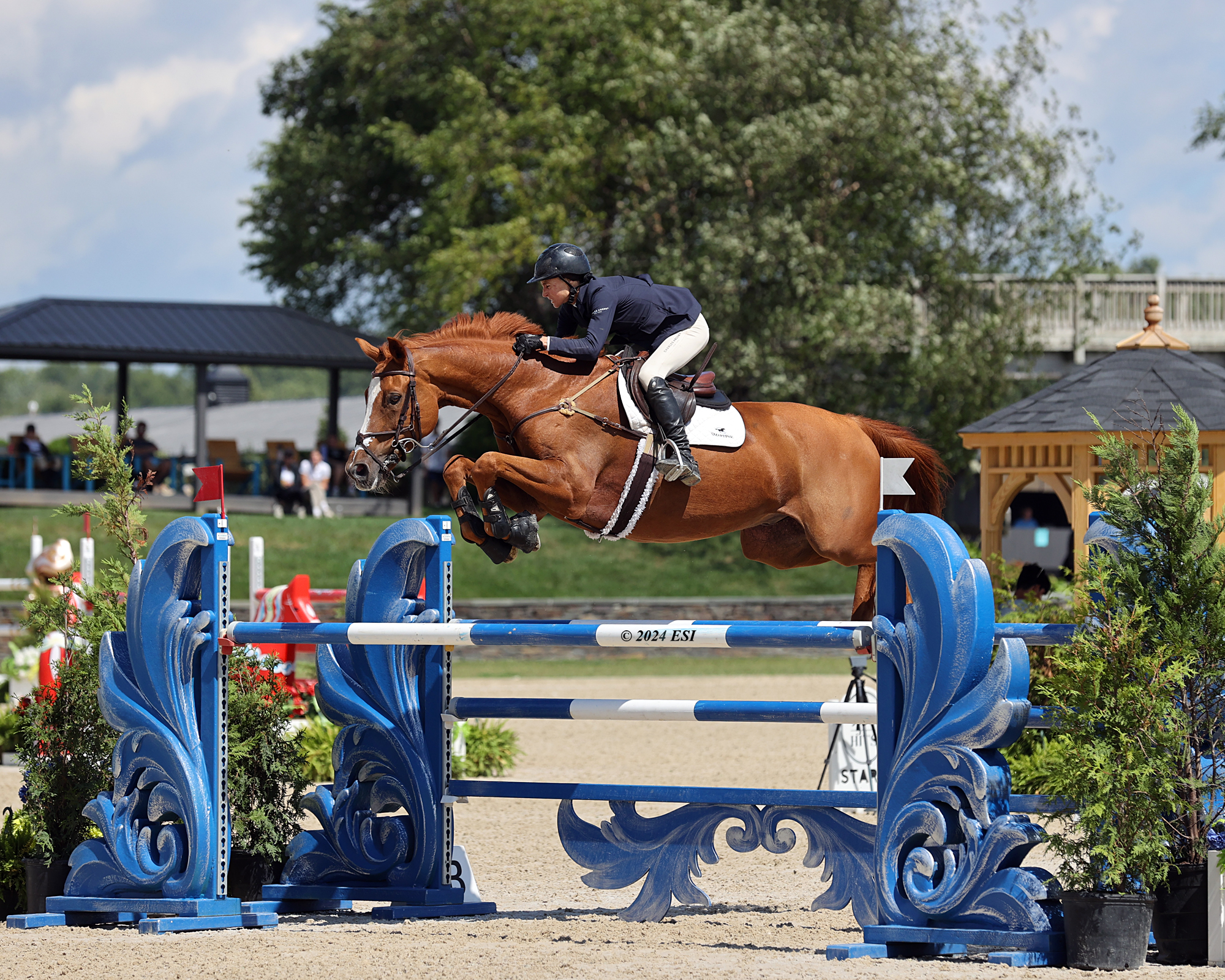
Kent Farrington rode Grass de Mars to win the Saugerties CSI3* Grand Prix in September of 2025. Jessica Springsteen — Bruce's daughter, the Tokyo 2020 team silver medalist — won the Saugerties $1 Million Grand Prix in 2016, when the purse still ran that high. Andre Thieme, the Tokyo team gold medalist for Germany, won that same million-dollar Grand Prix three separate times, most recently in 2017. The current marquee purses at Saugerties are meaningfully smaller than the ones on the sport's Wellington side — the $1M Grand Prix and the $500K Diamond Mills Hunter Prix Final were both retired or scaled down in the venue's 2023 renovation — but the caliber of the field is not seriously diminished. The horses that show at Wellington in February show at Saugerties in July.
That is what the phrase two-season equestrian town actually means. The town isn't Wellington's summer counterpart in a corporate sense. They're competing operations. It's the sport itself that migrates — that has been migrating for four decades — and Saugerties is one of only a small handful of East Coast venues where the sport lands at that tier when the weather turns. For twenty-two years, this town has been the summer chapter of American hunter/jumper. Not the whole book. But not a footnote either.
What the town does in the meantime
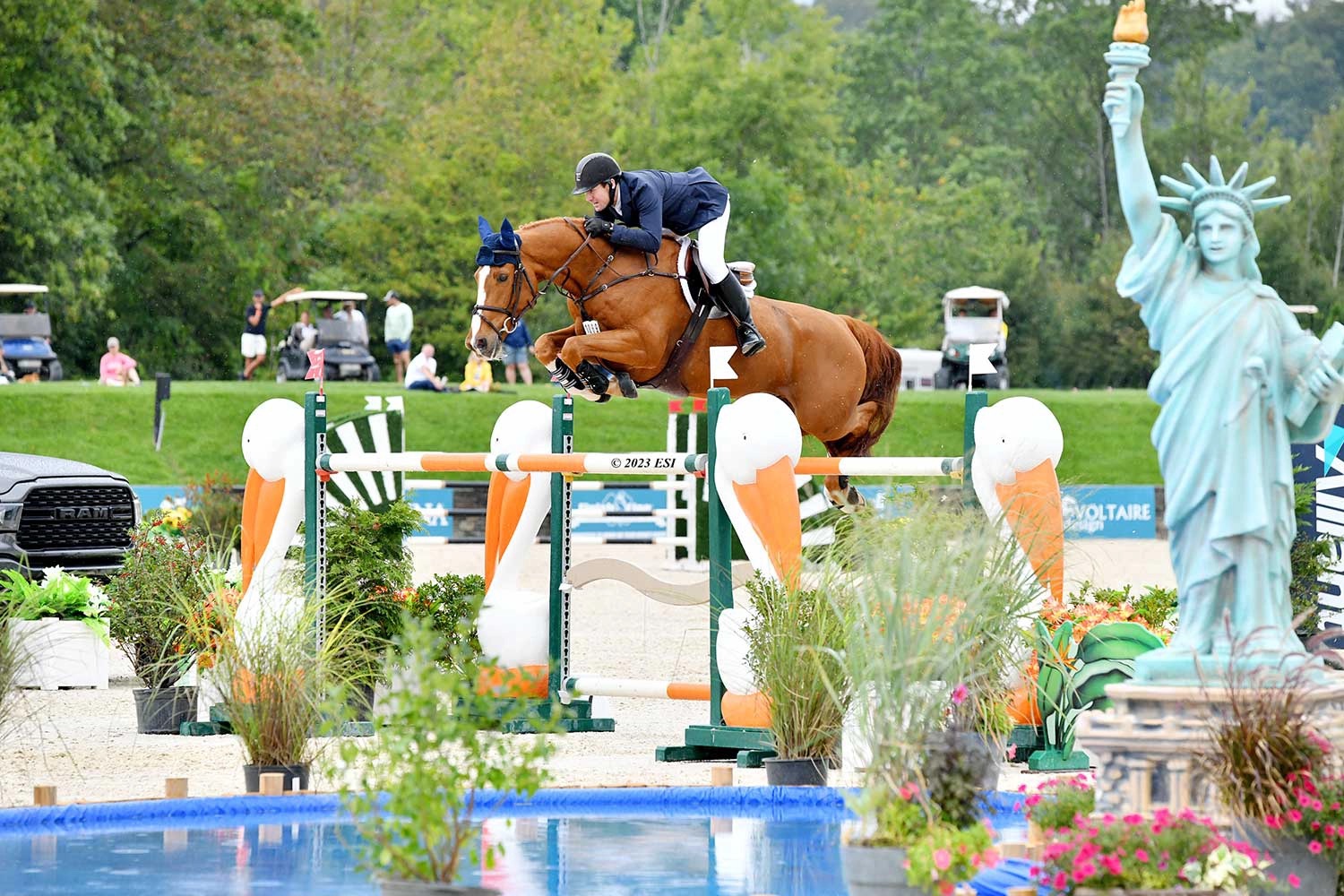
The people who work in a horse show do not live in a horse show. They live in the town around it. Fifteen hundred to two thousand horses on-site means trainers, grooms, working students, ring crews, judges, families of the riders, and — for the longer stays — the riders themselves. A summer at HITS is not a weekend trip. It is a season-long tenancy.
The Saugerties short-term-rental market is, at this point, structurally shaped around this. Vrbo and Airbnb listings explicitly market their proximity to HITS. A number of the region's older working farms and larger residential estates run summer rentals timed to specific show weeks — sometimes to a specific rider, year after year. Restaurants in the village and along Route 212 book to capacity through the summer. Hotels are full through the marquee weeks. The town rearranges itself around a Sunday-afternoon Grand Prix that most Saugerties residents don't attend but that most Saugerties residents can feel.
The property type the equestrian summer wants is fairly consistent. Acreage, so horses can be turned out. A barn — or the space and quiet for one. A drive to the ring measured in minutes rather than hours. The kind of Hudson Valley setting that photographs the way the Catskill horizon photographs behind the Grand Prix arena on Sunday. Some of these compounds trade in the private market year-round. Some appear as summer rentals. Some sit quietly on their acreage most of the year and wake up in late spring.
By mid-October, the last Fall Classic wraps. The trailers pull out. The Catskill light shifts angle. The Saugerties short-term-rental economy resets. And the two-hundred-acre showgrounds on the west side of town go quiet for the winter — as they have every winter since 2004 — waiting for the trailers to come back over the George Washington Bridge some week in mid-May of 2027, and the horses to walk down the ramps, and the sport to reset for its next northern chapter.
The show ring is closed for seven months a year.
The town has been shaped by the five months a year it isn't.
That's the case for the show that made Saugerties a two-season equestrian town.
— The Editors