There is a small white church on the west bank of the Hudson, in a hamlet called West Camp, in the Town of Saugerties. The present building dates to 1871. The congregation inside it has met on this ground continuously since June 3, 1711. Between those two numbers sits one of the largest — and least-remembered — migrations in colonial American history: the year the largest single group of immigrants in British America came up this river and stayed, and in staying, became the German-American backbone of the entire Hudson and Mohawk valleys.
The hamlet is quiet now. Riverside, residential, easy to drive past. But West Camp is one of the places where a particular and very American kind of story began: people who arrived for one reason, and built everything else.
The 1709 winter
The story begins in the Rhineland Palatinate — the German-speaking territory along the Rhine — at the end of the first decade of the eighteenth century. The War of the Spanish Succession had been grinding through the region for years, and the winter of 1708–09 — one of the coldest in European memory — finished what the war had started.
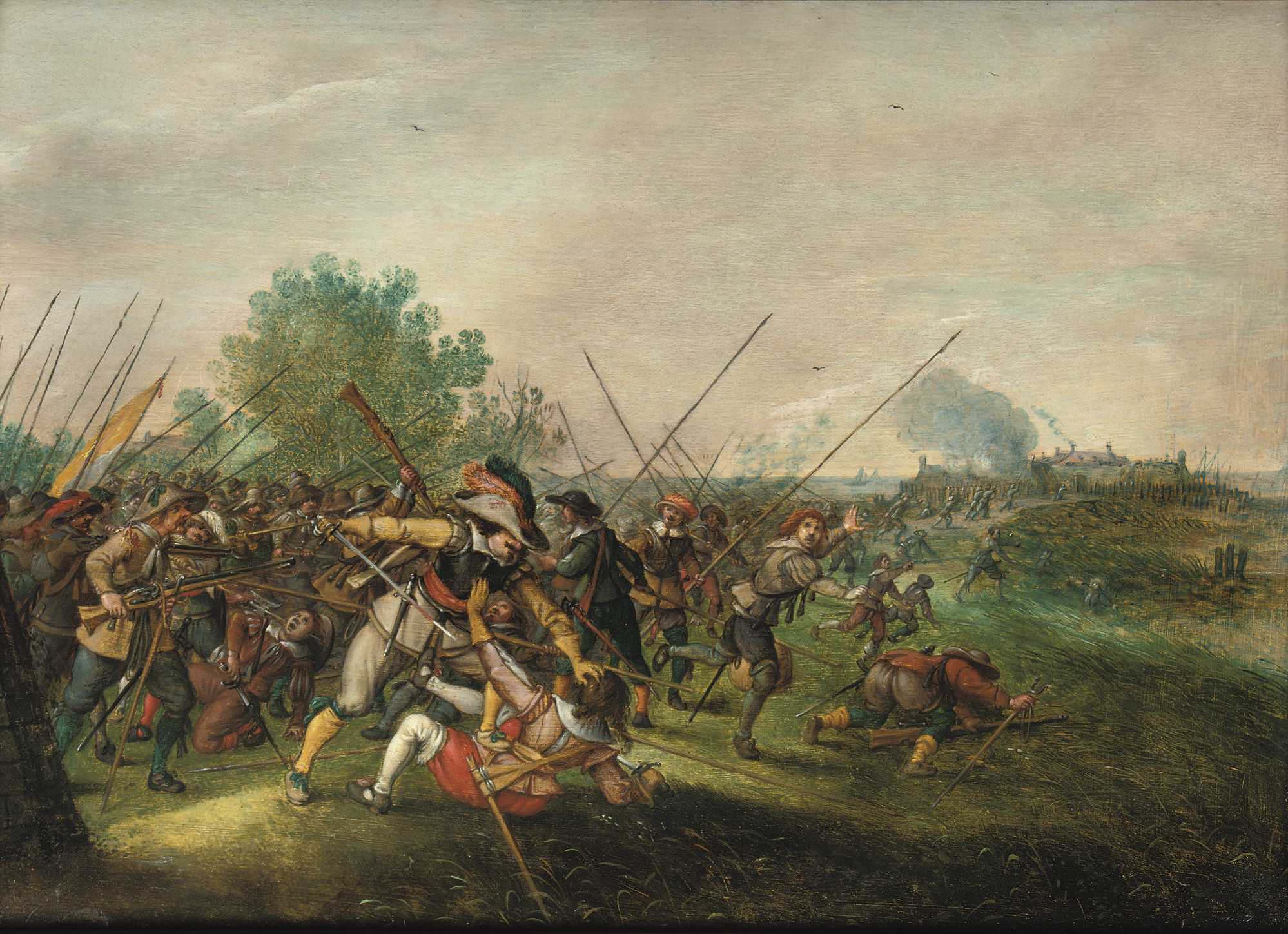
Tens of thousands of Pfälzer — Palatines — fled down the Rhine in 1709, bound for England, where rumor held that Queen Anne's Protestant government would help fellow Protestants. By that summer, British records logged roughly thirteen thousand refugees arriving in London. The city was overwhelmed. The "Poor Palatines" were housed in army tents on Blackheath and Camberwell. London had no plan for thirteen thousand destitute Germans, and no appetite to keep them.
So the government did what overwhelmed governments did with refugees in the eighteenth century: it shipped them somewhere else.
The 1710 voyage
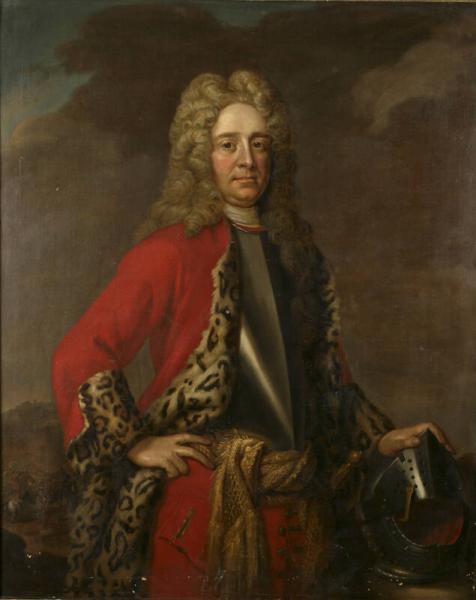
In 1710, Queen Anne's government loaded roughly three thousand Palatines onto a fleet of ten ships and sent them to the colony of New York, under the authority of a newly appointed governor, Robert Hunter. The crossing took about six months. Conditions were what conditions were on a crowded refugee fleet in 1710: roughly four hundred and seventy people died on the voyage and in the quarantine that followed, held on an island in New York harbor — Nutten Island, now Governors Island — until the shipboard fevers burned out.
It was, by the documented historical consensus, the largest single group of immigrants to enter British America before the Revolution.
The survivors were not brought to New York to be free. They were brought to make naval stores. The Royal Navy ran on tar and pitch — for waterproofing hulls, sealing rope, preserving rigging — and Britain bought nearly all of it from Sweden and the Baltic, at the mercy of Baltic politics and Baltic prices. The plan was to settle the Palatines as indentured laborers on the Hudson, where the pine forests would be tapped for sap, the sap rendered into tar and pitch, and the Royal Navy freed from its dependence on Scandinavia.
The Crown secured roughly twelve thousand acres on both banks of the Hudson. The settlers were divided into two camps: East Camp, on the Livingston land on the east bank (now Germantown, in Columbia County), and West Camp, here, on the west bank, in what is now Saugerties.
By the census of May 1, 1711, there were eleven hundred and ninety-four people in three hundred and forty-two families on the east side and five hundred and eighty-three people in one hundred and eighty-five families on the west side. Seventeen hundred and seventy-seven people, in two camps, on two banks of one river, making tar for a navy three thousand miles away.
The tar that never came
The naval-stores scheme came undone within two years, for a reason almost comic in its simplicity. They were tapping the wrong kind of pine tree. The pine growing on the Hudson, and the extraction method the project used, were never going to produce naval-grade tar and pitch. Work wound down by September 1712, and Hunter — out of money and never reimbursed by London — released the Palatines from their indenture.
And here is the hinge of the whole story. A migration of three thousand people, organized by a government for one specific industrial purpose, was now free of that purpose — and the people did the thing the project had never planned for. They stayed. They spread. They became the place.
What the Palatines became
In the winter of 1712–13, Palatine representatives walked west and approached the Mohawk clan mothers, who granted them permission to settle in the Schoharie Valley. About a hundred and fifty families moved there in the spring of 1713. From the Schoharie, the Palatines spread into the Mohawk Valley, becoming the German settler population that would shape the entire New York frontier through the eighteenth century. Others went to Pennsylvania — Johann Conrad Weiser led a group there in 1723, and his son Conrad Weiser became colonial America's most important diplomat to the Six Nations.
The surnames seeded by the 1710 migration — Weiser, Herkimer, Zimmerman, Fralick, Signor, and dozens more — run through Hudson Valley and Mohawk Valley genealogy for the next three centuries.
And then there is the boy.
Among the roughly three thousand Palatines who sailed in 1710 was a twelve-year-old from the village of Rumbach named John Peter Zenger. His father died on the voyage. On October 26, 1710 — months after the fleet arrived — Governor Robert Hunter himself signed the document apprenticing the orphaned Palatine boy to a New York printer named William Bradford.
Twenty-five years later, that boy, by then running his own print shop, was put on trial for seditious libel after his newspaper criticized the royal governor of New York. His 1735 acquittal — argued on the then-radical principle that truth is a defense against libel — is the foundational case in the history of American press freedom, the seed of what would become the First Amendment.
The governor who shipped over a failed tar colony in 1710 personally signed the apprenticeship of the boy whose trial would help invent the free American press. The naval-stores project produced no naval stores. It produced John Peter Zenger.
The church
The single building that holds the through-line is the church.
St. Paul's Evangelical Lutheran Church at West Camp — the "Old West Camp Church" — traces its congregation to 1710, under the Palatines' own pastor, Reverend Joshua de Kocherthal, who had led the very first group of Palatines to New York in 1708 and came back with the 1710 fleet. The first service on the West Camp glebe was held on June 3, 1711. It is described as "the oldest religious society in the Town of Saugerties," and is among the oldest Lutheran congregations in America — in continuous descent from the 1710 settlement.
The building has been replaced across the centuries — an original log church, a 1732 frame church built jointly with the Dutch Reformed congregation, and the present church of 1871, on or near the 1711 site. In 1898, the remains of early Palatines were re-interred at the church; the marker sits in the entryway. In 1998, a Palatine Monument was dedicated on the church lawn, honoring the refugees of 1709–1710.
The congregation has been meeting on this ground, in one building or another, for three hundred and fifteen years.
The sibling across the river
West Camp did not happen alone. East Camp, directly across the Hudson on the east bank, was the matched half of the 1710 project — four Palatine villages on the Livingston land, the larger of the two settlements at the 1711 census. East Camp became Germantown, one of Columbia County's original towns. The two camps are the two banks of a single migration — the same refugees, the same year, the same failed tar scheme, the same survival. You cannot tell the West Camp story without the east bank in the frame.
What the difference means
The argument is about what a place is for.
The Palatines were brought to West Camp for a reason that had nothing to do with the Palatines: the Royal Navy needed tar. Measured only by the ledger of the tar project, the venture came up empty — and there the story would close.
But a migration is not a project. A project has an output and either produces it or doesn't. A migration produces people in a place, and people in a place produce everything that comes after — congregations, towns, surnames, a free press, three centuries of valley life. The 1710 settlement is one of the clearest cases in American history of the difference. As a tar operation, it ended quickly. As a migration, it founded a region.
The Hudson Valley is layered with these foundings — Dutch at New Netherland, French Huguenot at New Paltz, English up and down the river. West Camp is the German stratum: the year the Palatines arrived, failed at their assigned job, and stayed to become the valley's German-American backbone.
What the rest of the valley can learn
Three things.
One. The reason a place is founded is rarely the reason it matters. West Camp was founded to make tar. It matters because of the people who were brought to make the tar. Most Hudson Valley towns were founded for an extractive or commercial purpose — a mill, a quarry, a port, a tannery — that has long since ended. The town is what remained after the purpose.
Two. A displacement reads differently at three-century remove than it read at the time. The Palatines were displaced by war and weather in the Rhineland; the government that received them had no plan beyond a failed industrial scheme. Three centuries later, that arrival reads as one of the founding chapters of the German-American Hudson and Mohawk valleys. The framing depends entirely on the length of the view.
Three. Continuity is held by institutions, not buildings. The West Camp church building is from 1871. The congregation has met on this ground since June 1711. The thing that has lasted three hundred and fifteen years is not the structure — it is the society that keeps rebuilding the structure. Same lesson as the rest of the valley's oldest places: the institution is the inheritance.
Go, then come back
West Camp is on the west bank of the Hudson in the Town of Saugerties, a few minutes off Route 9W. Visit St. Paul's — the Old West Camp Church — and read the Palatine Monument on the lawn. Stand in the churchyard and do the arithmetic: three hundred and fifteen years of one congregation on one piece of ground. Look at the river the Palatines came up in 1710. Drive down to the Saugerties Lighthouse at the mouth of the Esopus — a different chapter of the same shoreline, a hundred and sixty years later. Cross the river, if the day stretches, to Germantown — East Camp, the sibling settlement — and see the matched half of the story.
Then drive home and look at the towns you pass, and ask: what was this founded to do, and what did it become instead? That is the case for West Camp. And, quietly, it is the case for everywhere in the valley that outlived the reason it was built.
— The Editors