There are three Kingstons. Drive in from Route 9W and the first one is the Rondout — a steep waterfront neighborhood at the mouth of the creek, where canal-era brick buildings still face the Hudson and the bluestone that built half of Manhattan was once loaded onto ships. Cut up to Broadway and you reach Midtown — the industrial spine, the artist studios, the murals. Climb into the Stockade District and you find a third city, eight blocks of pre-Revolutionary Dutch stone, where the four corners at the intersection of John and Crown streets are all eighteenth-century houses — a configuration that does not exist anywhere else in America.
For thirty years the joke was that Kingston was three different towns that happened to share a zip code. For the last five, that has stopped being a joke.
The legal pivot
Here is the spine, and it is a sequence — three legislative moves in three consecutive years — that almost no editorial coverage of Kingston has put together in one place.
In August 2022, Kingston became the first city in upstate New York to opt into the Emergency Tenant Protection Act, placing roughly twelve hundred apartments under rent stabilization.
In August 2023, the Common Council unanimously adopted Kingston Forward, a citywide form-based zoning code that replaces the old use-based code with one that legalizes missing-middle housing, accessory dwelling units, and corner-store commercial in residential blocks.
In July 2024, Mayor Steve Noble signed Good Cause Eviction into law — the second upstate municipality to do so.
Kingston is not just attractive to designers and operators. It rewrote its own rulebook so that the design-first version of the city is what the law expects to happen.
That is a different kind of urban inflection from a moment. Hudson had a moment that became a decade — a curated street that filled with antiques dealers and stayed beautiful and thinned out toward weekend tourism. Rhinebeck has been quietly itself for a century and a half. Kingston's distinct version is that the city is not waiting for design to happen to it. It has encoded the design into its zoning.
The cultural pivot
The legal moves did not happen in a vacuum. The visible inflection was June 2019, when Hotel Kinsley opened in a four-building network across the Stockade — Wall Street, Pearl Street, Fair Street, John Street. Forty-three rooms by Studio Robert McKinley, with murals and carpets by Brooklyn artist Happy Menocal, and a check-in desk inside the building's original bank vault.
Hotel Kinsley was the first nationally-pressed design hotel in town, and it did what those rooms always do — it changed the legibility of the surrounding blocks. By Q4 2020, Kingston home prices had risen 24.2 percent in a single quarter; earlier that year the metro had briefly ranked the fastest-rising in the United States. Brooklyn buyers came at scale.
The Council watched. The legal moves of 2022, 2023, and 2024 are the answer the city wrote to that pressure — not against new arrivals, but against the consequences if the rules went unchanged.
Three neighborhoods
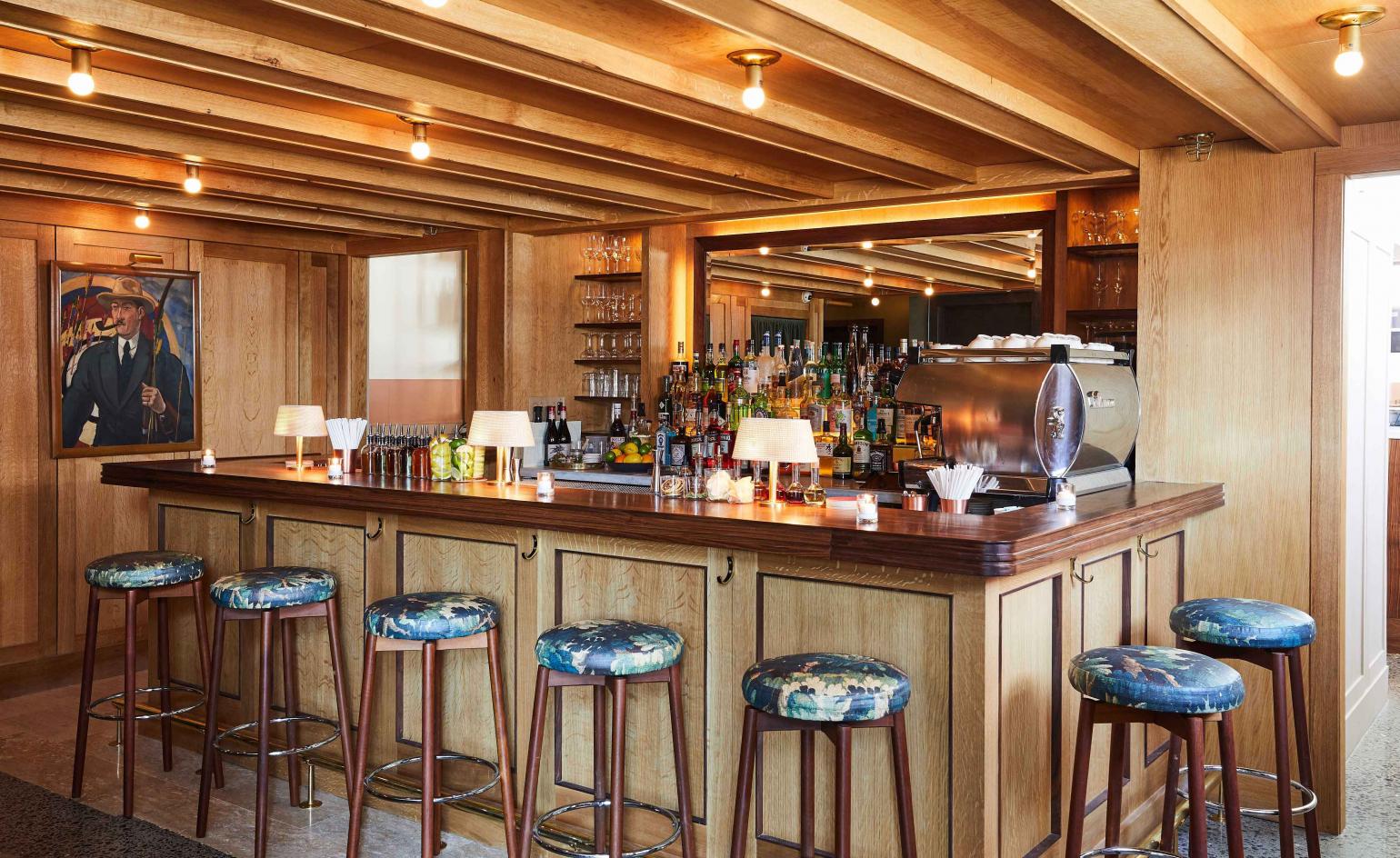
The Stockade is the most photographed and least replicable. Eight blocks of Dutch stone houses. The Old Dutch Church (Minard Lafever, 1852, a National Historic Landmark). The Senate House where New York State was established in 1777. The Pike Plan canopied sidewalks along Wall and North Front. The houses are not preserved. They are occupied — by Stockade Tavern, by Le Canard Enchaîné (a twenty-eight-year French staple), by Rough Draft Bar & Books, by Brunette Wine Bar, by Stockade design retail, by Chleo, the wine bar opened in 2023 in a former Mediterranean space.
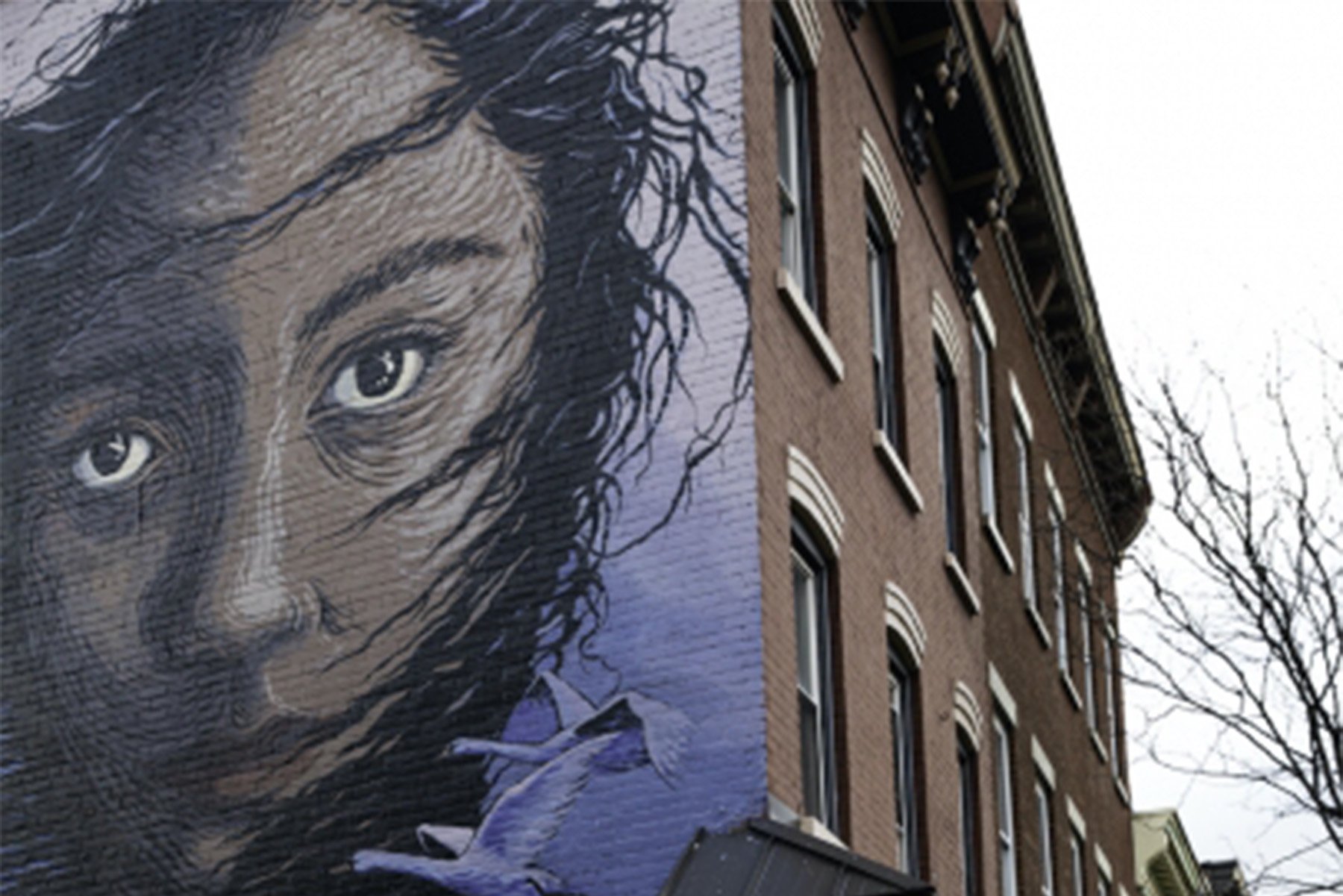
Midtown is the long industrial spine along Broadway — the Midtown Arts District, artists' studios, murals like the six-story Gaia Artemis Emerging from the Quarry, recent openings like Eliza, Kestrel Tavern, and Blue Duck Brewing. The architecture is mixed and the rents are still lower than the Stockade and the Rondout. It is the part of Kingston where what comes next is being decided.
The Rondout is the waterfront. The Strand runs along the north shore of Rondout Creek where the Delaware and Hudson Canal terminated in 1828 — the bluestone, brick, and Rosendale cement that built nineteenth-century Manhattan was loaded onto barges from this water. Rosie General is on its curved brick corner here. Hutton Brickyards — the riverfront resort built on a former brickworks — is just south.
What's been opening
The list is long enough now to read as a tide rather than a moment. Hotel Kinsley (June 2019). Restaurant Kinsley and LOLA Pizza (2019–20). Rosie General (May 2022). Chleo (February 2023). Hutton Brickyards (riverfront resort, brickworks reuse). Tubby's (Midtown). Brunette Wine Bar (Rondout). And in 2025 alone: Lucky Kingston (pan-Asian, October), Kingston Bread + Bar (Aaron Quint, October), Blue Duck Brewing (Phoenicia Diner partnership, summer), Kestrel Tavern (Midtown, October), Golden Hour Grocery (Wall Street, July).
The people are part of the count. Maryline Damour moved Damour Drake from Brooklyn and founded Kingston Design Connection. Catherine and Nick Carnevale brought knitwear brand Eleven Six to town. Slow Process moved menswear from Burlington. Andrew Lyght paints out of Ponckhockie Creek. None of this is a press-release story. It is a five-year accumulation that the zoning code is now matched to.
What the rest of the valley can learn
Three things.
One. A city is what its rules let it become. Kingston's three legal moves — ETPA, Kingston Forward, Good Cause — are not glamorous. They are the unsexy back-of-house mechanics of growth. But they are also the difference between a town that gets gentrified and a town that plans what comes next. Every Hudson Valley municipality should ask: do my zoning, my tenant protections, and my eviction rules permit the city I want to become?
Two. Specificity beats luxury — at the urban scale, too. Kingston does not advertise itself as the next Brooklyn or the next Hudson. It advertises itself as Kingston — three distinct neighborhoods, named openings, named designers, named legal moves. Generic boosterism is a commodity. Specific civic identity is a brand.
Three. Hospitality and law are downstream of each other. Hotel Kinsley arrived first; the legal protections followed. That sequence is the lesson — design hospitality can change a place's legibility quickly, but the city has to legislate what gets to happen next, or the inflection eats itself. Both moves are required. Neither is sufficient alone.
Go, then come back
Take the morning to walk the Stockade. Cross Crown and John and notice that all four corners are eighteenth-century. Have lunch at Rosie. Drive down to the Strand and look at the Hudson — bluestone left from this water for two centuries. Take a coffee at Rough Draft. Have dinner at Chleo. Stay at Hotel Kinsley if you can, in the room with the bank vault behind the desk.
Then think about what just happened. You spent a day in a city that, on paper, by the rules, has decided what it wants to be when it grows up. That is the case for Kingston. And it is, quietly, the case for every other Hudson Valley town that has not yet figured out the difference between a moment and a city.
— The Editors