The curved brick corner at 39 Broadway, in Kingston's Rondout District, has been four different things in its lifetime. A shoe parlor under a man named Greenwald. An antique shop called Skillypot. A few quiet years between. And, since May of 2022, a forty-nine-seat all-day café called Rosie General — the kind of place that, by every commercial logic, should already have a second location.
That it does not, on purpose, is the editorial argument.
The phrase
Anthony Sasso ran the kitchen at Casa Mono in Manhattan for thirteen years — five of them under a Michelin star — and has been pretty clear about what Rosie is and what it is not.
"There is not going to be a Rosie Part 2. No Rosie Rosendale. Rosie is a product of Kingston."
That is the spine. Most chefs of Sasso's pedigree open a place upstate and start drawing the second one on a napkin within eighteen months. Rosie is the deliberate refusal. A product of Kingston means: it cannot be franchised, cannot be replicated, cannot be Rosendale. The address is constitutive. Move it ten miles down the road and it is a different restaurant — and Sasso is on record saying that is the whole point.
The road home
Sasso grew up in Glasco, ten miles north of Kingston. He trained at ICE in Manhattan, apprenticed in Spain, and learned whole-animal butchery from Josh Applestone of Fleisher's. He spent thirteen years at Casa Mono — Andy Nusser and Mario Batali's Spanish kitchen on Irving Place — head chef from 2009. The room held a Michelin star for five consecutive years. He is co-author of The Casa Mono Cookbook.
In 2019 he left. The reasons were several. He took five months in a four-door Jeep across thirty states. He landed for a stretch on the graveyard shift baking bread at Gjusta in Venice, California. In February of 2020, he came home to Ulster County.
"The restaurant was open twelve to twelve. It consumed every second of my life — mentally and physically."
What Rosie became — the nine-to-four hours, the no-phone posture, the closed Mondays, the four siblings on the floor — is the deliberate inversion of those years. Not a retreat from ambition. A redirection of it.
The family
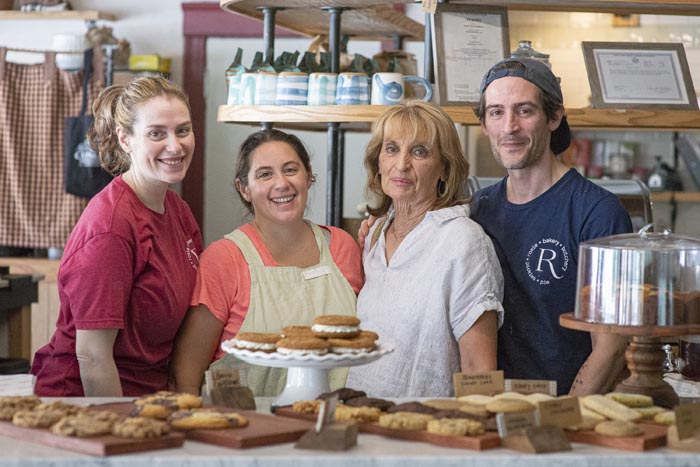
Rosie is not Anthony's restaurant. It is Anthony's, his sister Nicole's, his sister Andrea's, and his sister Ashley's. The Sasso siblings named it after their mother. Nicole, ICE-trained, runs the pastry program — salted chocolate-chip cookies, lemon cake, pistachio cookies. Andrea and Ashley run other parts of the operation.
This is the architectural fact of the place. A four-sibling team with a chef pedigree heavy enough to draw national press, working a forty-nine-seat room in a town of roughly twenty-three thousand people. The room cannot scale. The team will not let it scale. That is the design.
The floorboards
The interior is by Home Studios, the Brooklyn firm. The branding and photography are by Shipdaddy Studio. The space was, before its current life, Skillypot Antiques — and before that, Greenwald's shoe parlor. The original pressed-tin ceiling and wood-plank floors are still in place.
Here is the detail almost no review pulls forward. When the Sassos renovated, they tore up sections of the original floor and built the dining banquettes from the boards they removed. The red corduroy seats at the back of the room sit on lumber that came from twelve feet away. The chairs you eat in are made of the building you eat in.
"I fell in love with twenty places before I found Skillypot."
This is what eating the building looks like at the level of architecture rather than menu — and it is, in the literal material sense, what a product of Kingston means.
The menu
A list. Anthony's bread program: sourdough, baguettes, focaccia rossa, caraway rye, walnut fig. The signature mortadella sandwich: ricotta, pistachio, cherry-bomb pepper, Kingston honey on top. The bánh mì with house headcheese and smoked ham. The thick-cut grilled pastrami. Smoked trout on sourdough. The Reuben. The chicken salad with giardiniera.
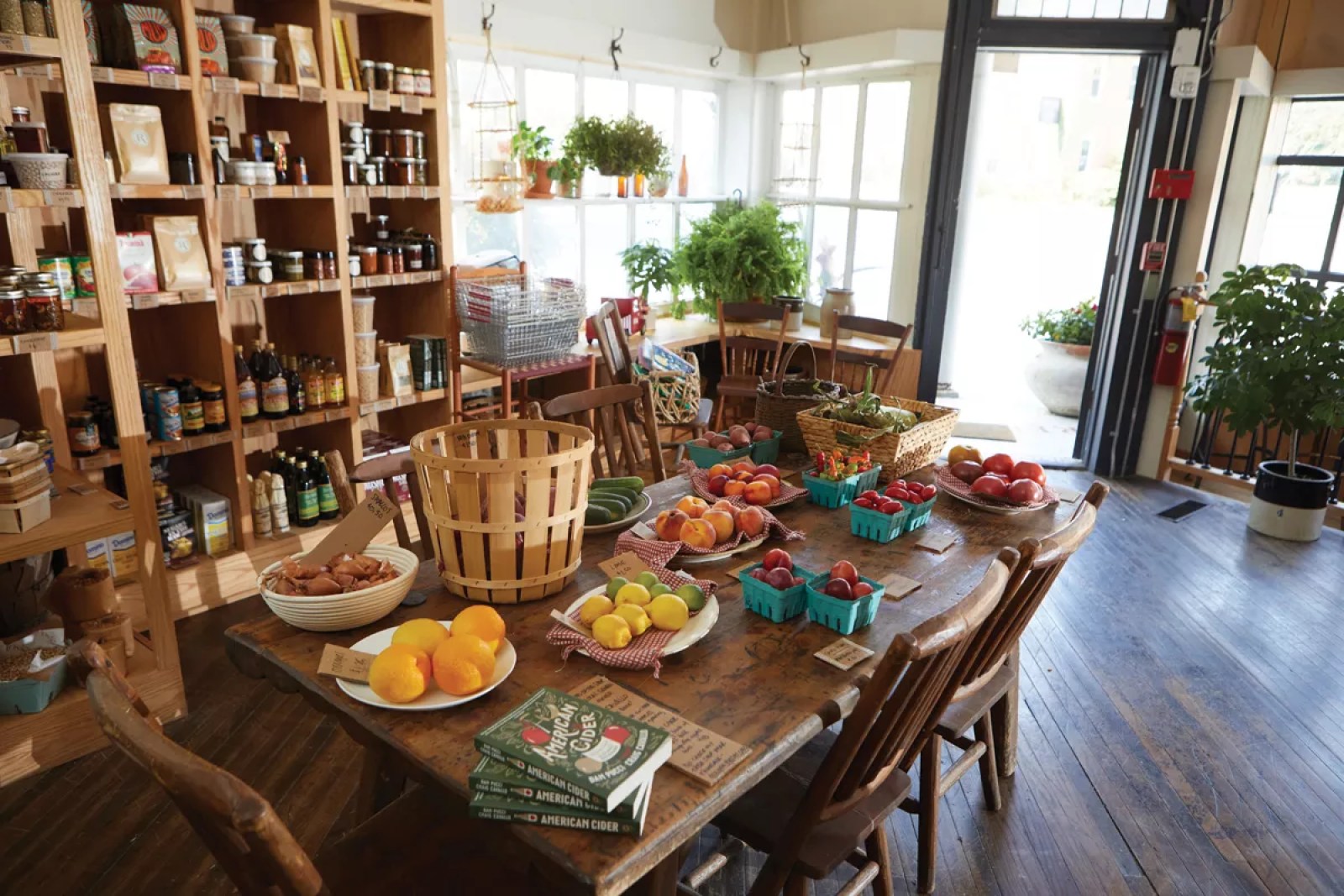
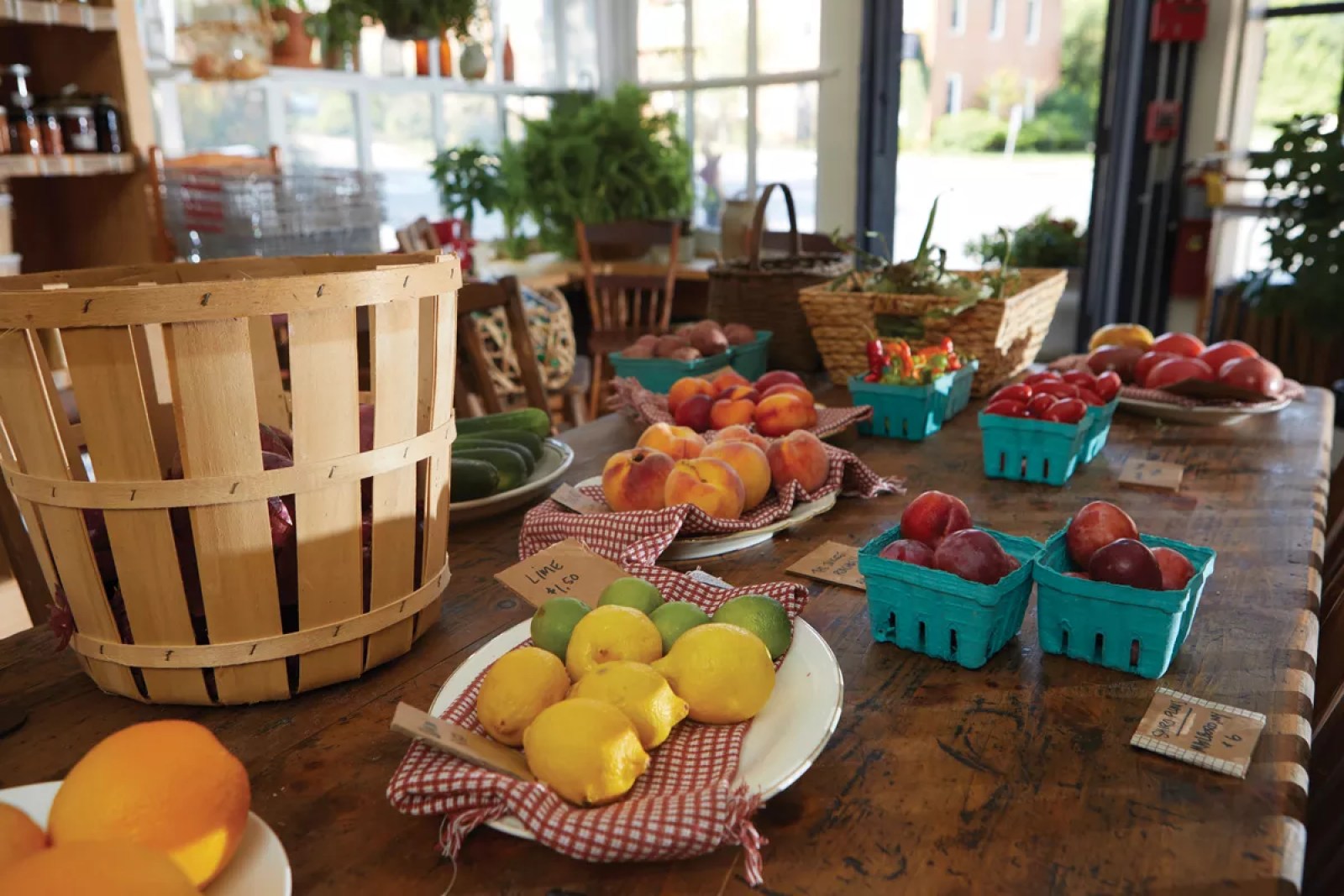
The pantry: the bacon is smoked here. The trout is smoked here. The pastrami is cured here. The pickles, the kraut, the fermented hot sauces, the giardiniera, the pistachio pesto — all produced behind the counter and stocked on shelves out front, where they double as retail. "We built a grocery store and stocked eggs and sliced bacon," Sasso has said. "We brought in fresh produce."
The egg toast — open-face sourdough, braised greens, white beans, housemade chili crisp — is the dish that will be on every Brooklyn brunch menu within five years.
What the rest of the valley can learn
Three things.
One. The discipline of not expanding is itself a positioning. Rosie is the upstate restaurant most likely, on paper, to franchise. A Casa Mono pedigree, a beloved local product, national press, a family team. And the explicit posture is we will not. In a market that defaults to scale, refusing to scale is a brand statement. Every Hudson Valley operator should ask: have I decided what staying put would look like for me? If not, the second-location decision is going to be made by inertia.
Two. Specificity beats luxury — again. Rosie does not advertise itself as the most ambitious all-day café in the Hudson Valley. It advertises itself as the place with the Kingston honey on the mortadella, the chairs made from the floorboards, the four siblings on the floor, the pressed-tin ceiling. A specific noun outsells a generic adjective every time.
Three. The room is the inheritance. Rosie did not invent the curved brick corner at 39 Broadway. It inherited it, restored it, and refused to flatten what was already there. That is the editorial move every developer in the valley should run before swinging a hammer: what is here that I would be foolish to remove?
Go, then come back
Rosie General is open Tuesday through Sunday, nine to four. No phone. Walk in. Order the mortadella sandwich and a coffee. Sit on the floorboards. Notice the pressed-tin overhead and the curve of the brick around the corner.
Then walk down to the Strand and look at the Hudson. Bluestone left from this water for Manhattan all through the nineteenth century. Hudson Valley brick. Rosendale cement. The city has been a product of Kingston before. Rosie is the latest restatement of the case.
— The Editors