The drive up from the city to Big Indian is almost exactly the same length as the drive from Los Angeles to Palm Springs, and almost exactly the same kind of trip. You leave one version of your life in a basement parking garage and you go collect a quieter one at the other end of a winding road. Palm Springs has been selling this trip — the brand of the trip, really — for sixty years. The Catskills, until relatively recently, was not.
Urban Cowboy Lodge & Resort is the clearest proof that this is changing. Not the only proof. But the clearest.
The number that matters
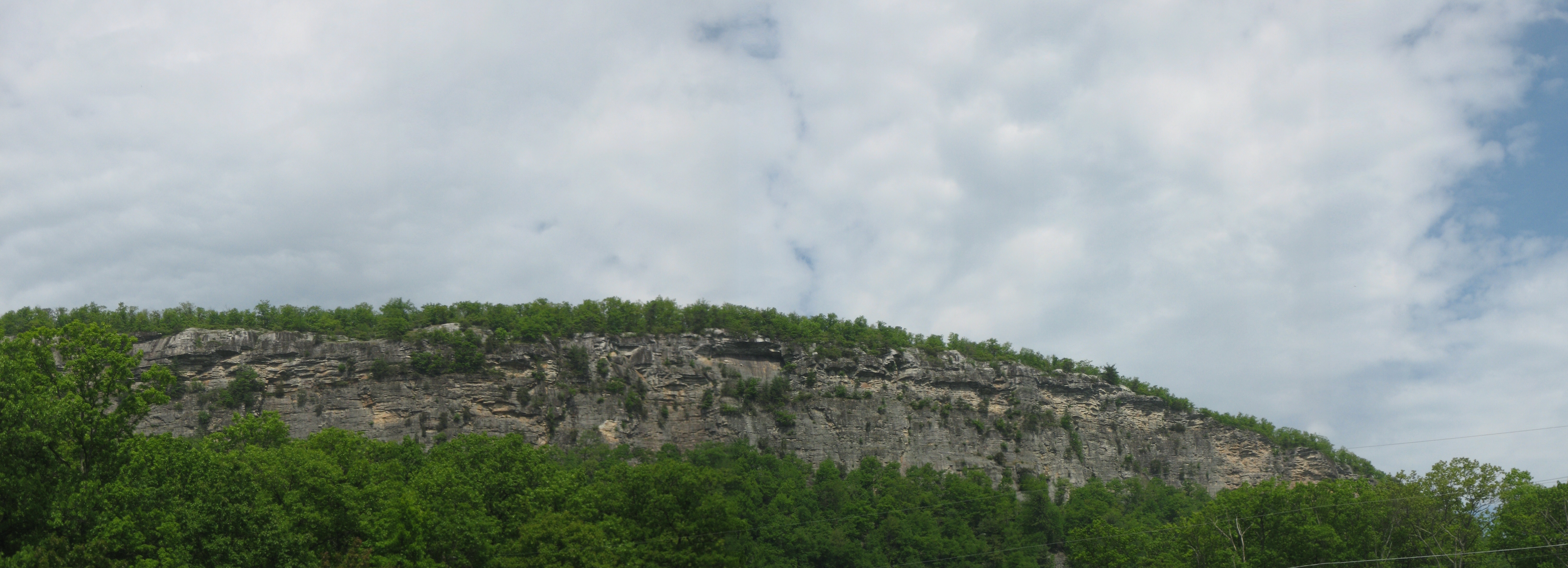
Two hundred acres. That is the headline, and everyone who writes about the lodge uses it, and they are right to. Two hundred acres is the difference between a hotel and an experience. It is also the number that lets Urban Cowboy be the thing it actually is — not a place you book for a night, but a place you go to. The acreage is not amenity. It is thesis.
Forty-four rooms sit inside those two hundred acres. That ratio — roughly four and a half acres per key — is what makes the lodge feel like a small private valley rather than a boutique hotel with a good trail map. The math is the brand. Everything else is downstream.
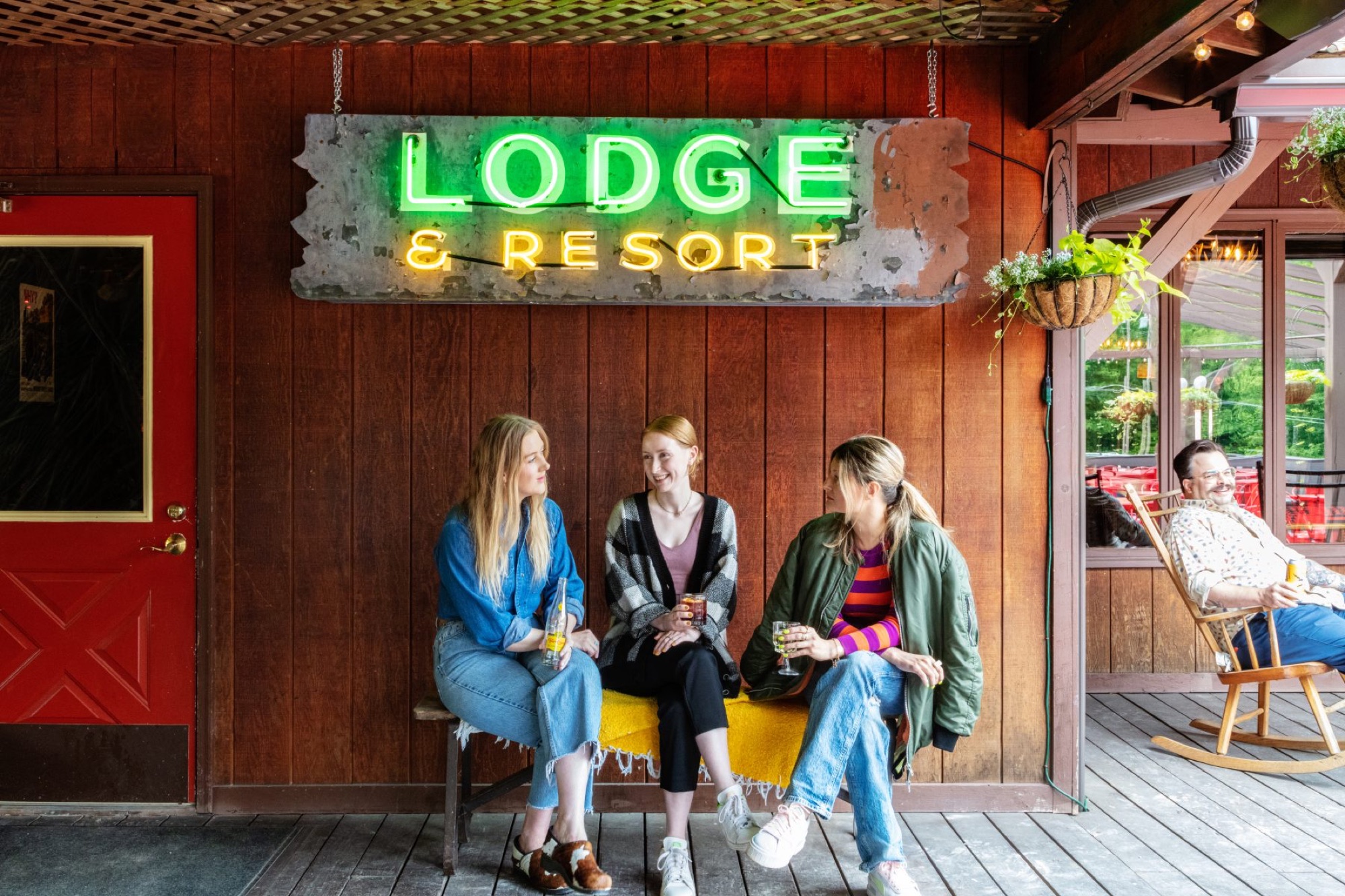
Forest bathing, Estonian sauna, the treenet
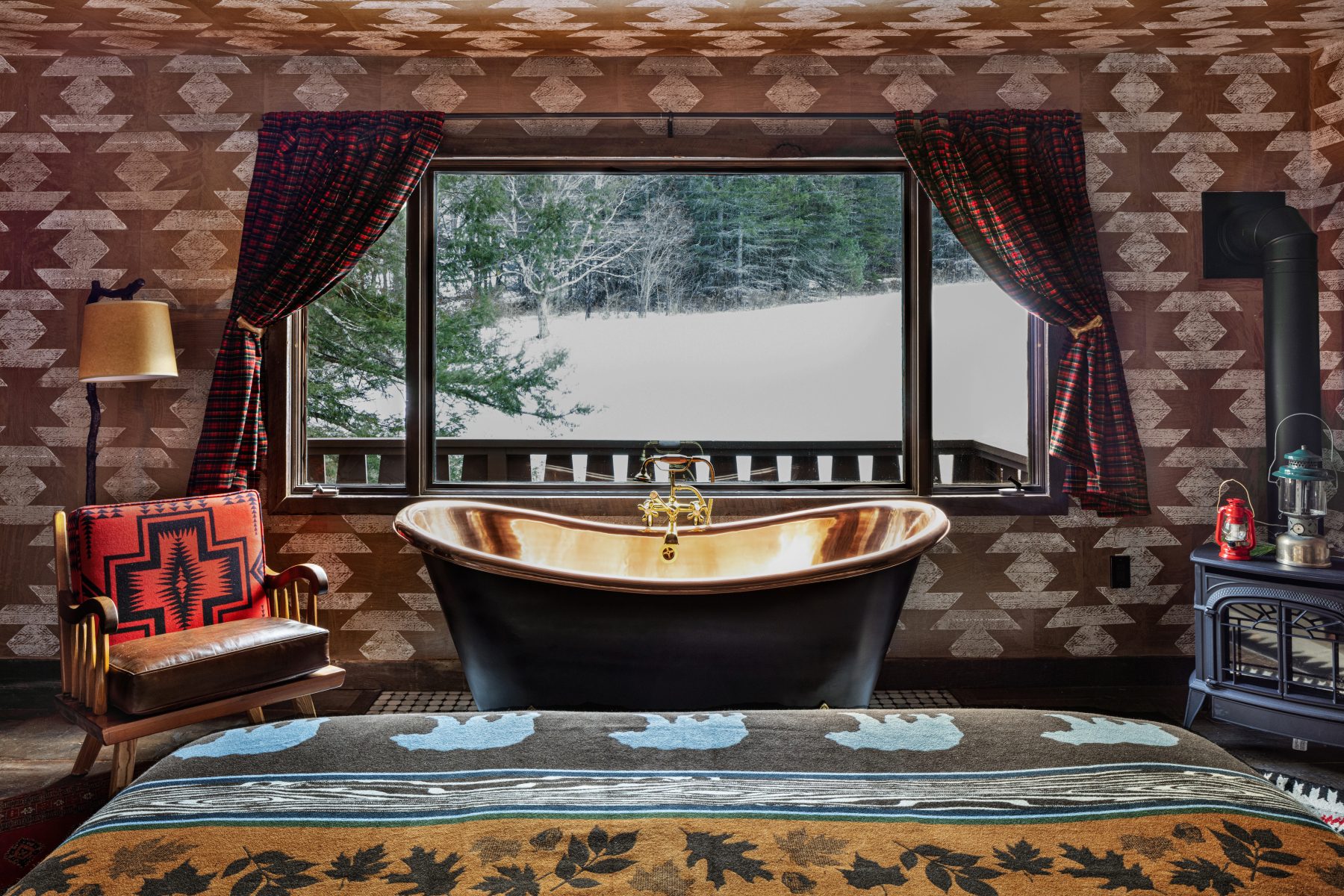
The amenities read like a carefully copy-edited list. Indoor and outdoor soaking tubs. An Estonian sauna. A pool. The Dining Room, an award-winning restaurant. Ralph's Bar & Bowling. The Public House Bar. Miles of hiking trails. A treenet installation strung between the trunks because someone on the design team understood that the word unique actually has to land somewhere.
None of these are accidents, and none of them are generic. Every one of them is the kind of thing a person mentions the Monday after they get back, which is the only test of hospitality design that matters. You don't remember the sheet count. You remember the sauna.
The math is the brand. Two hundred acres divided by forty-four rooms is roughly four and a half acres per key — and that ratio is why the lodge feels like a small private valley instead of a boutique hotel.
What this has to do with real estate
The reason Urban Cowboy matters to anyone thinking about the Hudson Valley — not just visitors, but the people who live here, build here, and sell properties here — is that it is a working example of the idea this publication exists to make. Context changes everything. The same building dropped in a different town, sold with a different narrative, priced against a different context, is a different asset.
A 44-room lodge positioned as "a boutique hotel near the Catskills" is one product. The same lodge positioned as "two hundred acres in the Big Indian Wilderness, two and a half hours from New York, where you come to stop checking your phone" is a different one. The building is identical. The number is different. And that number is shaped, months or years in advance, by the people who decide what story the place is allowed to tell.
This is the same logic that runs through every listing in the valley. A farmhouse in Accord is not a comp for a farmhouse in Accord. One of them is a farmhouse. The other is a brand. The difference is not price — the difference is the work done before the listing ever hits.
The case for the Catskills
The rest of the Hudson Valley tends to get more ink than the Catskills. Kingston and Rhinebeck and Hudson have been having their respective moments for the last decade, and for good reason. But the Catskills are doing something the rest of the valley isn't — and Urban Cowboy is the version of it you can book for a weekend.
What the Catskills have, that the rest of the region often doesn't, is space. Real space. The kind of space that does not fit in a brochure photograph. The kind that an average buyer will never understand from a listing but will absolutely understand two hours after they arrive. The job of anyone marketing property up there — the lodge, a development, a private home — is to make that space legible before a buyer or a guest sets foot on it.
Urban Cowboy manages it. The copy, the photography, the cadence of the whole experience are all calibrated to plant a particular kind of quiet in the reader's head before they ever book. That quiet is, in the end, what they are selling. The rooms are just where it happens.
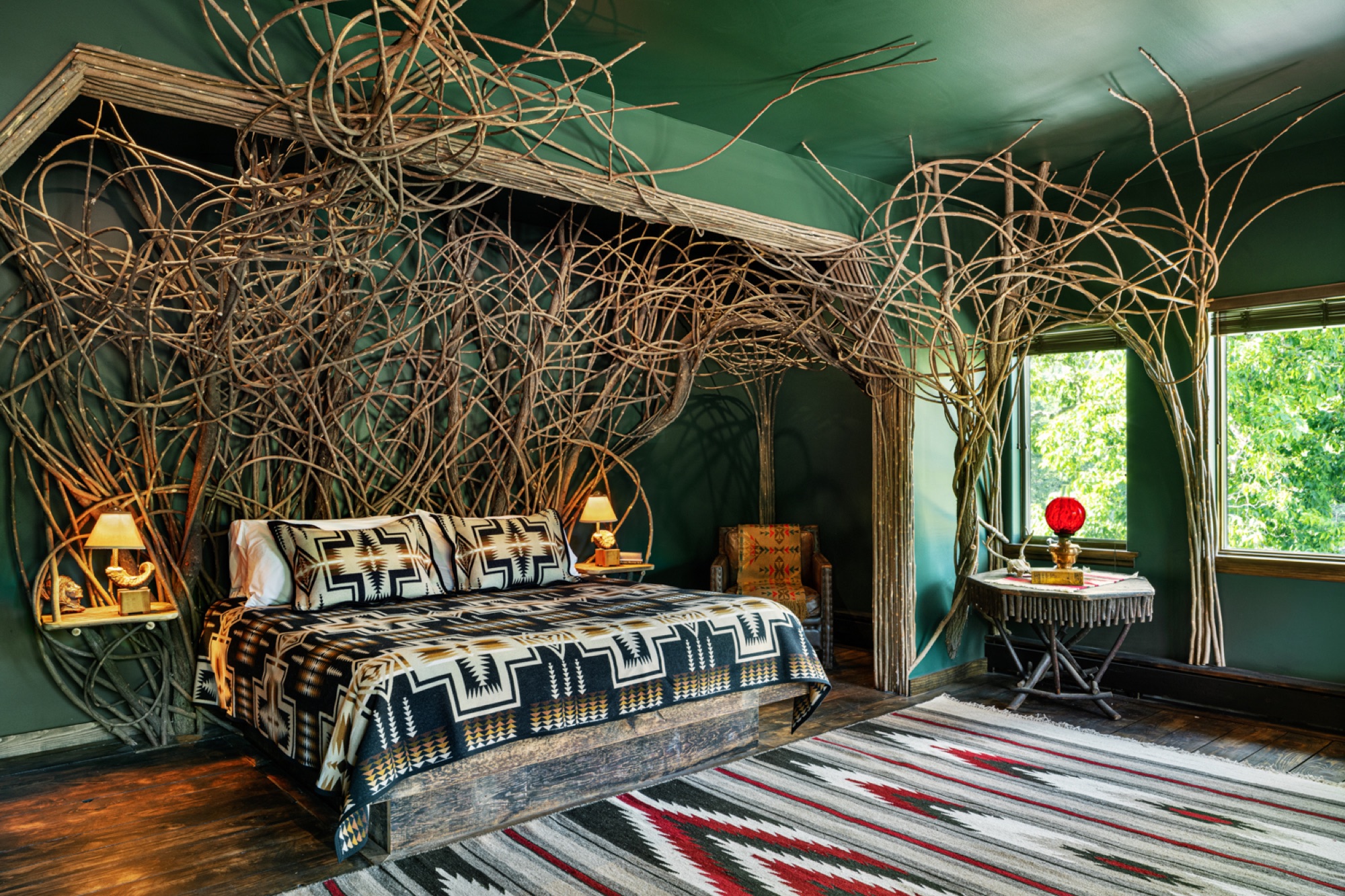
What the rest of the valley can learn
Three things, and this is what the whole piece has been building toward.
One. The context is the premise, not the backdrop. Urban Cowboy does not treat "the Catskills" as a decorative detail. It treats it as the reason anyone would come in the first place. Every developer, seller, and agent should ask, honestly: what am I selling — the building, or the valley the building sits in? If the answer is the building, the story is already too small.
Two. Specificity beats luxury. Urban Cowboy does not sell itself as the most luxurious resort in the Northeast. It sells itself as very specifically this place. The sauna is Estonian. The bar is Ralph's. The wilderness has a name. Generic luxury is a commodity. Specific luxury is a brand.
Three. The math has to hold up on the ground. Two hundred acres divided by forty-four rooms is a real ratio. The photograph of space is backed by actual space. If the story breaks the first time a guest or buyer walks the property, the story is not the problem. The fundamentals are.
Go, then come back
Urban Cowboy is 2.5 hours from New York City. Book a room. Walk the trails. Eat at the Dining Room. Sit in the sauna. Do nothing on purpose. Then, on the drive home, think about what the lodge is actually doing — what it is actually selling — and how rare and how replicable that is.
That is the case for the Catskills. And, quietly, it is the case for almost everything else in the Hudson Valley worth paying attention to right now.
— The Editors