Drive south on Route 9W from Highland and the road bends with the river for ten miles, mostly through orchards. Apple, peach, cherry. Some of the oldest commercial fruit acreage in the country runs along this stretch — Ulster County is the second-largest apple producer in the United States, and twenty-two percent of New York's commercial fruit acreage sits in the Hudson Valley. You will pass dozens of farm stands before you cross the line into the Town of Marlborough.
What is harder to see from the road is what one of those farms did, in 1976, to the rest of New York.
License No. 1
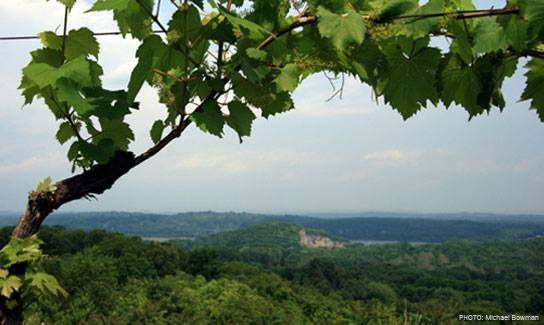
In 1976, the New York State Legislature passed the Farm Winery Act — the law that, for the first time, allowed a small grape grower to make wine on the premises and sell it directly to consumers without going through a wholesaler. Before that act, no New York winery you have ever heard of could legally exist. The act passed in part because Mark Miller, the owner of a 37-acre vineyard called Benmarl in the Marlboro hamlet, helped push it through.
When the licenses were issued, Benmarl received License No. 1.
Every winery in New York State exists because of a law a Marlboro vineyard owner helped write — and Benmarl received the first license issued under it.
That is the spine. License No. 1 is not a bragging right. It is structural specificity. The grape industry of contemporary New York — Whitecliff in Gardiner, Tuthilltown Spirits, every one of the dozens of producers along the Shawangunk Wine Trail — sits downstream of a piece of legislation a Marlboro grower helped move. The town's role in this is rarely surfaced. It should be.
The Caywood lineage
The license is the punchline. The setup runs back to 1877.
That year, Andrew Jackson Caywood — already a nationally known grape breeder — bought 84 acres on Old Post Road for seven thousand dollars. He named the property Caywood Vineyards. Over the following decade, in those rows, he bred the Dutchess, Ulster, Walter, and Poughkeepsie grape varieties — varieties that carried the names of Hudson Valley counties out into American horticulture and are still planted today. Marlboro is, in a literal sense, a birthplace of American viticulture.
In 1957 the Miller family bought the Caywood property and renamed it Benmarl — bonny marl, old Scots for "good earth." In 2006 the Spaccarelli family bought it from the Millers, replanted abandoned rows, and continue running it. The continuous viticulture on this single 37-acre estate stretches back to the late 1700s. The vineyard outlived all of its early American contemporaries.
That is what License No. 1 sits on.
The orchard math
The vineyard is one part of the answer. The other is the orchards.
Weed Orchards & Winery is on its fifth generation at 43 Mt. Zion Road, working a hundred-acre pick-your-own. Prospect Hill Orchards in the hamlet of Milton has had the Clarke family working the same land since 1817 — over two hundred consecutive years. Locust Grove on North Road. Hudson Valley Distillers, fourteen acres, est. 2014. Quartz Rock Vineyard under new ownership since January 2020. Each of these has its own continuity, and most of them are still family-run.
Add in the Town of Marlborough's official designation as a New York Farm Trail with about eighty member operations, and you have, in a roughly thirty-square-mile box, one of the most intact agricultural fabrics anywhere within ninety minutes of Manhattan.
A music venue in a button factory
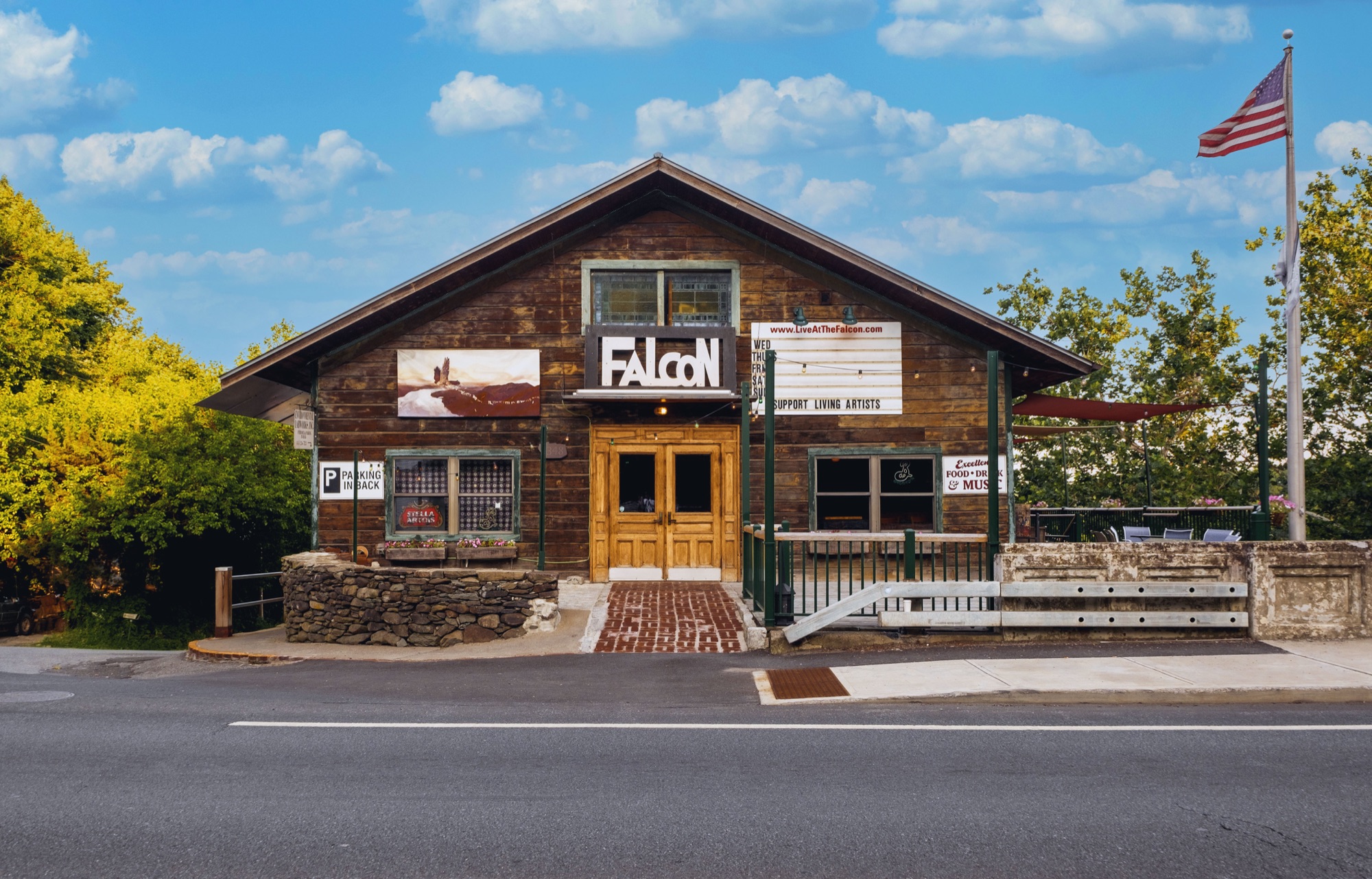
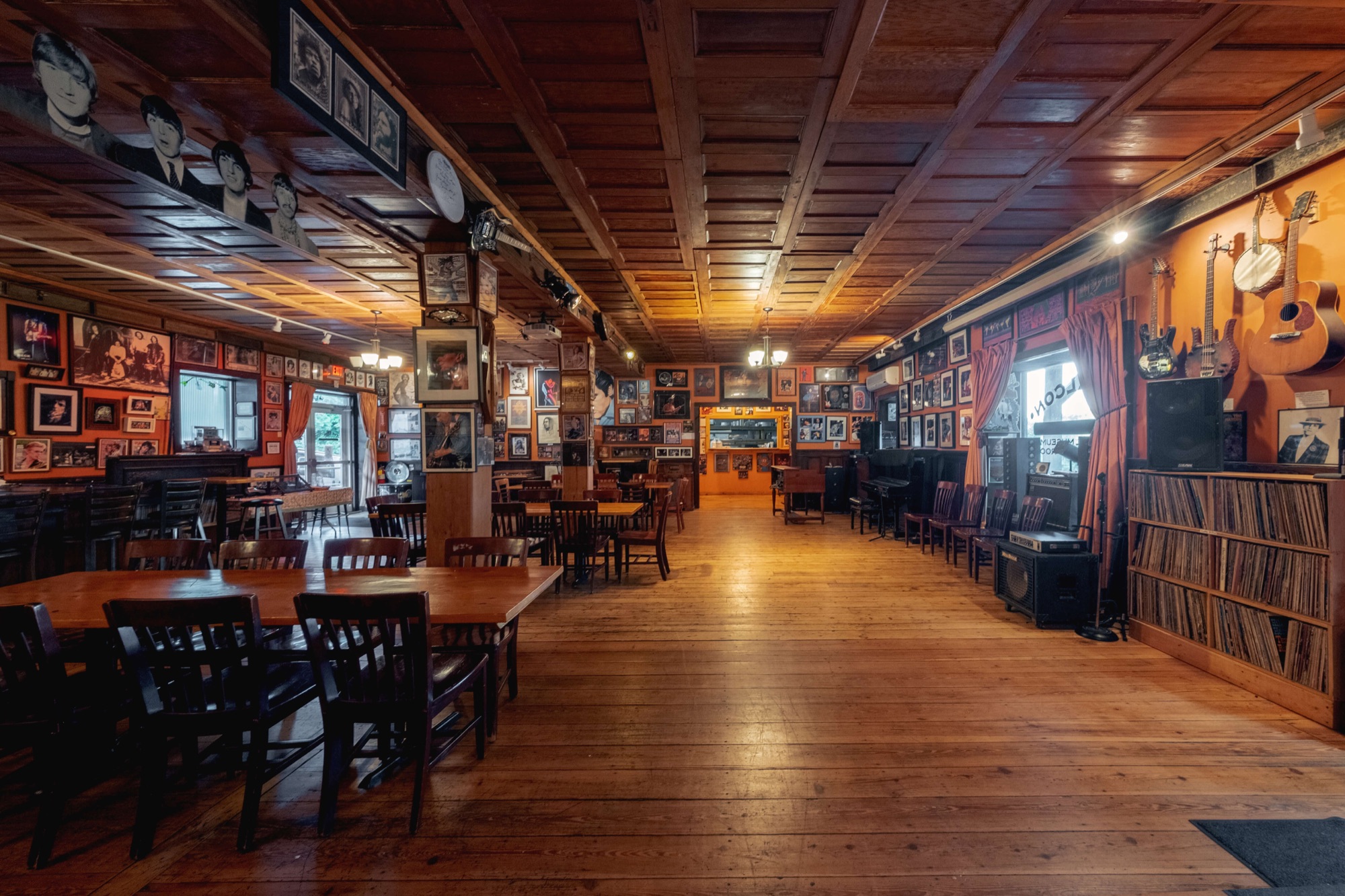
In 2005, Tony Falco — a SUNY New Paltz alum — opened The Falcon in a nineteenth-century button factory on Route 9W, directly above the 150-foot Marlboro Falls. The room is donation-only. Performers since opening have included Donald Fagen, Brad Mehldau, Joshua Redman, John Medeski, and the Letterman house band. The model is simple and the quote is verbatim: "Hey everyone, please support living artists."
John Medeski on the room: "There's a feeling there that you really don't find at too many other clubs, anywhere."
A donation-only venue, in a button factory, above a 150-foot waterfall, where world-class jazz musicians come to play, in a town of 3,700 people. That is not a vibe. That is a specific institutional fact about Marlboro. It belongs in the same paragraph as License No. 1.
What's coming
On April 16, 2025, the Ulster County Industrial Development Agency approved an eighty-nine-million-dollar incentive package for the Marlborough Resort — a 152-acre redevelopment of Saint Hubert's Lodge, a hundred-year-old hunting lodge in Lattintown. The developer, Seven24 Collective, is led by Michael Aschenbaum, son of the family behind the Gansevoort Hotel. Phase one will deliver a 28-room hotel, 90 cabin units, a spa, a working orchard, and a farm market. Twenty-five percent of the occupancy tax is committed to the Ulster County Housing Action Fund.
That is the next chapter of Marlboro. It will be built on the same agricultural fabric the Caywood, Miller, and Clarke families kept intact for almost two centuries.
What the rest of the valley can learn
Three things.
One. Continuity is not the same as nostalgia. Prospect Hill has been farming the same land for two hundred and eight years. Weed is in its fifth generation. The Caywood-Benmarl vineyard outlived every other American vineyard of its founding era. None of that is preservation work. It is a continuous business operation. The lesson for any developer in the valley is that nineteenth-century agricultural land that has stayed agricultural is the rarest asset in the region — and almost all of the remaining intact examples are in places like Marlborough.
Two. Specificity beats charm. "A charming Hudson Valley town" could describe almost any town in the region. "The town with License No. 1, the Caywood grape varieties, the Falcon, and the 208-year Clarke farm" describes one. Specifics are a brand.
Three. Structural facts outlive trends. License No. 1 was issued in 1976. It is still License No. 1. A Brooklyn migration can come and go. Real estate prices can rise and fall. The legal architecture of the New York wine industry will still trace back to a 37-acre vineyard in Marlboro. That is what durable positioning looks like at the town scale.
Go, then come back
Marlboro is roughly ninety minutes from Manhattan via the Newburgh-Beacon Bridge. Start at Benmarl on Highland Avenue and have a glass on the terrace looking down at the river. Walk down into the hamlet. Have dinner at the Raccoon Saloon — forty-plus years on Western Avenue, the burger that anchors the town. Go up to The Falcon for a Friday show; leave a donation. Drive to Milton in the morning and find the Clarke family's land at Prospect Hill, where the apples are still picked.
Then drive home and look at a New York wine list. Notice that almost every grower on it owes their license to a 1976 act that a vineyard owner in Marlboro helped move. That is the case for License No. 1. And, quietly, it is the case for everywhere in the valley that has stayed itself on the land.
— The Editors