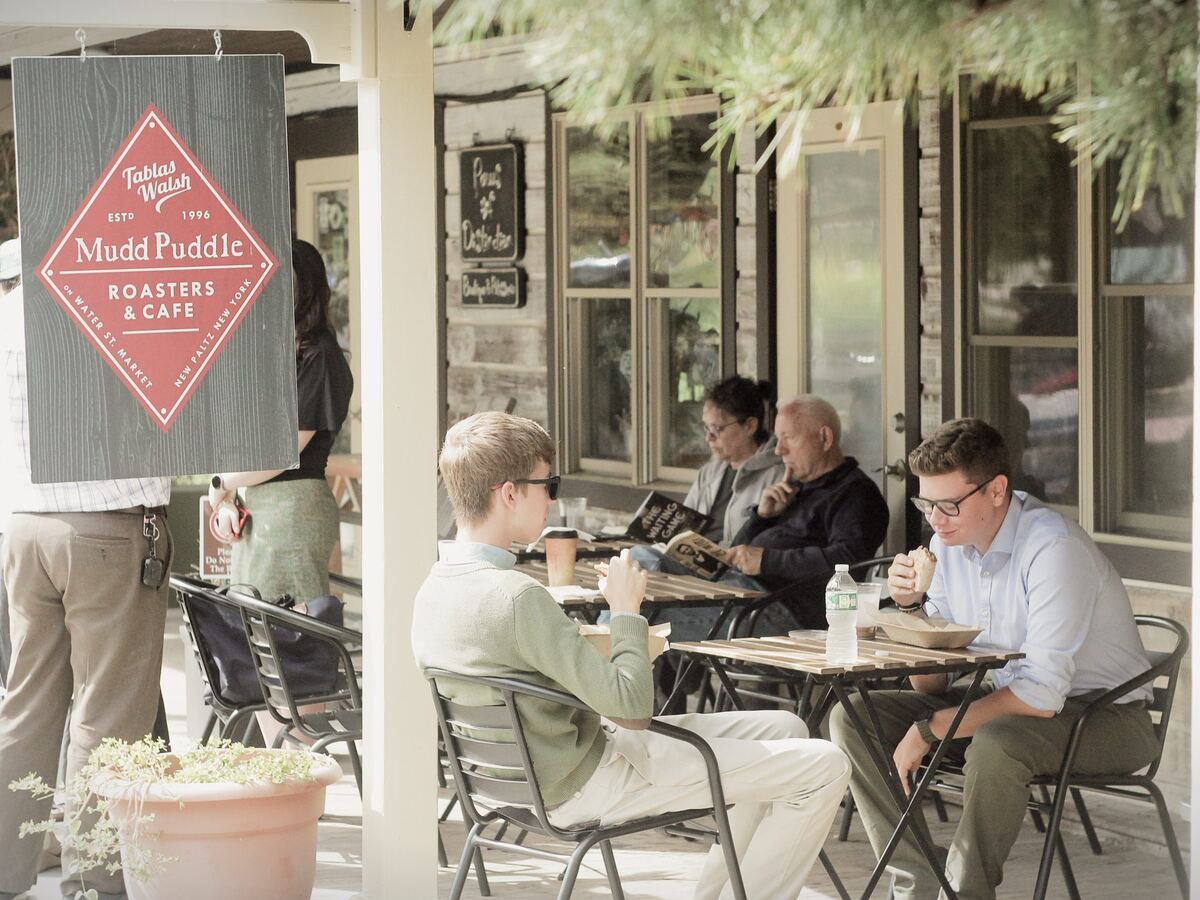
The room is on Main Street in New Paltz, behind a storefront painted in the kind of plainspoken colors that don't ask for attention. There is a counter. There is a chalkboard of the day's specials. There is a case of prepared foods, the kind of food you would actually want to take home — roasted vegetables in olive oil, grilled chicken on the bone, a quiche, a salad that isn't sad. There is, at the back, a kitchen the size of a small commercial kitchen, where most days a team is preparing the food for somewhere else: a wedding upstate, a reception at a historic estate in Hyde Park, a school benefit in Highland, a gallery opening in Beacon. The room out front is the storefront. The room out back is the catering company. They have been the same room since May of 1990.
That's thirty-six years. In a country where the median life of a small independent restaurant is somewhere under five.
The take-out that became the catering company
Bruce Kazan grew up in Flushing, Queens. He came to SUNY New Paltz as an undergraduate in the late 1970s. He went on to the Culinary Institute of America in Hyde Park, graduated Class of 1981, and took the kind of catering apprenticeship a young chef takes when they want the volume training nobody else will give them: executive sous chef at the New York Hilton. Then he went to Lincoln Center as Director of Catering for Restaurant Associates — running pre- and post-performance dinners for, on the right night, five hundred at a time.
The number that matters there isn't five hundred. It's the catering apprenticeship — the years in production kitchens where the food has to leave the building hot, beautiful, and accounted for, on the clock, for people who don't know you and won't be back to complain. It's a different discipline from line cooking. You're cooking for a building you're not in.
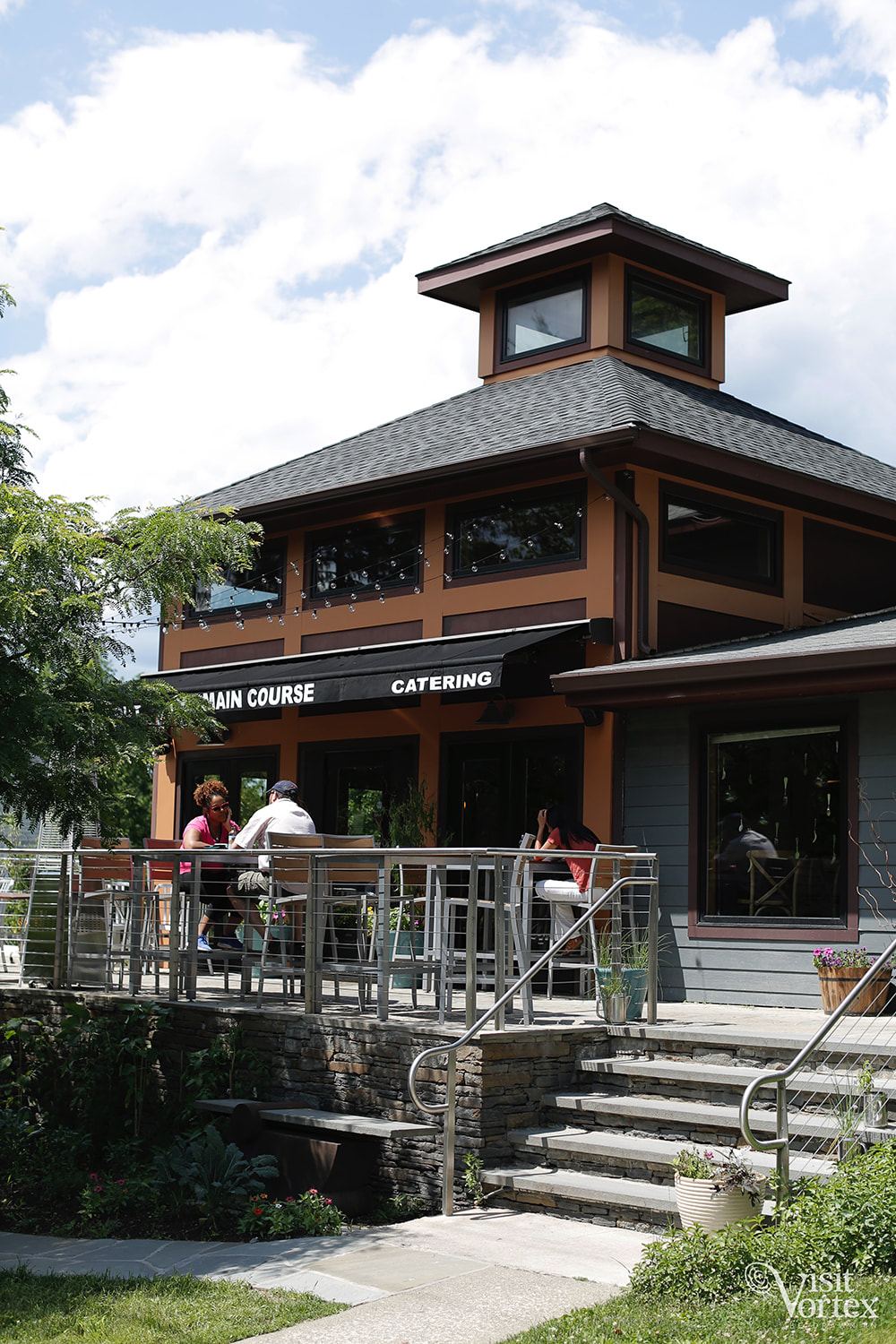
In 1989, Kazan came back to New Paltz with that discipline and started taking out small advertisements in the local paper. He didn't have a kitchen yet. The ads ran for a year while he scouted locations and built a small client list among the wedding venues, the academic institutions, the historic estates of the Hudson Valley that needed regular catering and were tired of paying New York City prices for it. By the time the storefront opened in May 1990 — a few blocks north of where Main Course now sits — the catering side was already booked. The front-of-house take-out followed.
That's the architecture: a catering business with a storefront attached, not the other way around.
BATH
Kazan's own word for the working philosophy is BATH — Better Alternative to Home.
The line has been on the back wall in some form since 1990. It's a piece of writing that has aged better than almost anything else from the catering vocabulary of its decade. It does not say farm-to-table. It does not say artisanal. It does not say elevated. It says, food that's better than what you'd make at home if you had time you don't have.
The implications of the line are, in retrospect, exactly the implications you'd want a thirty-six-year-old institution to have:
- The food has to be home-quality — meaning recognizable. A roast chicken that looks like a roast chicken.
- It has to be better than home — meaning the kitchen earns its existence. Not by being fancier, but by being more consistent.
- It has to be accessible — meaning a hundred-dollar tray of food and a six-dollar sandwich live under the same brand.
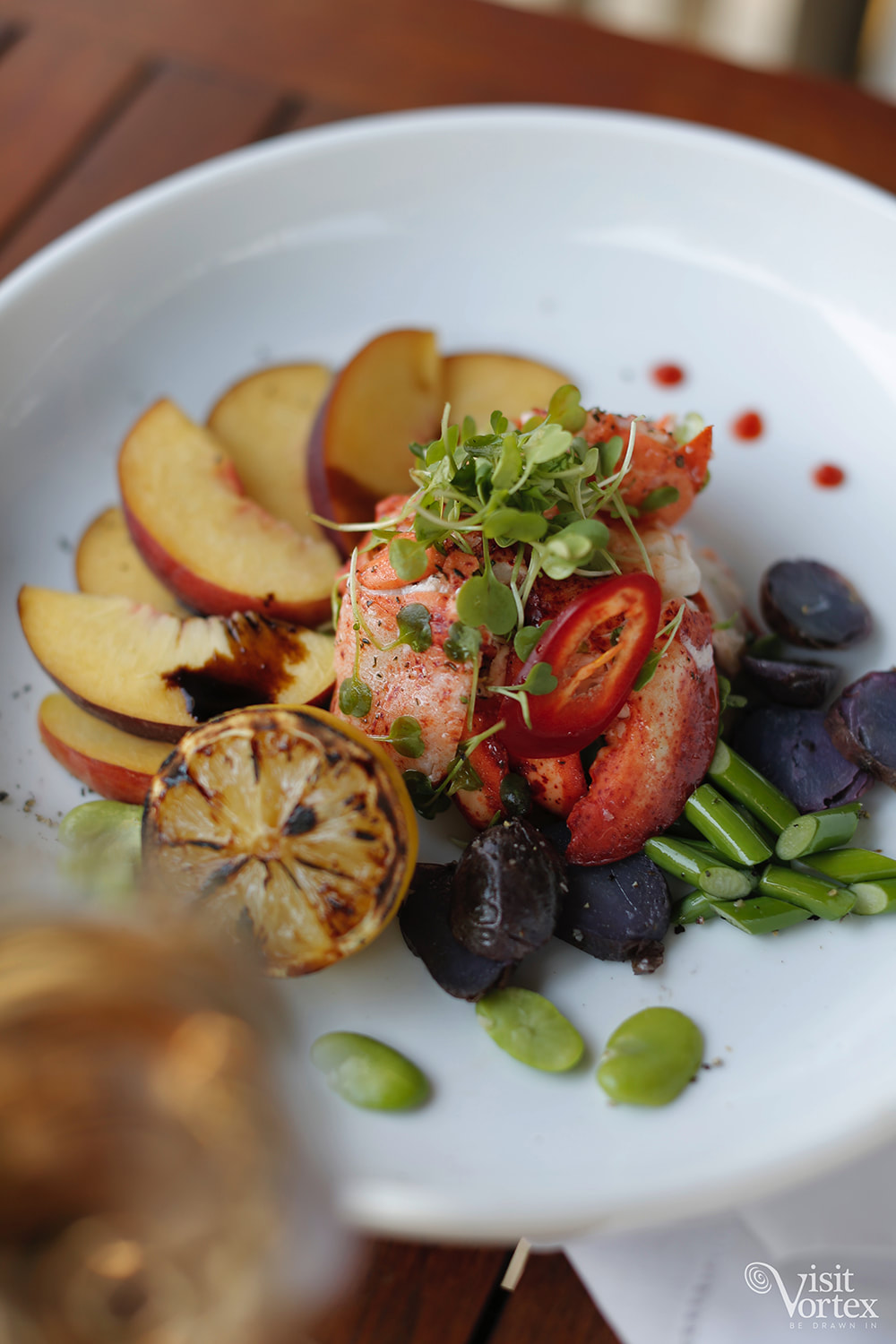
The vocabulary Main Course has used about its food, across decades of press coverage, is telling. It doesn't lean on luxury. It leans on clean. It leans on low-sodium. It leans on made from scratch. These are the words of a kitchen that has been at it long enough to know that consistency outranks novelty over thirty-six years.
The farms before the phrase
In 1990, the phrase farm-to-table was not a category in American restaurant marketing. It would not become one for another fifteen years.
That spring, Kazan sat down with a handful of working Hudson Valley farms — Russell Farms in Rhinebeck, Jenkins-Lueken Orchards in New Paltz, Sorbello Farms in Highland, among others — and started a conversation about which crops they would grow for him. That conversation has continued, in some form, every spring since.
This is the part of the Main Course story that gets quietly under-told. By the time Hudson Valley restaurants started marketing their sourcing relationships in the mid-2000s, Main Course had already been doing it for fifteen years without the language to brag about it. They just bought the vegetables. Today the kitchen runs on relationships with twelve or more local farms, most of them measured in decades rather than seasons.
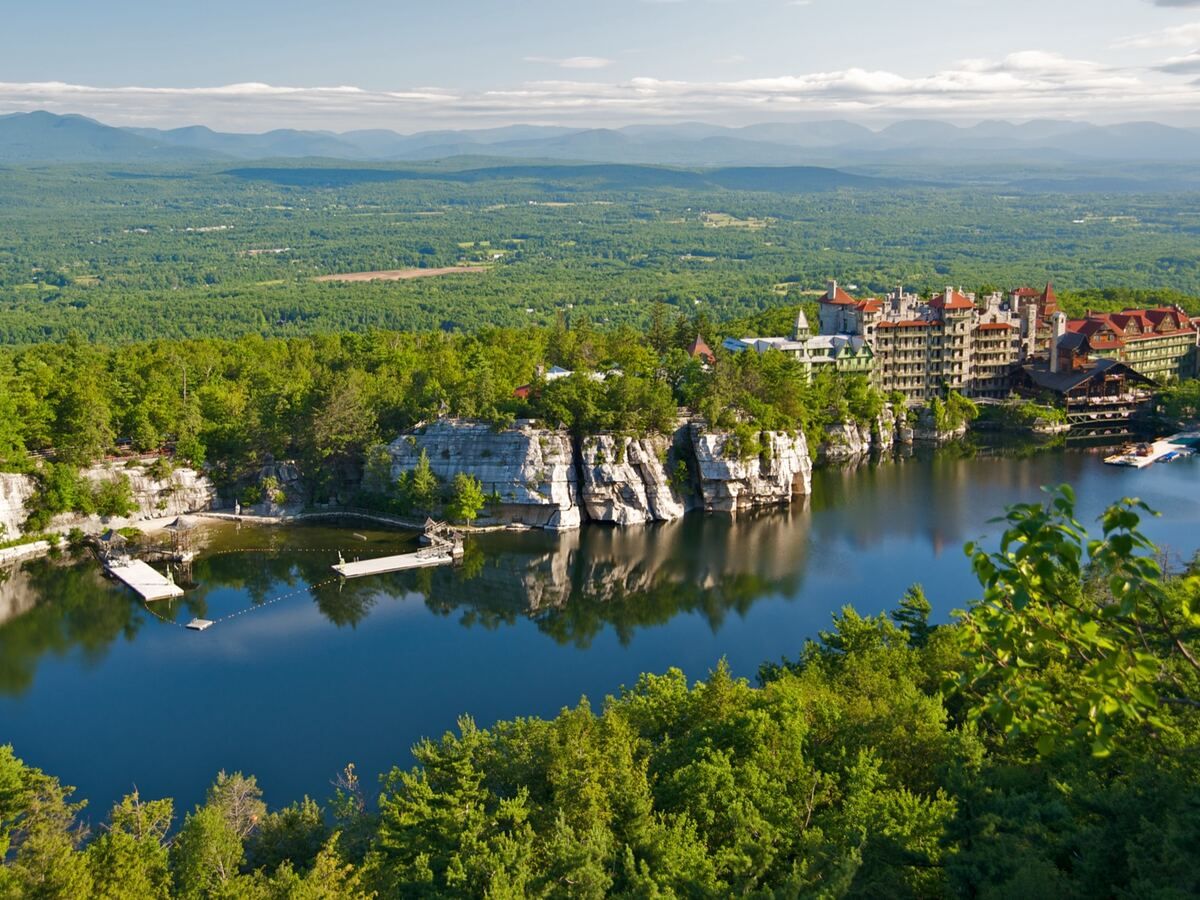
It is the same point the Mountain House story makes, in a different register: an institution that long-outlasts the trends it predates by being too early to use the vocabulary the trend would later invent. If you have to advertise that you source locally, the relationships haven't been there long enough to be invisible.
The wedding food the locals actually eat
The single sharpest fact about Main Course, the one that earns the dek of this piece, is this: Hudson Valley Magazine's readers have voted Main Course Best Caterer in the Hudson Valley every year since 1994. That's a thirty-year unbroken reader-vote streak, in a region that includes some of the most credentialed catering competition in the Northeast — from Westchester wedding-machine outfits to the upstate farm-table catering boom that started fifteen years later.
It is, in the relevant sense, the longest-running positive review in regional food.
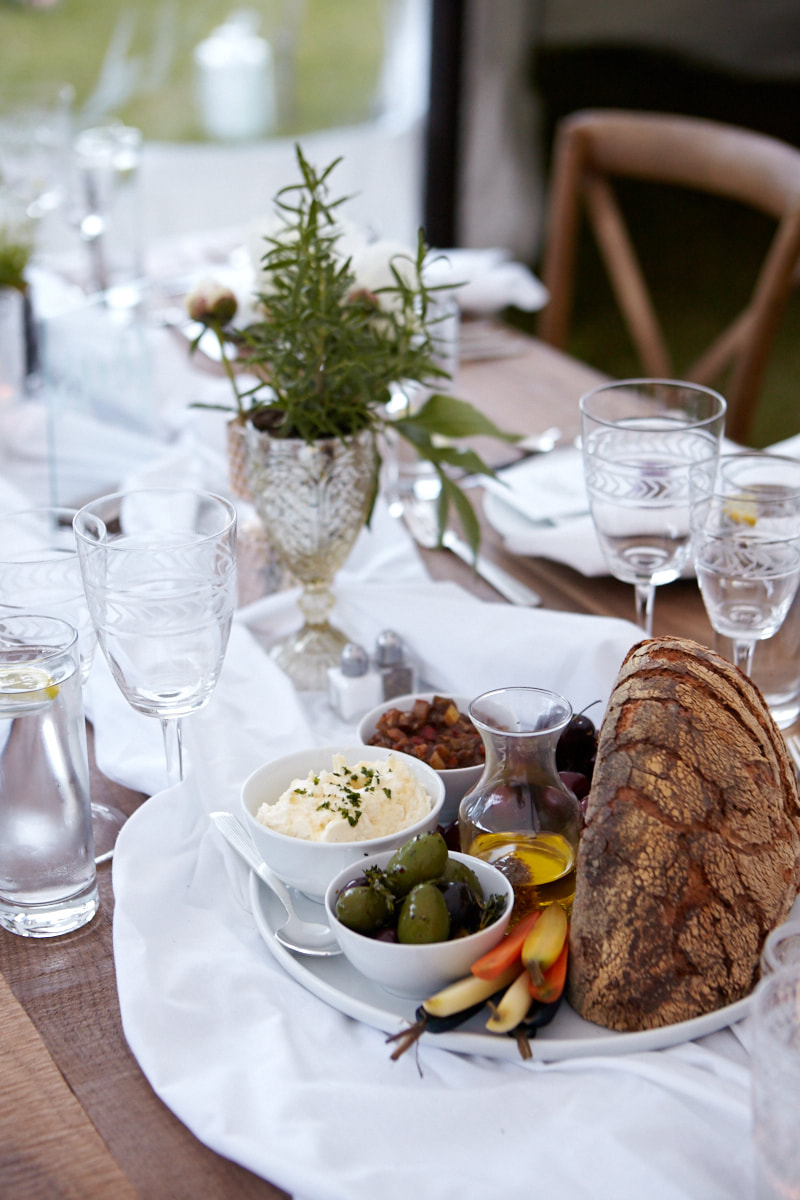
The institutional clientele is also documented: Main Course is the caterer of record at the Roosevelt estate at Hyde Park — the Franklin D. Roosevelt National Historic Site — for state functions, partner events, and benefit dinners. The kitchen has, over the years, fed Presidents Bush and Clinton, Hillary Clinton, and Boris Yeltsin at events held in the Hudson Valley. None of this appears on the front of the website.
The reason it doesn't is the same reason the readers vote them best every year. They're not trying to be famous. They are trying to feed the wedding tomorrow. And the school benefit on Saturday. And the gallery opening Wednesday. And the gala the following Friday. The institutional clientele follows from the work, not from the marketing.
The wedding food the locals actually eat, in other words, is the food the caterers themselves order when they're going to a wedding. That's what thirty-six years of consistency buys you: an industry secret that stops being a secret.
What the room teaches
Main Course never franchised. It opened in 1990 a few blocks north on Main Street, moved once around 2008 to its current address at 175 Main Street, and has been there ever since. Never left Main Street. Never left New Paltz. No second location, no sister restaurant in Beacon, no New York satellite. The kitchen has the size it has. The team has the size it has. The institutional clientele has grown by accretion, one repeat booking at a time, for the better part of four decades.
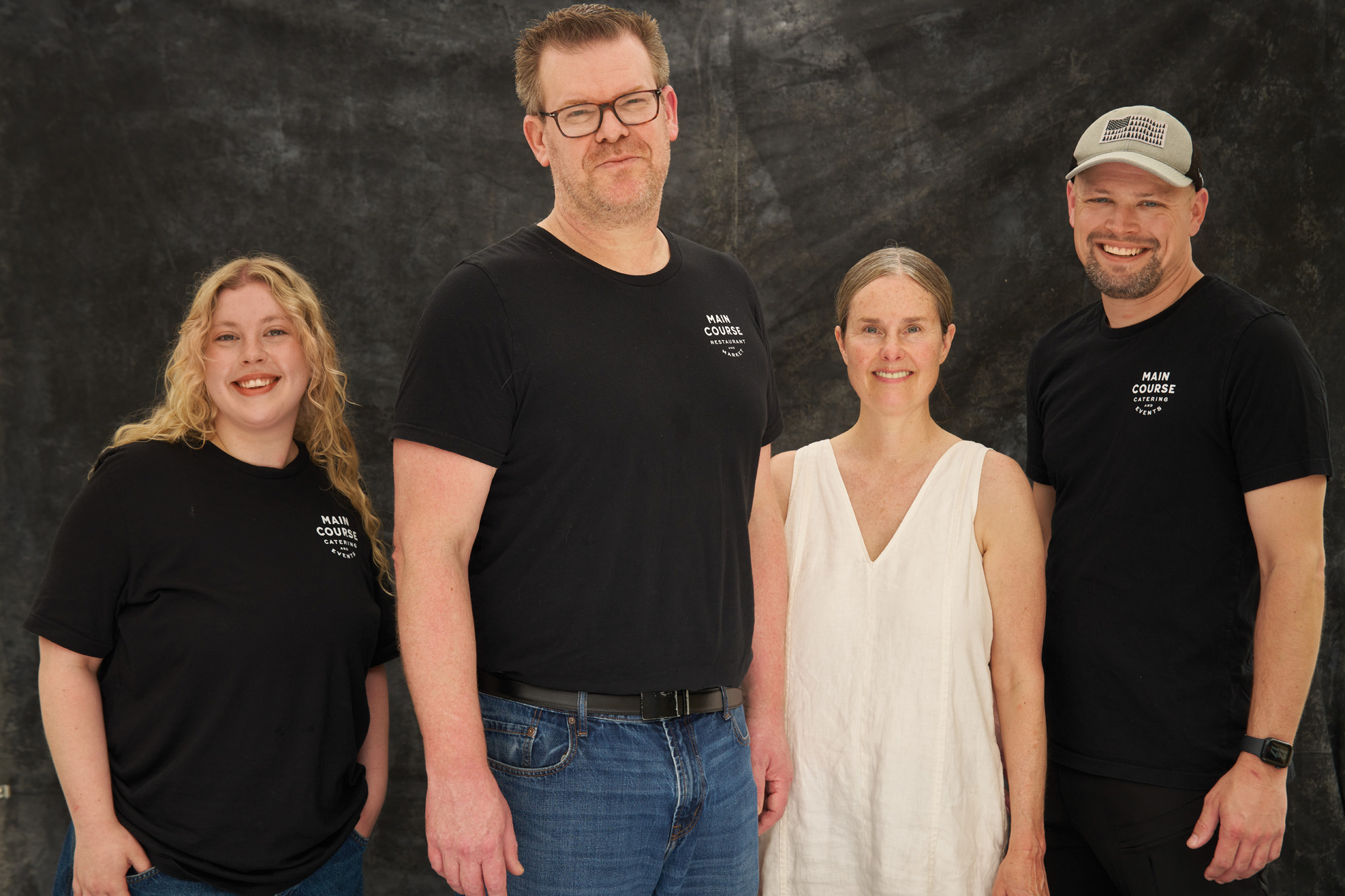
What has changed, quietly, is who is running it day-to-day. Chronogram's July 2026 profile identifies the current team as Shawn Harrison, Matt Gaines, Chris Dodd, and Angie O'Connor — the four people carrying the room's next chapter. That is what a thirty-six-year-old institution looks like: an original chef whose ads ran in the paper before he had a kitchen, and a team behind the counter today whose work is the same room's continuing argument.
What the room teaches the rest of the valley — and the reason it's in The Edit — is the same thing the Mohonk story teaches at a different scale, the same thing every long-lived Hudson Valley institution teaches when you look hard enough. The valley rewards staying. Not staying still, exactly — Main Course has evolved its menu, expanded its catering services, updated its market display, brought in newer kitchen leadership over the last several years. But it has stayed of the place. The relationships with the farms have stayed. The chalkboard has stayed. The line on the back wall has stayed.
Better Alternative to Home is not a slogan. It is a multi-decade promise that the kitchen still appears to be capable of keeping. The next time you find yourself at a wedding in the Hudson Valley and the food is, against every reasonable expectation of catering, actually good — the kind of food where you eat a second piece of the chicken — there is a strong chance the team in the back of the venue came from a small storefront on Main Street in New Paltz where, thirty-six years ago, a chef came back from Lincoln Center and started taking out ads in the paper a year before he had a kitchen.
That's the case for the room that's been at it since 1990.
— The Editors