Drive up Route 9 with the windows down and you can almost feel Rhinebeck deciding to be itself, one block at a time. The Beekman Arms on the corner. The old stone walls. A village that managed, somehow, to get the last fifty years mostly right while everywhere else was getting them wrong. There is a kind of trust you develop in a town like this — that the next thing to open is going to fit, and that the people doing the opening will have actually thought about it.
Little Goat opened on Mill Street last June. It fits.
A small gift
The founders, Taavo Somer and Erin Winters, describe the restaurant in their own words as a small gift to the community. It is the kind of phrase you can read past the first time. Don't. That phrase is doing the work the two-hundred-acre number does at Urban Cowboy, two valleys over — it tells you exactly what the place is, and exactly what it isn't.
A gift is not a transaction. A gift presumes you know who it is for. A gift is given by someone who already lives there.
This is not how most restaurants in the Hudson Valley introduce themselves. Most introduce themselves as destinations — places you drive up to, places you photograph, places you tell people about because they confer something on you. Little Goat is announcing itself, very deliberately, as the opposite kind of thing. A neighborhood gathering place. Open all day. Designed, in Somer's words, to feel like home.
Inness, downstream
Somer and Winters are not new to this. They built Inness — the destination hotel an hour west, in Accord, that has done as much as any single property to define the contemporary Hudson Valley luxury vernacular. They are also behind Hotel Kinsley in Kingston, Lola, and, before all of it, Freemans on the Lower East Side, which more or less invented the room a generation of restaurants would copy.
Read in that line, Little Goat is something specific: it is what these operators built when they pointed the same craft back at the place they live. Inness sells the Hudson Valley to weekenders. Little Goat is what the same team made for the people who already drive these roads on a Tuesday in February. That direction reversal is the real story.
Inness sells the Hudson Valley to weekenders. Little Goat is what the same team made for the people who already drive these roads on a Tuesday in February. That direction reversal is the real story.
The architect's restaurant
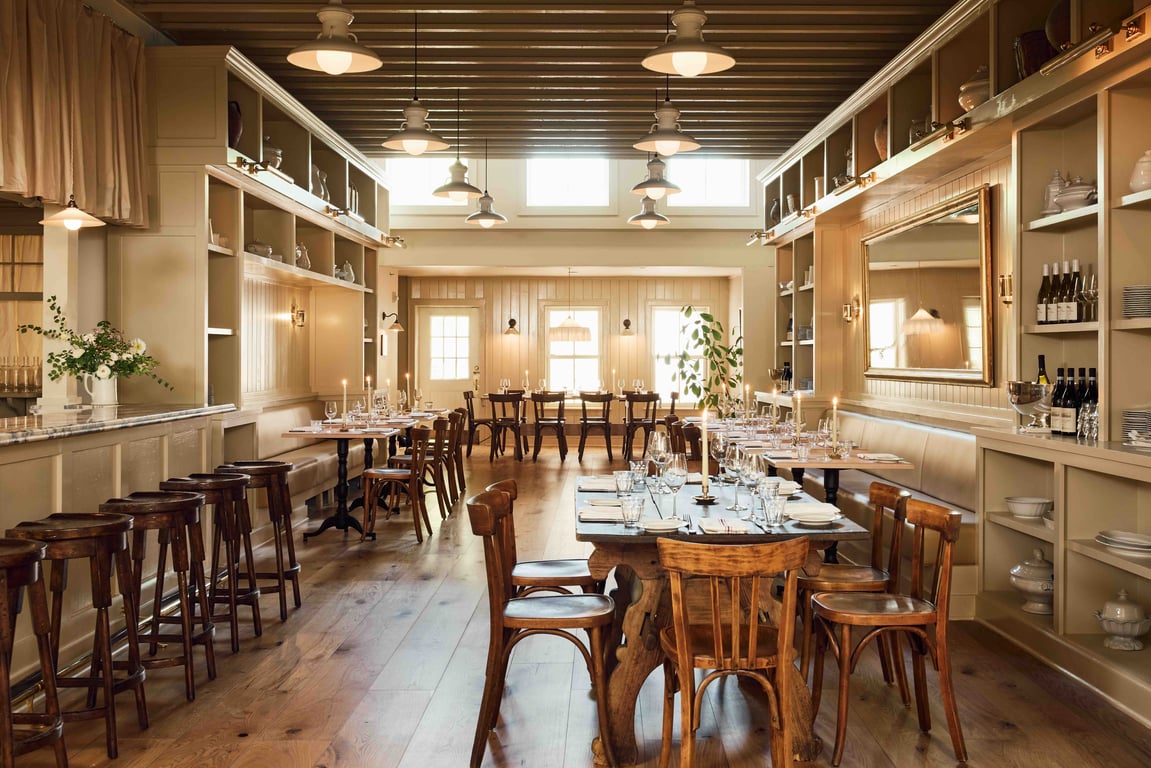
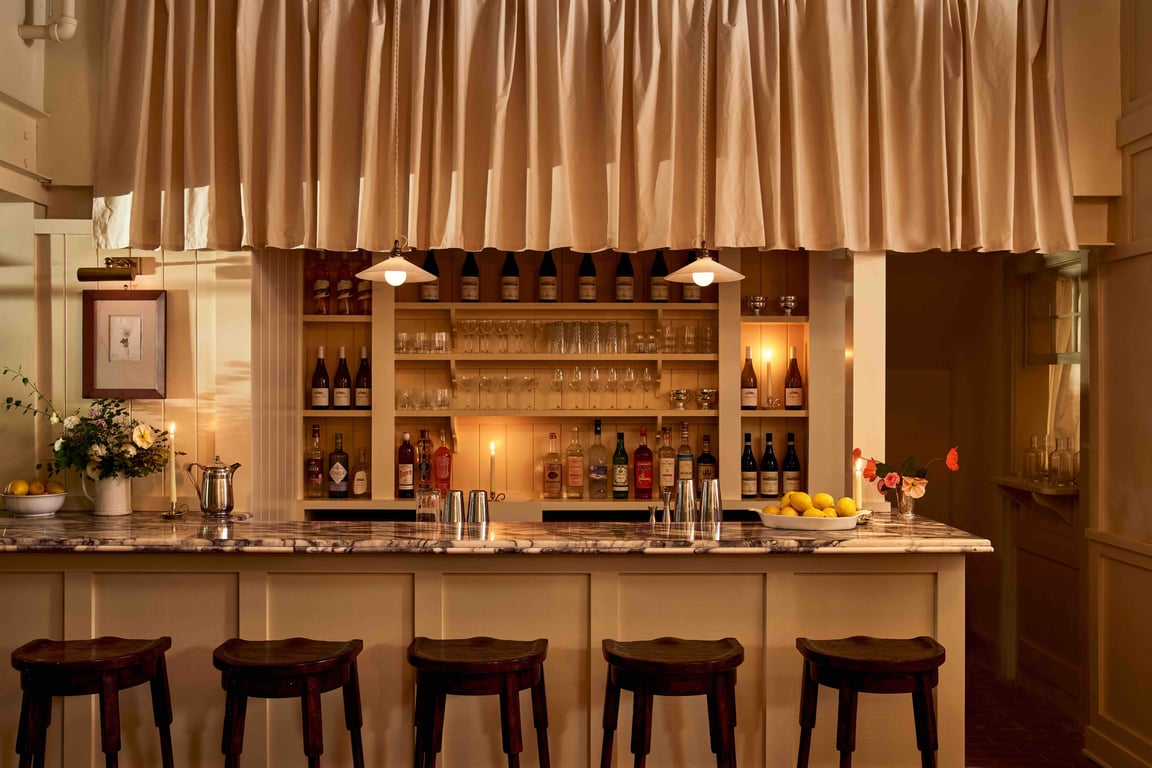
Somer is an architect by training, and the room reads like it. The dining space sits inside a restored 18th-century townhouse — formerly Amsterdam — that he gut-renovated. The ceiling, originally tall, was lowered with decorative beams to bring the proportions in. The walls are Farrow & Ball — New White, String, Wimborne White — and the bar is Calacatta Viola marble. There are vintage French chairs and brass sconces and ironstone, some of it pulled out of Somer's own kitchen at home. His youngest daughter contributed the small hand-made goat figurines that sit on the shelving near the door.
This is what practiced design looks like, as opposed to applied design. Most restaurants are decorated; this one is composed. There is a difference, and you feel it instantly. Kate Sears's photographs across the press capture the same room shifting from breakfast sunlight to dinner glow without ever quite changing — which is a harder thing to design than it sounds.
The math is in the menu
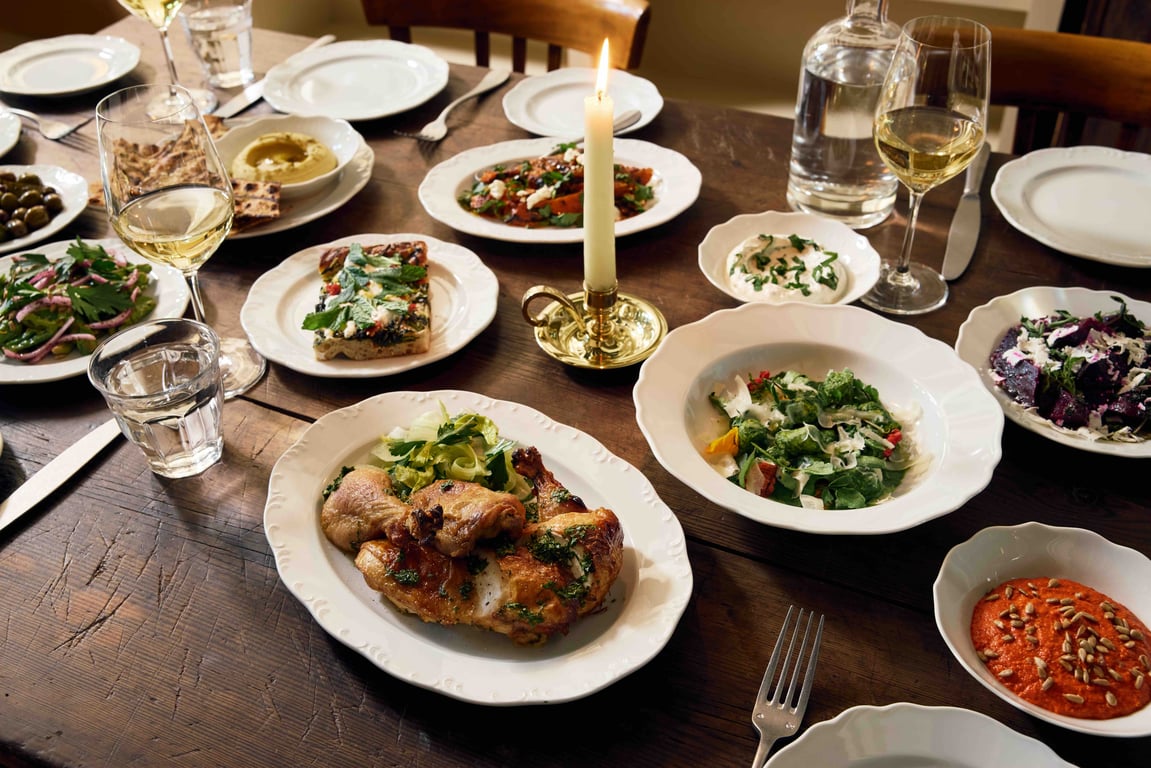
Specificity beats luxury — this was true at Urban Cowboy and it is true here. The kitchen is run by Brian Paragas, a chef who came up through Blackberry Mountain, Vetri Cucina, and Zahav, with consulting work from Brian Arruda (José Andrés, Thomas Keller, Daniel Boulud). The food is vegetable-forward Mediterranean, pulled across North Africa, the Middle East, and the Italian South. The pasta is housemade. The flour is from Sparrowbush, milled in Hudson. The chicken is from La Belle Farm. The pork is from Veritas. The dairy is Churchtown.
Read those names again. Those are not garnishes on a menu. Those are partners. Those are the names of the operations that are fed, in turn, by the existence of a restaurant like this on Mill Street. A vegetable-forward kitchen that buys at this density is not an aesthetic choice. It is an economic one. It is what civic infrastructure looks like when it is doing its job.
The signature dishes are easy to name and they earn their place. Grilled harissa carrots with farmer's cheese, mint, and cilantro. Charred local greens. A bucatini with ramp pesto in the spring. Wood-fired Sparrowbush bread, cultured butter on the side. The Basque cheesecake. The martini service — vodka and gin on a tray, sidecar on ice, $25 — that you order if you came on purpose.
The case for Rhinebeck
Rhinebeck has been having its moment for thirty years now, which is another way of saying it isn't having a moment — it is just the kind of town that knows how to stay legible. What it has, that other parts of the valley don't, is a resistance to failure-by-trend. Mill Street has not collapsed into pure tourism. It has not been hollowed out into a row of boutiques selling the same five candles. Things open here that are made for the residents first. The Beekman Arms is still, in the year 2026, a hotel and a bar and a place locals walk to. That is the achievement.
Little Goat is the next entry in that ledger. It is open at seven in the morning for coffee and a pastry. It is open at noon for a sandwich and a soup. It is open at seven at night for a roasted chicken and a glass of Burgundy. The same room serves all three meals and serves them well. That sentence is harder to write than it sounds.
The case for Rhinebeck is the case for towns that get this right — towns where the next opening is built for the residents and survives the weekend traffic anyway. That is rarer than it sounds. The Hudson Valley has many destinations. It has fewer towns.
What the rest of the valley can learn
Three things, again, and this is what the whole piece has been building toward.
One. Hospitality is civic before it is commercial. The phrase a small gift to the community is not marketing copy. It is positioning copy, and it is structural. It tells the operator who the room is for on a Tuesday at three in the afternoon, when no one is photographing it. Build for that customer first. The weekenders will follow on their own.
Two. Specificity beats luxury, again. The pork has a name. The flour has a town. The cheese has a dairy. Generic luxury collapses the moment a guest tries to recommend it. "It was nice" is the death of repeat business. "It was the chicken from La Belle, with the harissa carrots" is the inverse — and it is the inverse for the same reason Urban Cowboy's Estonian sauna is the inverse. A specific noun outsells a generic adjective every time.
Three. The architect is the chef of the room. Somer treats the dining space the way Paragas treats a plate — same level of intention, same level of edit. If a restaurant or a listing or a development feels decorated rather than composed, the problem is upstream of the decorator. It is in the brief. It is in the question of whether anyone really decided what the room is for.
Go, then come back
Little Goat is two hours from New York City. It is fifteen minutes from Hudson, ten from Tivoli, and around the corner from anyone who is already lucky enough to live in Rhinebeck. Go for breakfast on a Saturday. Order the milkbread toast. Sit at the bar. Come back at seven for a drink and the harissa carrots and whatever is on the pasta board that night.
Then, on the drive home, think about what is actually happening in that room. A team that built one of the Hudson Valley's most-photographed destination hotels just opened an all-day restaurant for residents, and they meant the word gift when they used it. That is the thing. That is the case for Rhinebeck — and, quietly, the case for almost everything else in the valley worth paying attention to right now.
— The Editors