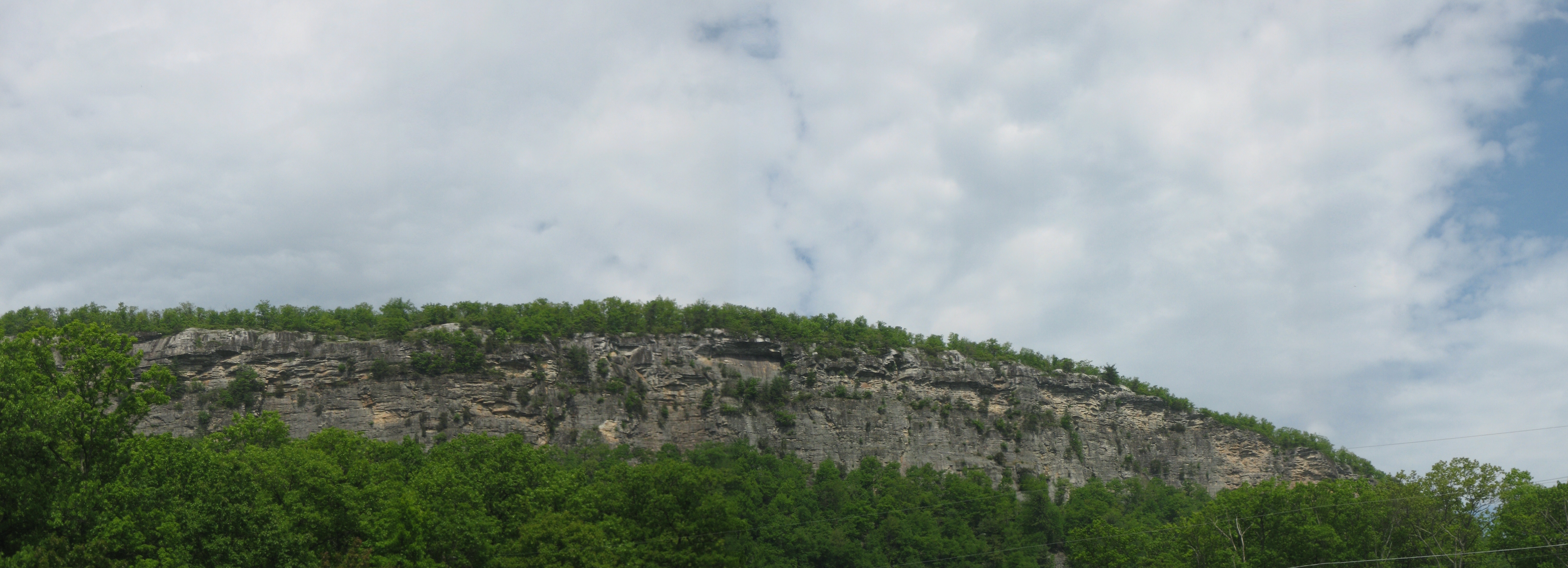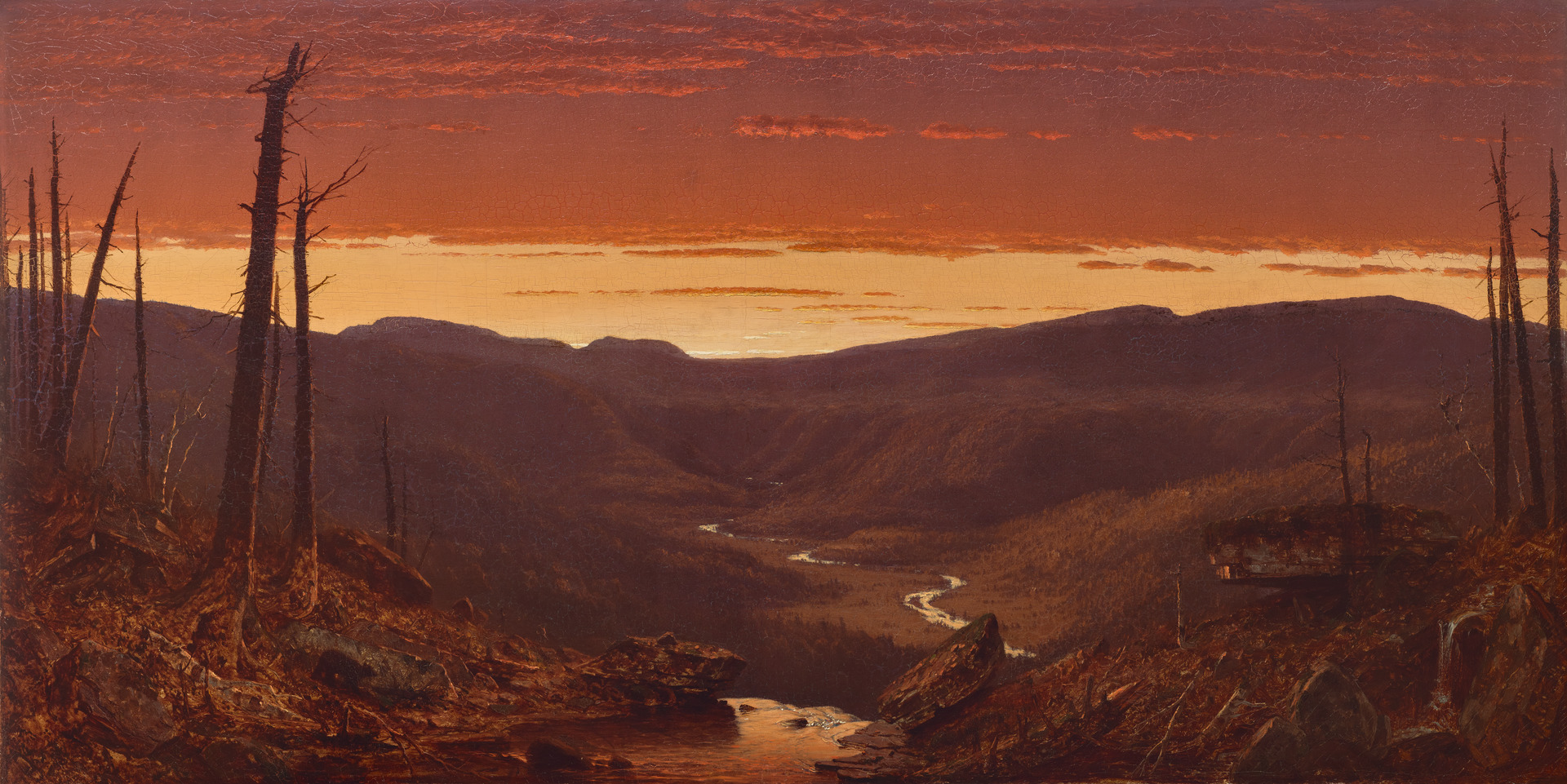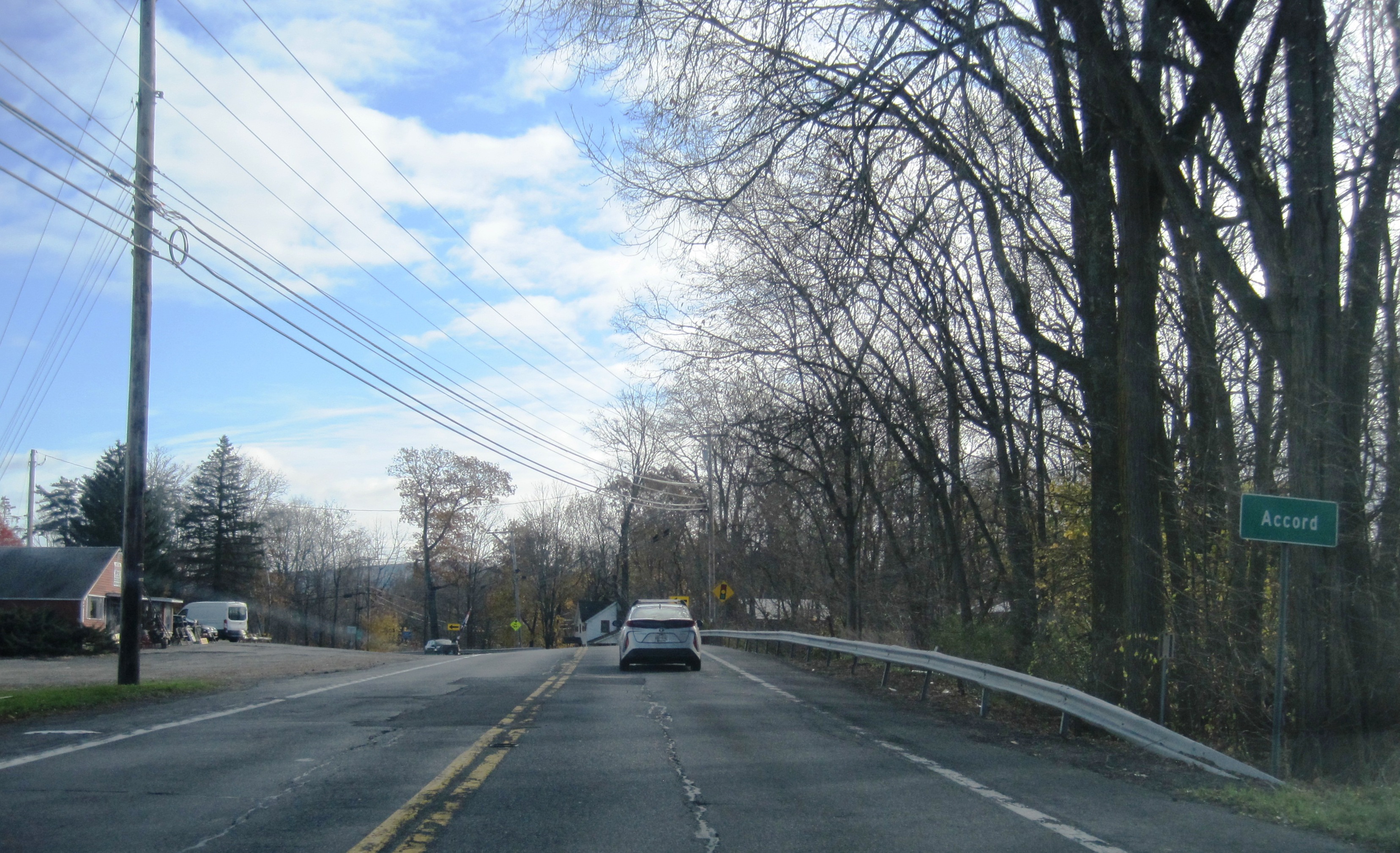
Accord is a small hamlet — population around 573 — in the Town of Rochester, Ulster County, on Route 209 south of Stone Ridge. It sits on the flat, fertile floor of the Rondout Valley, between the Shawangunk Ridge to the east and the Catskills to the west, with the Rondout Creek running through it. Where Stone Ridge is built up — limestone houses on the road and the ridge — Accord is built flat: alluvial bottomland, the most farmable ground in the region, worked since the seventeenth century.
The name is a small joke the town has kept. The hamlet was originally called Port Jackson; when residents petitioned for a new name, the story goes, the authorities "could not come to an accord" — and named it Accord. In 2020, the hamlet was designated a historic district on the State and National Registers.
The argument here is about the floor — what happens when the most fertile ground in a region stays in farming for three hundred and forty years, and then meets a wave of contemporary money that decides to build with the agriculture instead of over it.
The farm that has not stopped
Start with the oldest thing.
Saunderskill Farms, at 5100 Route 209, sits on land granted to Lieutenant Hendrick J. Schoonmaker by Peter Stuyvesant in 1663 and continuously farmed since 1680. That is eleven generations of the Schoonmaker family, on roughly three hundred acres of prime Rondout bottomland, without interruption. It is frequently cited as New York State's oldest continually running business — second oldest in the country only to a farm on Long Island — and it holds a USDA Tricentennial Award for it.
Today Saunderskill is a working farm with a market, a bakery, a lunch counter, greenhouses, pick-your-own berries and apples and pumpkins, and a fall corn maze. It is not a heritage exhibit. It is a farm that has been a farm since before the United States existed, still selling what it grows, on the same ground.
Saunderskill is the control case for the entire argument. The valley floor stayed agricultural — and here is the eleven-generation proof.
The canal
The nineteenth-century layer that runs under Accord is the Delaware & Hudson Canal.
Built 1825–1828, the D&H Canal ran 108 miles from the anthracite coalfields at Honesdale, Pennsylvania, to Rondout (now part of Kingston) on the Hudson. It carried coal — and, through the Ulster County stretch, also Esopus millstones, bluestone, grain, hides, and lumber. Its route ran straight up the Rondout Valley, alongside the creek, through Kerhonkson (then called Middleport), Alligerville, High Falls, and Rosendale. Accord and Kerhonkson sit squarely on the old canal corridor.
The last coal shipment ran in 1898; the canal was abandoned by 1904. What it left is the valley's transportation grain — the corridor that is now partly the O&W Rail Trail, which runs through Accord and Kerhonkson on its way toward Kingston, "through extensive farmland, forest, and wetlands." The canal moved Pennsylvania coal to New York Harbor. The farmland it ran past is still farmland.
The new hospitality
And then, in the last decade, the contemporary chapter arrived — and the thing worth noticing is what kind of chapter it is.
Inness opened in July 2021. Its founder, Taavo Somer — the restaurateur behind Freemans in New York, and a trained architect — bought a stone house in Accord in 2008, moved full-time in 2016, and developed the resort on more than 220 acres of former farmland and a former golf course. Designed with Post Company, Inness is 28 cabins plus a 12-room farmhouse, a farm-driven restaurant, two pools, tennis, an events barn, and a nine-hole golf course designed by King Collins (the Tennessee firm behind Sweeten's Cove). At the center of the property is a three-acre organic farm and orchard, with a Farm Shop beside it.
It would be easy to over-claim Inness as "a farm." It is not primarily a farm — it is a high-end resort and members' club, and the three working acres are modest against two hundred and twenty. But the posture is the point: Inness keeps land in agricultural use, sites a working farm at its literal center, and reads — through Miranda Brooks's naturalistic landscape — as farm rather than as manicured resort. It is hospitality that decided to look like the valley floor it was built on.
Westwind Orchard & Cidery, founded in 2002 by the photographer Fabio Chizzola and Laura Ferrara, is the cleaner case. They bought an abandoned orchard in Accord and revived it as a certified-organic operation — now seventy-some apple varieties, the fruit going into traditional-method, unfiltered, bottle-conditioned cider with no added sulfites or sugar. They added Roman-style wood-fired pizza, a cider garden, honey, and maple. A working orchard that became a destination by staying a working orchard.
Arrowood Farms is the cleanest case of all. It began as a hop farm in 2013; the taproom opened in 2016; the distillery in 2020. Arrowood grows its own organic hops and grains and makes its beer and spirits from estate-grown, 100% New York ingredients — a model that the New York Farm Brewery license structurally enforces, requiring escalating percentages of New York-grown inputs. Arrowood is agriculture driving the hospitality, not decorating it: the field is the supply chain.
The land trusts
Here is the part that turns the coexistence from a vibe into a verified fact.
The honest question about any town where luxury hospitality arrives is: does the money price out the farming? In a great many places, it does — the farms get sold, subdivided, paved, and the agricultural landscape that drew the money in the first place disappears under the thing the money builds.
In the Rondout Valley, the answer is documented, and it is the opposite. The Open Space Institute has protected more than 1,200 acres of farmland in the Rondout Valley through purchases and conservation easements — named, working parcels kept permanently in agriculture. In one concrete case, OSI bought a 140-acre property, sold thirty acres to a neighboring farm under a strict conservation easement, and transferred the remaining hundred-plus acres to the Hudson Valley Seed Company — land kept in active farming, not subdivided.
That is the structural backstop. Saunderskill's eleven generations show the floor has stayed agricultural. The OSI easements show it is being kept that way deliberately, even as the new money arrives. The coexistence is not an accident of timing. It is being maintained.
What's around it now
A day in Accord, beyond the three anchors: Saunderskill for the farm market and whatever is in season. Mill & Main in adjacent Kerhonkson — run by Claudia Sidoti (formerly of HelloFresh) and her son Christopher Weathered (formerly front-of-house at Blue Hill at Stone Barns), a real culinary pedigree on the valley floor. Rough Cut Brewing and the Kerhonkson Diner nearby. The O&W Rail Trail for a flat valley-floor walk or ride past the farmland. The Mohonk Preserve and Minnewaska trailheads a short drive east into the ridge.
What "the valley floor" means
The argument is about coexistence, and what makes it possible.
In most places, the relationship between agriculture and money is zero-sum. The farmland is valuable precisely because it is open, fertile, and beautiful — which is exactly what makes it worth more as house lots than as farm. So the money arrives, the farms convert, and the open fertile beauty that drew everyone vanishes into the subdivisions that chase it. The valley floor becomes lawns.
Accord is the case where it has, so far, gone the other way. The oldest farm in New York State is still farming. The new resort sites a working farm at its center and keeps its acreage in agriculture. The cidery is a real orchard; the brewery grows its own grain. And a land trust has locked 1,200 acres into permanent farming. The valley floor is demonstrably still a valley floor — flat, fertile, worked — with the contemporary hospitality built into it rather than on top of it.
That is rare. It is not guaranteed to last. But right now, in Accord, the floor is holding.
What the rest of the valley can learn
Three things.
One. The most fertile ground is the most endangered ground, because fertility and beauty are exactly what make farmland worth more as real estate than as farm. The towns that keep their agriculture do it on purpose — through easements, through land trusts, through operators who choose the farm model. Accord is keeping it on purpose.
Two. Hospitality can be built with agriculture instead of over it — but only when the operators choose the harder version. Westwind is a real orchard. Arrowood grows its grain. Inness sites a working farm at its center. The easy version (buy the farm, pave it, call the restaurant "farm-to-table") is everywhere. The hard version is what keeps the floor a floor.
Three. Continuity is the strongest possible proof of a place's character. Saunderskill has farmed the same bottomland for eleven generations and three hundred and forty years. No marketing can manufacture that. The valley has a small number of these deep-continuity operations, and they are the truest thing any of these towns can point to.
Go, then come back
Accord is on Route 209 in the Rondout Valley, about ninety minutes from Manhattan. Stop at Saunderskill for the farm market and the eleven-generation arithmetic. Eat and drink the valley floor: a flight at Arrowood, cider and wood-fired pizza at Westwind, dinner at Mill & Main in Kerhonkson. Stay at Inness if the budget stretches — and walk to the three-acre farm at its center to see the posture in person. Walk the O&W Rail Trail past the protected farmland.
Then drive home and look at the open farmland you pass, and ask: who is keeping this a field, and for how long? That is the case for Accord. And, quietly, it is the case for everywhere in the valley where the floor has been kept a floor on purpose.
— The Editors